

Global Broker Regulation Inquiry App
About WikiFX
English
简体中文
繁體中文
English
Pусский
日本語
ภาษาไทย
Tiếng Việt
Bahasa Indonesia
Español
हिन्दी
Filippiiniläinen
Français
Deutsch
Português
Türkçe
한국어
العربية
اردو


Datuk and Tan Sri Charged in RM300 Million Investment Scandal

WikiFX
|


Abstract:Two senior figures from Malaysia’s Islamic banking sector are expected to be formally charged at the Sessions Court today in connection with a large-scale investment scheme that allegedly led to losses exceeding RM300 million.
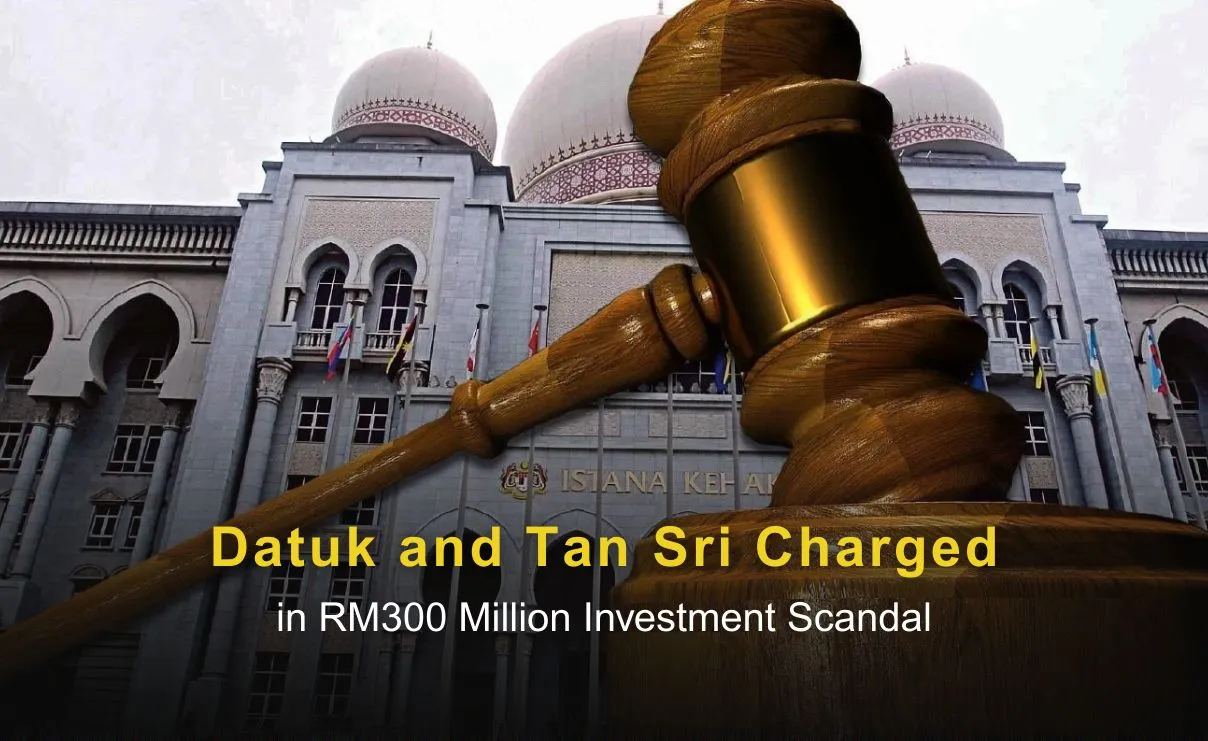
Two senior figures from Malaysias Islamic banking sector are expected to be formally charged at the Sessions Court today in connection with a large-scale investment scheme that allegedly led to losses exceeding RM300 million.
The individuals, who hold the titles of Tan Sri and Datuk, are understood to be facing charges under the Securities Commission Act. The case marks a significant development in what authorities have described as a serious economic crime involving the misuse of investor funds.
One of the suspects, a corporate leader in his 60s who holds the Tan Sri title, was previously detained by the Malaysian Anti-Corruption Commission (MACC) as part of an ongoing investigation into the alleged fraud. His remand followed concerns over an investment operation that is believed to have attracted substantial public participation before collapsing.
Investigators have since determined that a large number of investors suffered heavy financial losses after placing funds into what is now suspected to be a coordinated investment syndicate. The scheme is thought to have accumulated hundreds of millions of ringgit before its operations came under scrutiny by enforcement agencies.
Earlier this year, on 22 January, MACC Chief Commissioner Azam Baki publicly identified the primary suspect as a well-known figure within Malaysias private sector. He characterised the matter as an economic crime centred on investment activities and indicated that authorities were examining allegations that funds raised from investors had been diverted for personal use.
The decision to proceed with charges under the Securities Commission Act reflects the seriousness of the alleged offences and highlights the growing regulatory focus on financial misconduct within the investment landscape. Market observers note that cases involving senior corporate figures often present broader implications for public confidence in regulated financial services, particularly in sectors built on trust-based frameworks such as Islamic finance.
Malaysia‘s Islamic banking industry has long been viewed as a stable pillar within the country’s financial system, supported by strong governance standards and adherence to Shariah-compliant principles. However, the emergence of high-profile investigations involving prominent personalities risks undermining investor sentiment if accountability measures are not seen to be enforced effectively.
Regulatory authorities in Malaysia have in recent years stepped up enforcement actions against unlicensed investment schemes and fraudulent financial products. The latest case is likely to reinforce calls for stronger due diligence among investors and enhanced transparency across investment platforms, especially those operating outside established institutional frameworks.
Financial analysts suggest that the scale of the alleged losses in this case could have lasting repercussions for both retail and institutional participants, particularly if confidence in alternative investment offerings weakens as a result. The situation also underscores the importance of independent regulatory oversight in detecting and addressing financial irregularities before they escalate into systemic risks.
As proceedings commence at the Sessions Court, further details are expected to emerge regarding the structure of the alleged scheme and the roles played by those involved. The outcome of the case will be closely watched by industry stakeholders and regulators alike, as it may influence future enforcement strategies within Malaysias broader financial and investment ecosystem.
Amid heightened concerns over investor protection, platforms such as WikiFX have continued to promote tools and analytical resources aimed at helping market participants identify potential risks within the global foreign exchange environment. The organisation maintains that improved access to information and transparency remains essential in fostering safer trading conditions for investors operating in increasingly complex financial markets.
With legal proceedings now set to move forward, the case is poised to become a key reference point in Malaysias ongoing efforts to safeguard market integrity and reinforce trust in its financial institutions.

Disclaimer:
The views in this article only represent the author's personal views, and do not constitute investment advice on this platform. This platform does not guarantee the accuracy, completeness and timeliness of the information in the article, and will not be liable for any loss caused by the use of or reliance on the information in the article.
WikiFX Broker
Latest News
OtetMarkets Review 2026: Reported Account Block, Bonus Abuse & Withdrawal Delay Claims
WikiFXEMAR MARKETS Review: What Traders Should Know Before Depositing
WikiFXRupee Fell to ₹97, Clawed Back to ₹94.5 — The $15.4 billion Oil Bill is Still There
WikiFX92 Claims, No Sources: The Trump Scorecard Line That Touches India
WikiFXU.S. Dollar Moves Away From Session Highs As Treasury Yields Drop: Analysis For EUR/USD, GBP/USD, USD/CAD, USD/JPY
WikiFXSterling Up After Higher Inflation
WikiFXMan Sells His House to Invest, Only to Lose RM132,590 in Forex Scam
WikiFXXTrend Speed Broker Exposed: What Are Other Traders Saying About This Broker?
WikiFXRBI Tightens Rupee Derivative Rules as Currency Hovers Near Record Low
WikiFXXTrend Speed Broker Review: Is It Safe for Traders?
WikiFX