Abstract:Recently, reports have surfaced regarding scammers targeting users of Binance, one of the world's leading cryptocurrency exchanges. Despite the platform's stringent security measures, these scammers have managed to deceive users by posing as legitimate affiliates, ultimately leading to financial losses for the victims.

In the interconnected world of digital finance, where opportunities for investment abound, there also lurk malicious entities seeking to exploit unsuspecting individuals. Recently, reports have surfaced regarding scammers targeting users of Binance, one of the world's leading cryptocurrency exchanges. Despite the platform's stringent security measures, these scammers have managed to deceive users by posing as legitimate affiliates, ultimately leading to financial losses for the victims.
One such victim, named Collins, shared his harrowing experience with WikiFX. Having opened an account on Binance, he was approached by someone claiming to be a fellow Binance customer service representative offering an enticing investment opportunity through Namshi. Trusting the affiliation with Binance, Collins invested approximately $7,000 into what he believed to be a legitimate venture, only to find himself unable to withdraw his funds later.
Upon realizing the fraudulent nature of the transaction, Collins promptly reached out to Binance's customer service, providing all relevant evidence of the scam. Shockingly, the response from Binance's customer service was disheartening. They claimed that the purported customer account associated with the scam did not exist within their platform, despite all transactions having occurred within the Binance ecosystem.
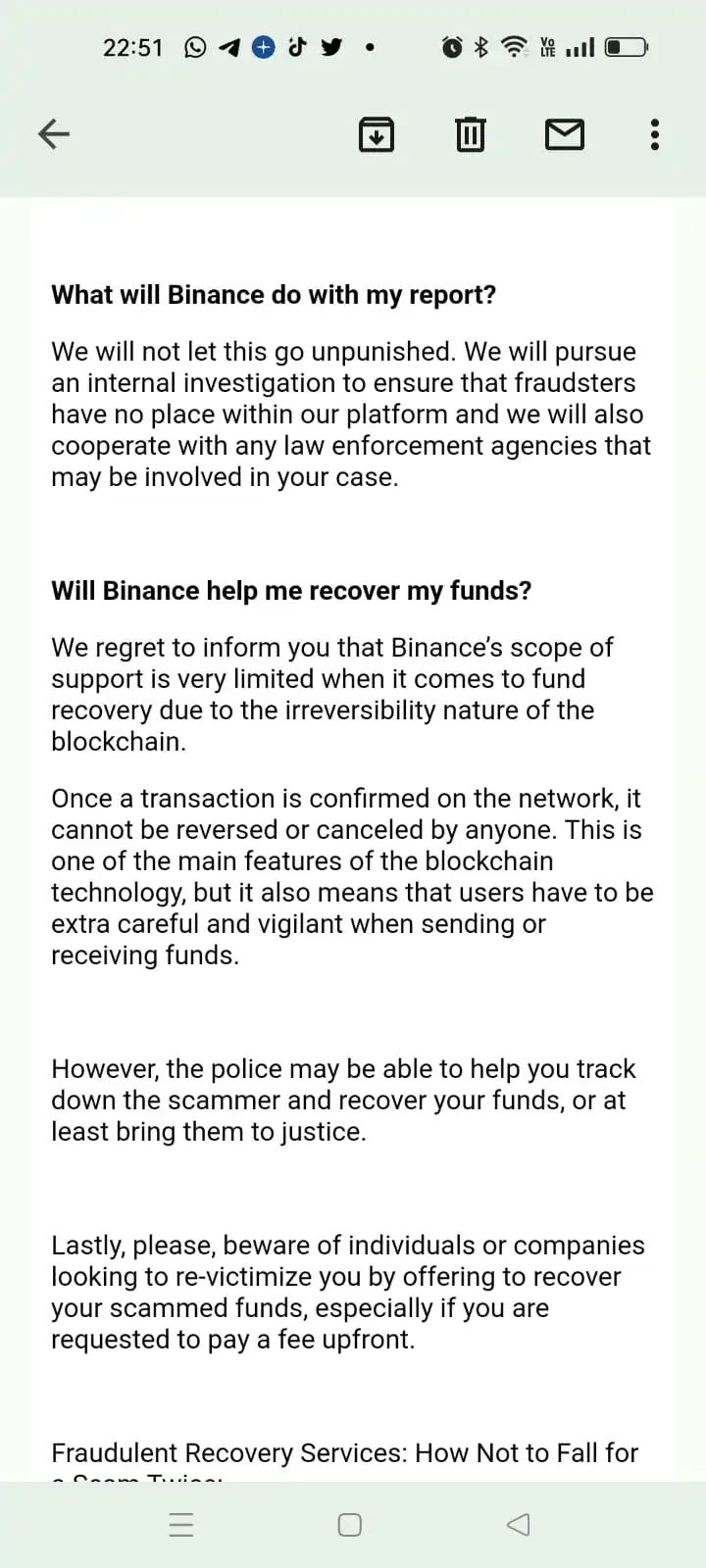
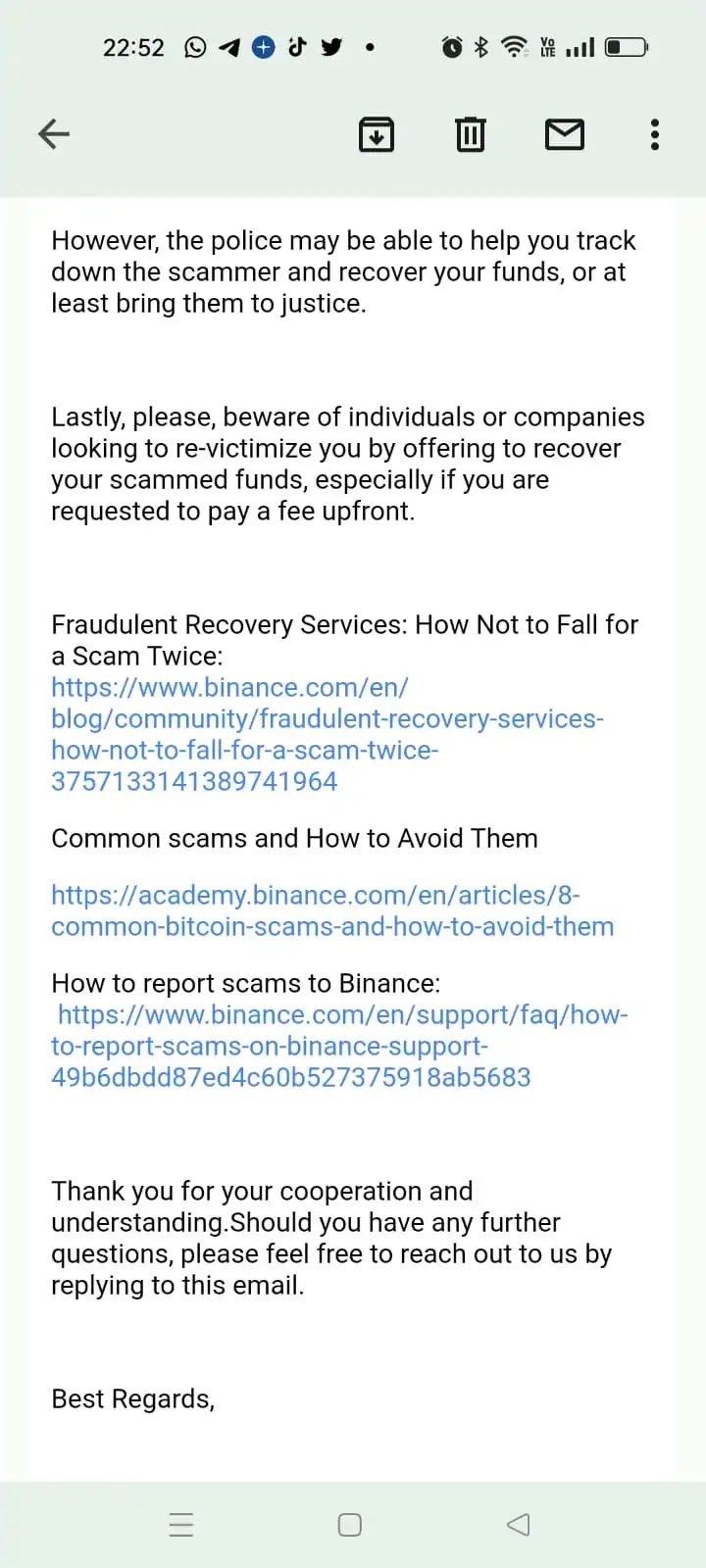
Faced with the realization that his funds were in jeopardy and seeking recourse, Collins sought assistance from law enforcement. However, he was met with further frustration as the police were unable to intervene due to the nature of cryptocurrency transactions.
What adds to the perplexity of the situation is the fact that all Binance users undergo a Know Your Customer (KYC) verification process, which should ostensibly provide an added layer of security. Yet, in this instance, Binance disavowed any knowledge of the fraudulent dealers to whom Collins had transferred his funds.
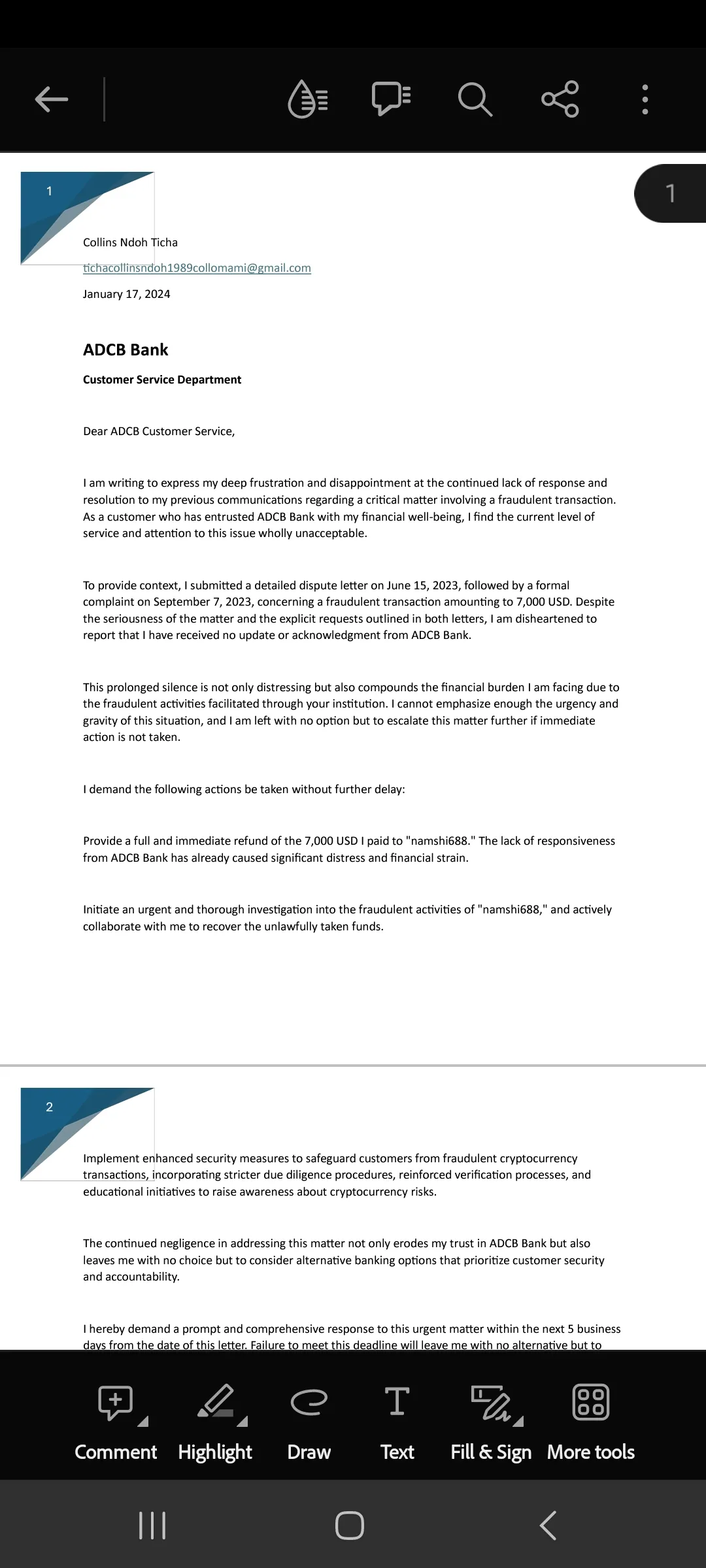
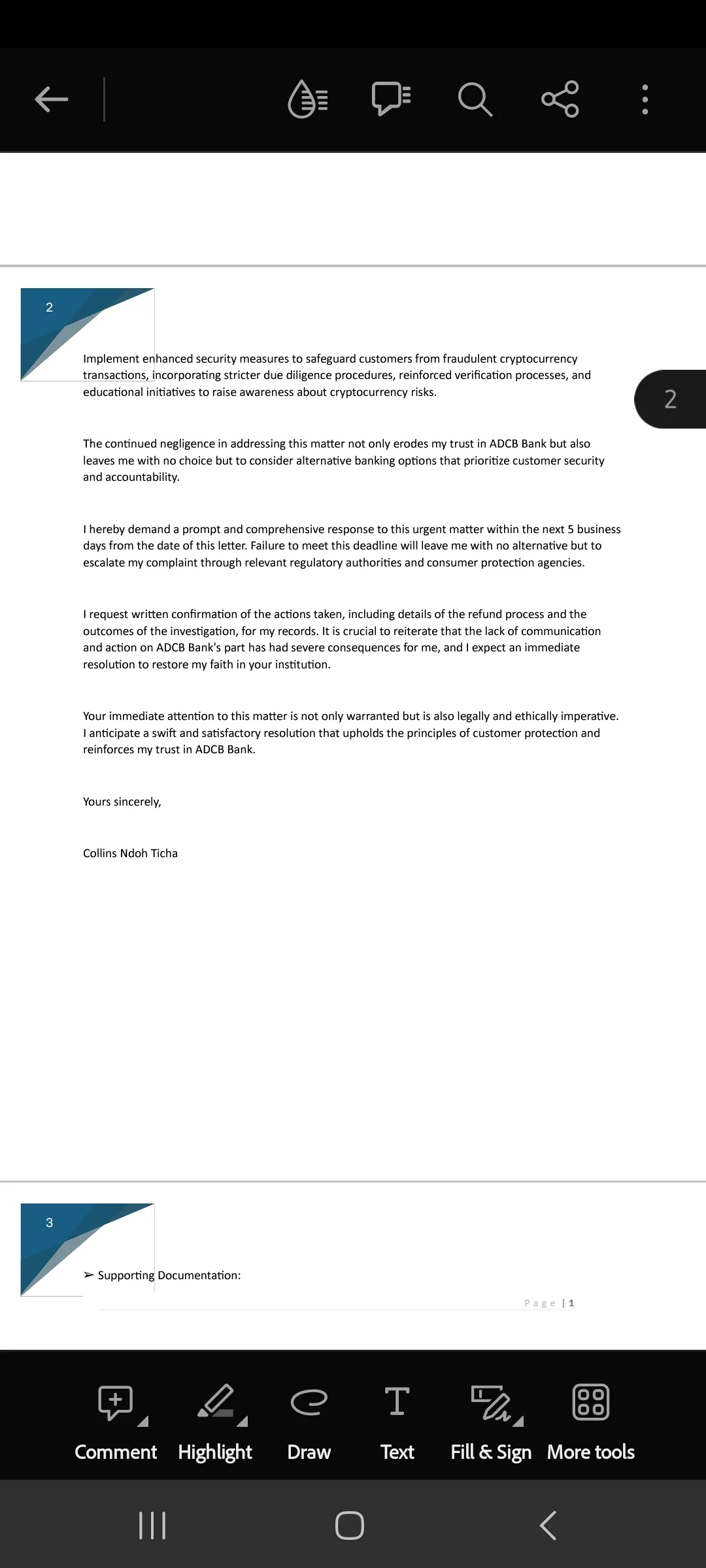
In a desperate attempt to reclaim his lost funds, Collins pursued avenues through his bank, initiating a dispute and lodging complaints. Regrettably, these efforts yielded no tangible results, leaving Collins feeling abandoned and disillusioned.
This unfortunate incident serves as a sobering reminder to all users of digital finance platforms, not limited to Binance, to exercise utmost caution when approached with investment opportunities. Despite the reputation and security measures of any platform, scammers continue to find ways to exploit unsuspecting individuals.
It is imperative for users to remain vigilant, to thoroughly vet any investment opportunities, and to be wary of unsolicited offers, even if they appear to originate from seemingly reputable sources. Furthermore, in the event of suspected fraudulent activity, users are encouraged to report it immediately to the platform's official channels and to refrain from engaging further with the perpetrators. While the allure of quick financial gains may be enticing, the risks posed by fraudulent schemes far outweigh any potential benefits. By staying informed and exercising caution, users can help safeguard themselves and others from falling victim to such scams in the future.