Abstract:A Prime of Prime forex arrangement can help a broker access trading relationships, credit intermediation, technology connectivity, and liquidity aggregation that may otherwise be difficult to obtain directly. But the label does not prove direct bank access, executable depth, or a particular execution outcome. This 2026 guide explains what a forex Prime of Prime, PoP liquidity provider, prime brokerage forex service, and forex prime broker proposal can mean in practice; where the credit and order-routing chain must be documented; how to test pricing, limits, rejects, records, and resilience; and which commercial terms create hidden operating cost. Use the comparison framework, red-flag list, and 90-day launch plan to assess fit for your client mix and risk model. The objective is a controllable execution dependency with traceable evidence, not a marketing claim about institutional access.

**Editorial and risk notice:** This B2B guide is for brokerage executives, dealing desks, operations, technology, risk, and compliance teams. It is not investment advice, a recommendation of any Prime of Prime provider, or a promise of pricing, fills, execution quality, client growth, or trading outcomes. Confirm the legal entity, permissions, contractual scope, credit arrangements, and local obligations with qualified advisers and counterparties.
At a broker's first liquidity meeting, the commercial pitch can sound simple: one connection, institutional access, better pricing, and room to grow. The hard questions arrive later. Who is the legal counterparty? Who extends credit? Where does an order go after it leaves the platform? Which records can the broker review when a client disputes a fill? A prime of prime forex relationship is valuable only when those questions have operational answers.
A Prime of Prime, often shortened to PoP, may provide a route to liquidity and services through a structure that sits between a broker and the market-access relationships beneath it. The service can include different combinations of execution, credit intermediation, aggregation, reporting, technology, or operational support. It is not a universal product. The task for a broker is to map the actual service, not to infer it from the label.
 Contents
Executive Takeaways
· A forex prime of prime proposal should be evaluated as a credit, execution, technology, and governance arrangement together.
· “Institutional” and “bank” are marketing descriptions unless the legal entity, service scope, access path, and evidence are documented.
· A broker can use a PoP structure appropriately without claiming direct access to every underlying source.
· Test stressed conditions: changing limits, depth deterioration, rejects, partial fills, stale prices, a connectivity loss, and reconciliation breaks.
· Retain broker-owned records for decisions, route changes, exceptions, costs, incidents, and client communications.
1. Prime broker, Prime of Prime, and Liquidity Aggregation are Not Interchangeable

Editorial illustration: a broker-owned control hub coordinating multiple market-access routes through a Prime of Prime relationship.
The terms often appear together, but they answer different questions. A forex prime broker may provide financing or execution-related services to professional clients under its own model. A Prime of Prime may package access, credit, and connectivity for brokers or professional participants that do not have the same direct arrangements. A liquidity aggregator may technically combine streams and route orders, but it does not by itself explain who owns credit, execution responsibility, or client communication.
**Common mistake:** treating a provider diagram as proof of the relationship. A diagram is useful only when it matches the contract, operational controls, and records the broker can actually obtain.
Key Takeaway
Do not ask only “which liquidity sources are available?” Ask what is executable for the intended instrument, ticket size, trading condition, and credit state - and who is accountable when the answer changes.
2. The Most Important PoP Question is Often Credit, Not Spread
Displayed spread is easy to compare. Credit capacity, limit governance, and exception handling are harder to see, yet they can determine whether an attractive price is usable. In a PoP structure, a broker should understand whether credit is its own, allocated through another party, pre-funded, collateralised, capped by instrument, or subject to intraday changes. The answer affects what the broker can offer, what can fail under stress, and which teams must be alerted.
Composite Scenario: A Good Quote Becomes Unavailable at the Wrong Moment
This is an illustrative scenario, not a customer case study. A growth-stage broker observes competitive prices during a demo and accepts the commercial proposal. During a high-volatility test, a risk limit is reached on one route. The platform continues to show an instrument, but the resulting rejects increase and the support team cannot see the route status. The issue is not that PoP is inherently unsuitable. It is that credit events, instrument availability, routing fallbacks, and client wording were not designed as one service.
Before launch, test the following as a controlled exercise:
1. A limit reduction while orders are active.
2. A venue or route becoming slow or unavailable.
3. A partial fill and a reject with client-facing status.
4. A trade correction or bad-price investigation.
5. End-of-day reconciliation of trade, fee, and adjustment records.
Key Takeaway
If no one can explain a limit event in plain operational language, the broker is not ready to promise the connected execution service to clients.
3. Turn a PoP Sales Demo into an Evidence-based Procurement Test
The right comparison is not “Provider A has more names on a slide.” It is “Provider A can evidence the service we need under the conditions we expect.” Establish a test protocol before commercial decisions are final, with a shared clock, defined instruments, ticket bands, normal and stressed windows, a reason-code taxonomy, and named owners for results.
The FCA's third-party resilience guidance offers a useful discipline even where it is not the broker's home regulator: map the people, processes, technology, information, and third parties needed for important services, while keeping responsibility for the resulting risk. A provider's own test report can help, but the broker still needs to decide whether the scenarios and evidence are sufficient for its business.
4. Cost: Model the Operating Consequences, Not Just the PoP Commission
A PoP proposal may contain commissions, markups, minimums, connection or bridge costs, market-data charges, professional services, collateral or funding requirements where applicable, and charges for changes or support. The cost that surprises new operators is usually exception work: reconciliations, route investigations, support escalation, configuration testing, client-notice approval, and contingency capacity.
Build a base, growth, and stress case. The stress case should assume a material route loses availability, a limit change occurs in a volatile period, or the broker needs to move a monitored client cohort. Include staff time and control costs rather than assuming every incident is handled by the PoP.
**Common mistake:** using the headline spread to choose a provider, then discovering later that the broker lacks the data rights or operational capacity to investigate client complaints.
5. Implementation Governance: One Execution Story Across Teams
The same event should have one defensible story for dealing, operations, technology, compliance, and client support. That requires a shared event vocabulary, named source-of-record rules, change control, and approved customer-facing language. It also requires a fallback that is operationally real, not simply a second provider name on a diagram.
For brokers operating in Indonesia, localisation is more than translating platform labels. A Pialang Berjangka should have its legal and compliance functions confirm current Bappebti permissions and operating requirements. Bappebti's public materials describe licensing, customer information, separate customer-fund accounts, transaction records, and confirmations. A PoP relationship or a local payment connection does not itself establish permission, segregate customer funds, or guarantee execution. Keep Bahasa Indonesia notices, payment status, KYC/onboarding explanations, and incident messages consistent with the broker's actual records and legal model.
6. A 90-day PoP Launch Plan
FAQs
What is Prime of Prime Forex?
Prime of Prime forex describes a service structure that may give a broker or professional participant access to execution, liquidity, credit intermediation, aggregation, technology, or reporting through a provider's own arrangements. The precise service must be confirmed in the contract and operating model.
Is a PoP Liquidity Provider the Same as a Bank or Direct Interbank Access?
No. A PoP may provide valuable institutional-style access, but the term does not itself prove a direct bilateral bank relationship. Verify the legal counterparty, actual execution path, credit arrangement, data rights, and operating responsibilities before making any claim.
What should a broker monitor after launch?
Monitor fill and reject patterns, executable depth by relevant size, latency, limit events, route changes, costs, reconciliation breaks, incident response, client complaints, and the performance of any contingency process. Review results against agreed thresholds and assigned owners.
Conclusion
A pop liquidity provider can be a practical bridge between a broker's ambitions and the operational requirements of market access. The decision becomes robust when the broker can prove what it is buying: the legal and credit chain, executable service, data rights, exception process, cost, and recovery path. Treat the relationship as a controlled dependency, not a shortcut to an institutional label.
Download the WikiFX app for the latest forex updates.
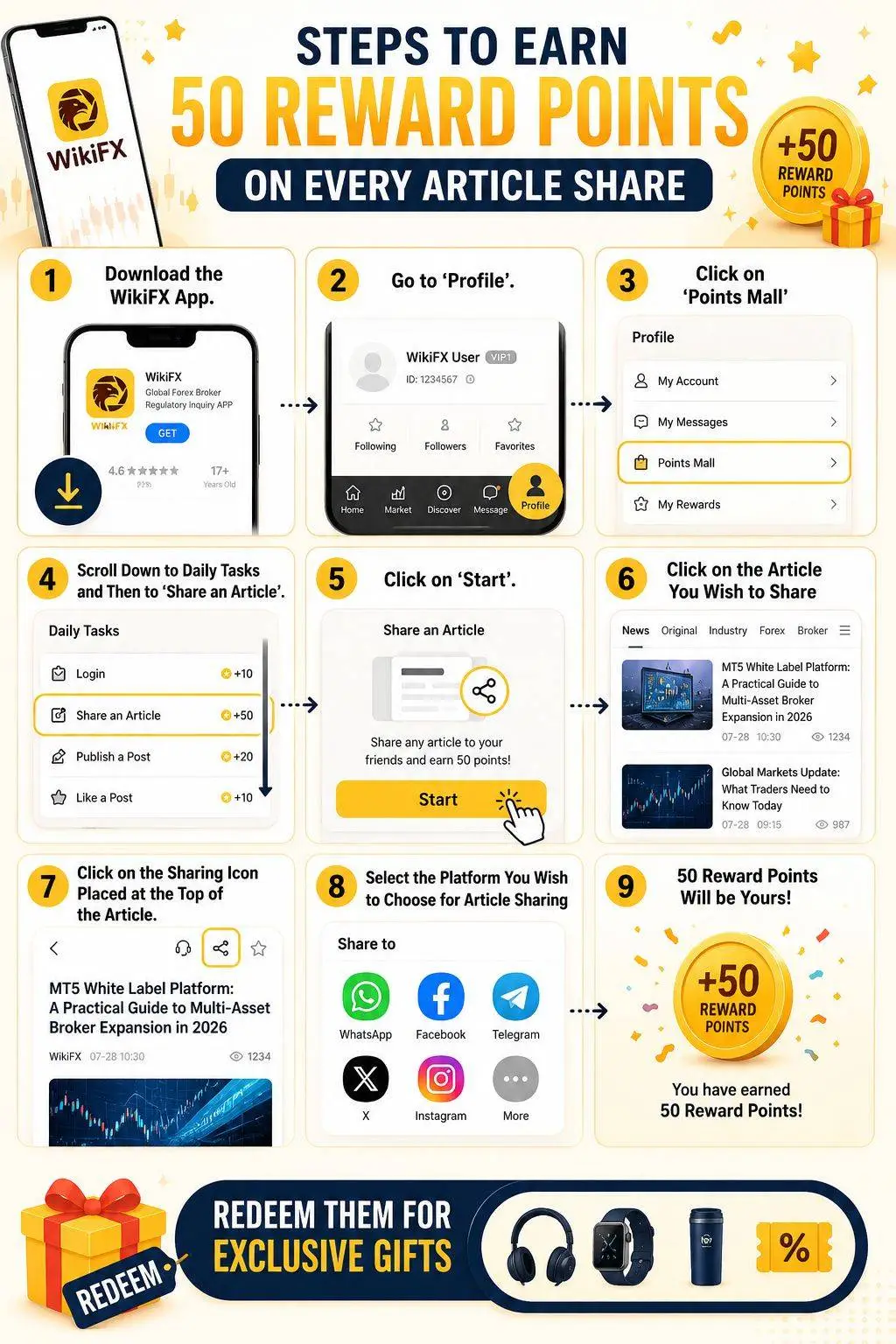
Knowledge pays at WikiFX.Every time you share a WikiFX article, you'll receive 50 Reward Points. Grow your rewards with every share and unlock exclusive gifts in the WikiFX Points Mall. Start earning today!
Interesting Articles for You
How to Start a Forex Broker in 2026: Build the Operating Model Before You Buy the Platform
A forex brokerage launch can look like the fastest route to a modern branded trading environment, but a fast launch is not the same as a controlled launch. This 2026 broker guide explains what the broker platform is, where a technology provider broker solution can sit in a wider operating stack, and how to evaluate the difference between a white label, a server license, and a connected CRM or Client Office setup. It also unpacks broker startup costs beyond the monthly headline, including implementation, integration, support, data, governance, migration, and exit assumptions. Use the practical questions, workflow tests, comparison table, and launch checklist to assess a technology provider without mistaking a feature demo for evidence that your brokerage can run the service safely at scale.
News
2026-08-10
Further Reading
Review 2026: Users Report Disturbing Withdrawal Issues - Is the Broker Still Reliable?
Review 2026: Why Some Users Report Withdrawal Problems - and What the Evidence Shows