

Global Broker Regulation Inquiry App
About WikiFX
English
简体中文
繁體中文
English
Pусский
日本語
ภาษาไทย
Tiếng Việt
Bahasa Indonesia
Español
हिन्दी
Filippiiniläinen
Français
Deutsch
Português
Türkçe
한국어
العربية
اردو


War in the Middle East: Oil Spikes and Stocks Tumble as Conflict Enters "Uncharted Territory"

WikiFX
|


Abstract:Global markets face a severe volatility shock following confirmed US-Israel strikes on Iran and the death of Supreme Leader Khamenei, triggering a massive flight to safety. Crude oil prices spiked over 13% intraday on fears of a Strait of Hormuz blockade, while equities across Asia and Europe tumbled.
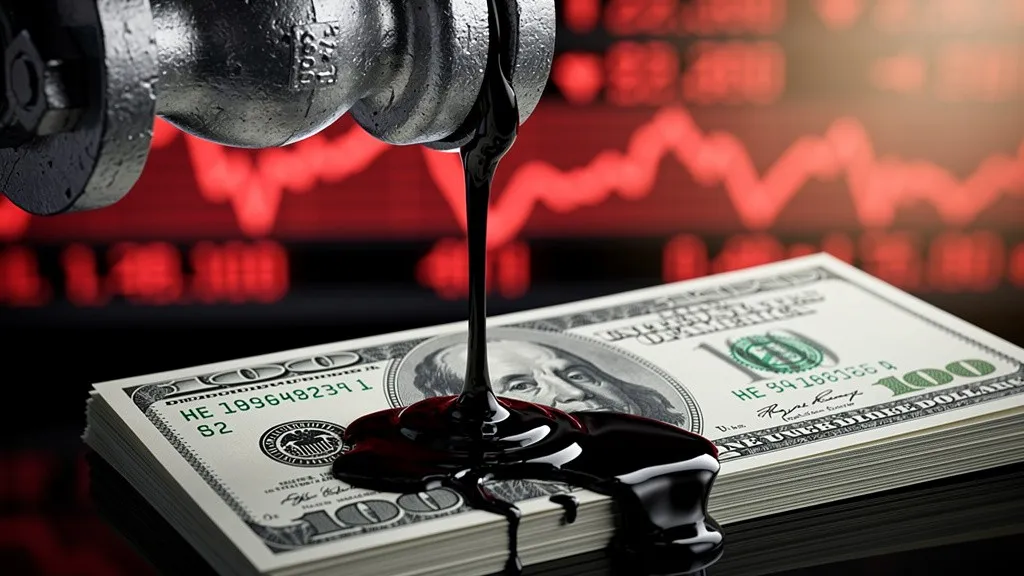
Global financial markets were thrown into disarray on Monday following the confirmation of coordinated military strikes by the United States and Israel against Iranian targets, resulting in the death of Supreme Leader Ayatollah Ali Khamenei. The escalation has shattered hopes for a short-term diplomatic resolution, forcing investors to brutally reprice geopolitical risk premiums across all asset classes.
Energy Markets in Panic Mode
The impulse reaction was most violent in the energy sector. Brent Crude futures surged over 13% intraday—the largest single-day spike since March 2022—before paring gains to trade around $77.50, up 6.4%. WTI Crude followed a similar trajectory, stabilizing near $72.00.
The primary driver of the panic is the “nightmare scenario” regarding the Strait of Hormuz. Digital signals indicate tanker traffic in the strategic waterway, which handles 20% of global oil supply, has nearly ceased.
- Goldman Sachs warns that a sustained blockage constitutes the “most destructive” risk scenario.
- Bloomberg Economics modeling suggests crude could leap toward $108/barrel if the blockade persists.
Safe-haven demand propelled Spot Gold (XAU/USD) up 2% to a record $5,388/oz, while Silver gained 1.5%.
Equity Liquidation and “Cockroach Effect”
Risk assets faced immediate liquidation. The geopolitical shock has exposed the fragility of equity valuations, particularly in markets reliant on stability for credit expansion.
- Panic in Asia: Pakistan's stock exchange triggered a trading halt after plunging 9.6%. Japans Nikkei 225 dropped 1.5%, while bank stocks plummeted over 6% on credit market fears.
- European Open: Euro Stoxx 50 futures fell over 2%, with German DAX and French CAC following suit.
- US Futures: S&P 500 and Nasdaq 100 contracts retreated approximately 0.7%, showing relative resilience compared to Asian counterparts.
Market analysts are citing the “Cockroach Effect” in private credit markets—fears that visible distress is merely a symptom of wider systemic vulnerabilities in financing for the tech sector.
Analyst View: The “Stagflationary” Risk
Rabobank notes that macro data has become secondary to real-time geopolitical reshaping. The immediate concern for global central banks is the inflationary impulse of soaring energy costs colliding with fragile economic growth.
> “The market is currently pricing a limited conflict. However, if the US is drawn into a ground war or the Strait of Hormuz remains closed, the risk-reward ratio for equities becomes unattractive. We could see a 10% correction in the S&P 500.” — Ajay Rajadhyaksha, Barclays Global Research.
Disclaimer:
The views in this article only represent the author's personal views, and do not constitute investment advice on this platform. This platform does not guarantee the accuracy, completeness and timeliness of the information in the article, and will not be liable for any loss caused by the use of or reliance on the information in the article.
WikiFX Broker
Latest News
OROKU EDGE Review 2026: What Traders Should Know About Withdrawal & Slippage Reports
WikiFXKudotrade Review 2026: Reported Slippage & Trade Execution Issues You Should Know
WikiFXNZDCHF: Bearish Now, But Is Smart Money Preparing the Reversal?
WikiFXEUR/USD: Bearish Structure Shift
WikiFXEURUSD | Demand Zone Holding, Bulls Eyeing Higher Resistance
WikiFXValutrades Rejects Exit Rumors Amid Client Review
WikiFXFX Trading Share Falls Sharply Across Retail CFD Market
WikiFXIG Faces Hundreds Of Job Cuts In Global Restructure
WikiFXMalaysia To Host Asia Fintech Regulatory Summit
WikiFXWeekend CFD Trading Moves Beyond Gold as Brokers Add Oil, Silver and Indices
WikiFX