Abstract:Explore Fintokei regulation, broker model, Forex trading, fees & login process. Learn if it’s safe before trading—check the full review now!
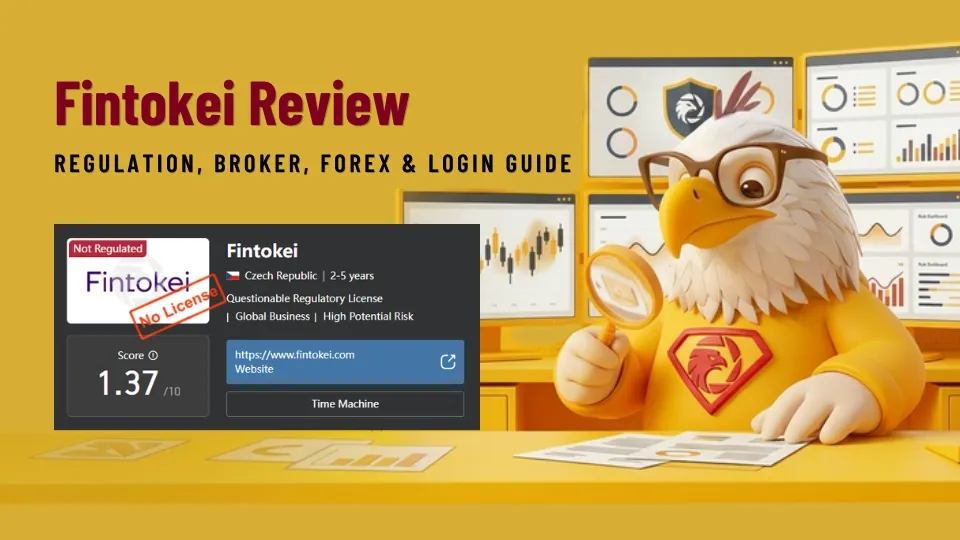
When evaluating trading platforms like Fintokei, one of the most critical factors traders consider is regulation and legitimacy. Unlike traditional Forex brokers, Fintokei is widely known in the trading industry as a proprietary (prop) trading firm, which means it operates under a different structure compared to regulated brokerage institutions.
This distinction is important because regulation Fintokei searches often reflect user concerns about safety, fund handling, and legal oversight. In general, prop trading firms do not function as brokers that hold client deposits; instead, they provide simulated or evaluation-based trading environments where traders can qualify for funded accounts.
In this article, we break down everything you need to know about Fintokei broker structure, Fintokei Forex offering, and Fintokei login process, based on a structured, high-intent analysis.
 Contents
Is Fintokei a Regulated Broker or a Prop Trading Firm?
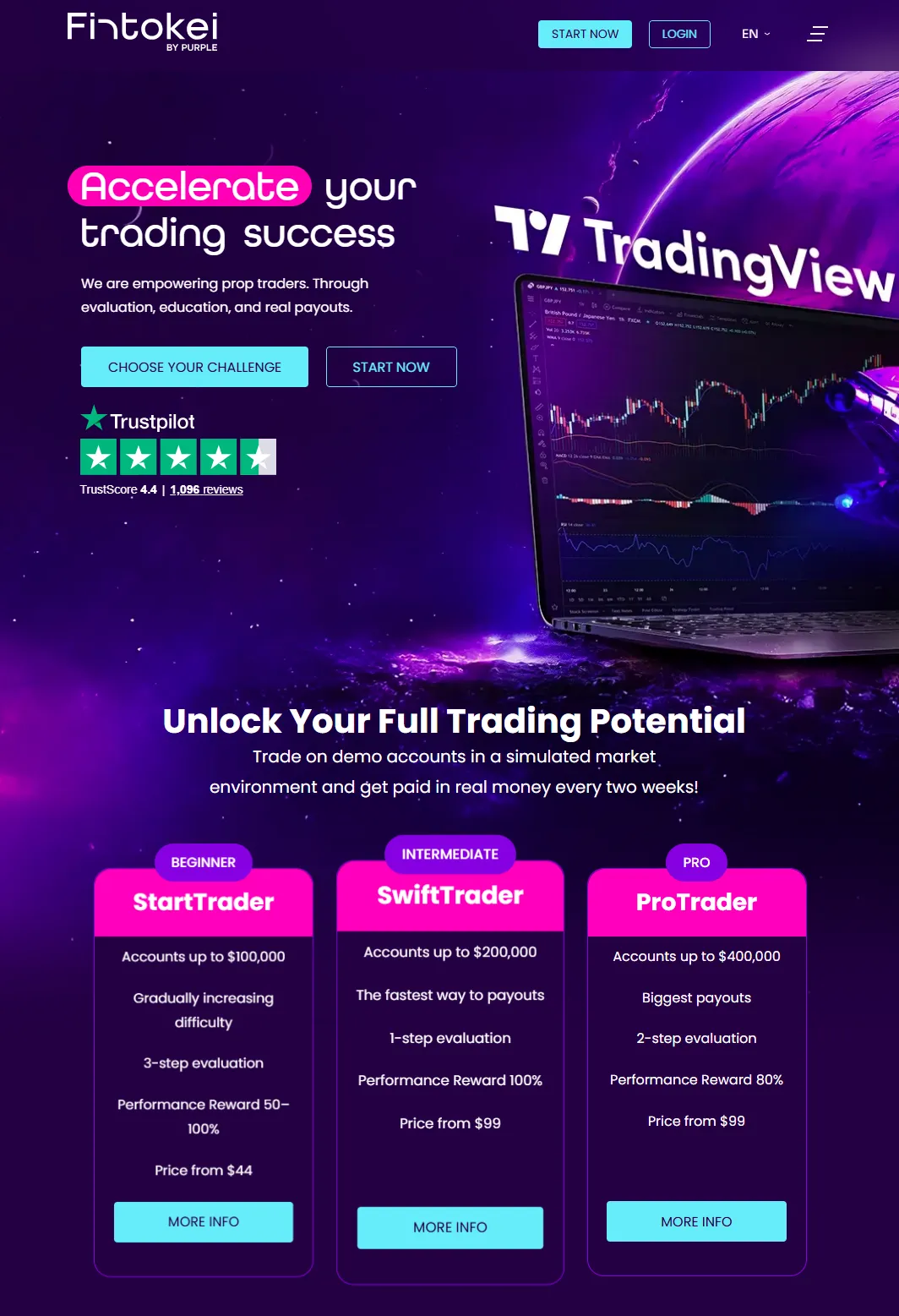
Fintokei is not a traditional Forex broker. Instead, it operates as a proprietary trading firm.
- Traders typically do not deposit funds for direct market trading
- Instead, they participate in evaluation programs or challenges
- Successful traders may gain access to funded trading accounts
This model differs significantly from brokers, where:
- Clients trade with their own capital
- Brokers execute trades directly in live markets
Because of this distinction, referring to “broker Fintokei” can be misleading—Fintokeis core function is talent evaluation and capital allocation, not brokerage services.
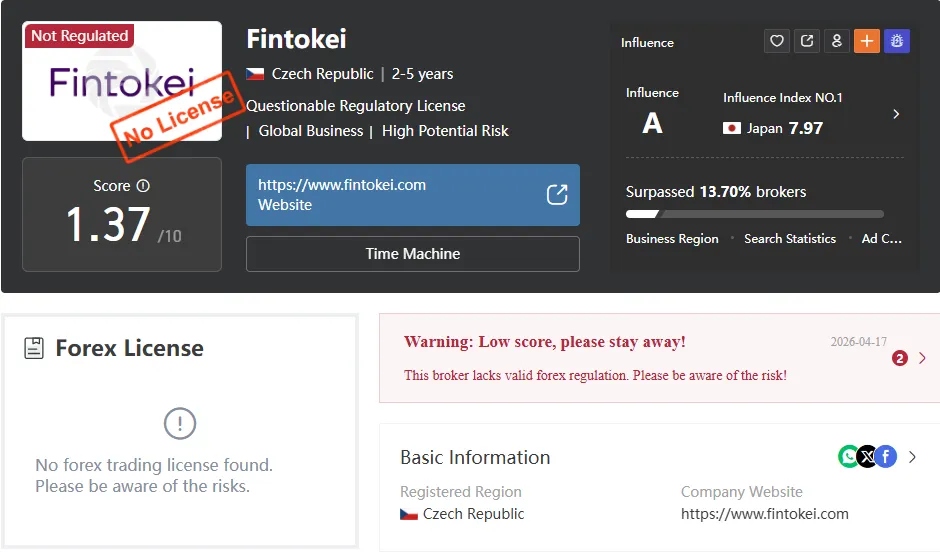
What Is the Regulatory Status of Fintokei?
Fintokeis regulatory status must be interpreted within the prop trading firm category.
- Prop firms are generally not regulated in the same way as Forex brokers
- They do not typically hold client funds for investment purposes
- Their operations focus on simulated trading and internal funding models
➡️ Important:
- If the WikiFX page lists a regulatory status, you should verify:
- Whether it refers to a registered company entity
- Or a licensed financial brokerage
⚠️ I cannot confirm the exact regulatory classification shown on the provided WikiFX page—please verify directly for accuracy.
How Does the Fintokei Trading Model Work for Users?
Fintokei follows a challenge-based evaluation model, which is common among prop firms.
Typical structure:
- Trader purchases a challenge account
- Must meet profit targets under risk rules
- If successful → gains access to a funded account
- Earns a profit split from generated returns
Key characteristics:
- Risk limits (daily loss, max drawdown)
- Profit targets
- Time or consistency requirements
This model is designed to:
- Identify disciplined traders
- Reduce firm risk exposure
- Scale capital allocation based on performance
Is Fintokei Safe and Legitimate for Forex Trading?
Safety depends on understanding the business model, not just regulation.
What can be considered:
- Fintokei does not function as a deposit-taking broker
- Traders typically risk challenge fees, not trading capital
- Payouts depend on meeting evaluation criteria
Risk considerations:
- Failure to pass challenges = loss of fees
- Strict trading rules may affect outcomes
- Profit payouts rely on company policies
➡️ Conclusion:
Fintokei may be considered legitimate within the prop trading industry, but it does not offer the same protections as regulated brokers.
What Forex and Trading Instruments Are Available on Fintokei?
Fintokei Forex trading typically includes access to:
- Major currency pairs (EUR/USD, GBP/USD, USD/JPY)
- Minor and exotic Forex pairs
- Potentially indices, commodities, or other CFDs
However:
- Instruments depend on the platform and account type used
- Trading is often conducted in a simulated environment during evaluation
⚠️ Exact instrument lists should be verified on the official platform or WikiFX page.
What Trading Platforms and Tools Does Fintokei Offer?
Most prop firms, including Fintokei, typically support:
- Popular trading platforms (commonly MetaTrader 4 or MetaTrader 5)
- Charting tools and technical indicators
- Risk management tracking dashboards
Additional tools may include:
- Performance analytics
- Trade history tracking
- Rule compliance monitoring
➡️ Platform availability should be verified directly, as offerings may vary.
What Are Fintokei Account Types, Fees, and Funding Requirements?
Fintokei usually operates with challenge-based account tiers, such as:
Account Structure:
- Different account sizes (e.g., $10K, $50K, $100K simulated capital)
- Scaling opportunities after performance milestones
Fees:
- One-time challenge fee
- No traditional deposit requirement for trading
Funding:
- “Funded accounts” are allocated capital, not user deposits
- Profit splits are typically shared between trader and firm
⚠️ Exact pricing, splits, and rules should be confirmed from the official source.
How Do You Register and Login to a Fintokei Account?
The Fintokei login process is generally straightforward:
Registration:
- Create an account via the official website
- Select a challenge or evaluation program
- Complete payment (if applicable)
Login:
- Access dashboard using registered credentials
- Connect to trading platform (MT4/MT5 or equivalent)
- Begin trading under evaluation rules
➡️ Always ensure you are using the official website to avoid phishing risks.
Conclusion
Fintokei represents a growing segment of the trading industry: proprietary trading firms offering funded opportunities instead of traditional brokerage services. While searches like Fintokei broker or Fintokei regulation suggest a need for regulatory clarity, it is essential to understand that Fintokei operates under a different framework than licensed Forex brokers.
- It is not a conventional regulated broker
- It offers challenge-based access to funded trading accounts
- Its safety depends on transparent rules and payout reliability, not regulatory protection
Before engaging with Fintokei, traders should:
- Verify details directly on trusted platforms like WikiFX
- Understand the evaluation model and risks involved
- Ensure expectations align with prop trading conditions