Abstract:The Indian Finance Minister Nirmala Sitharaman, while announcing the Union Budget 2026-27, proposed a sharp rise in the Securities Transaction Tax (STT) on Futures and Options as part of the government’s strategy to soothe the country’s overheated derivatives market. The move comes on the backdrop of regulators’ concerns over excessive speculation in F&O allowing retail traders to enter the market and lose capital. Whether the government will be able to curb excessive speculation in F&O through this move remains to be seen. The stock indices, however, were hit hard, with the BSE Sensex falling by 1500 points amid widespread selling on the STT hike. Let’s examine the potential impact of this hike on Indian F&O traders.
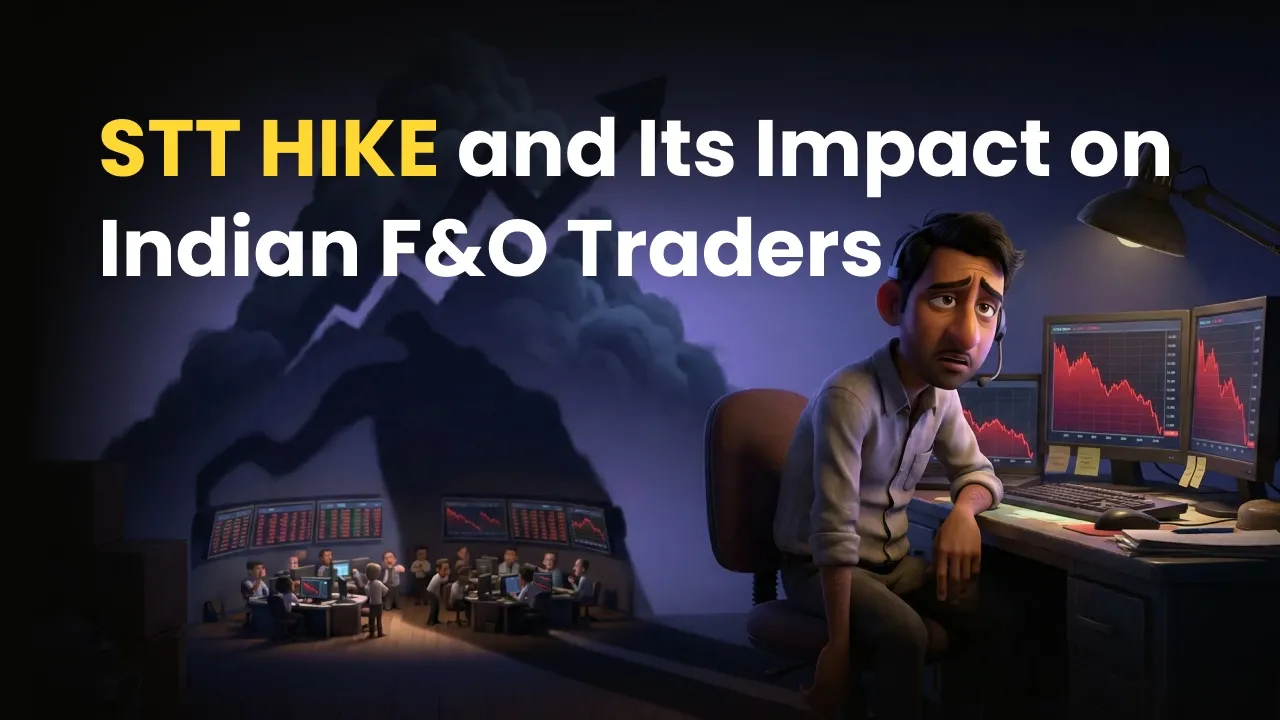
The Indian Finance Minister Nirmala Sitharaman, while announcing the Union Budget 2026-27, proposed a sharp rise in the Securities Transaction Tax (STT) on Futures and Options as part of the government‘s strategy to soothe the country’s overheated derivatives market. The move comes on the backdrop of regulators‘ concerns over excessive speculation in F&O allowing retail traders to enter the market and lose capital. Whether the government will be able to curb excessive speculation in F&O through this move remains to be seen. The stock indices, however, were hit hard, with the BSE Sensex falling by 1500 points amid widespread selling on the STT hike. Let’s examine the potential impact of this hike on Indian F&O traders.
What is STT?
It is levied as a direct tax on shares, equity derivatives (futures and options) and listed securities on Indias recognized stock exchanges to promote tax compliance and prevent black-market trades. However, the tax is collected only upon the transaction on an exchange.
What are Stock Futures and Options Trading?
A futures contract represents a legally enforceable agreement between two parties to transact an asset, commodity, or security at an agreed price on a future date. To ensure smooth and efficient trading, exchanges standardize futures contracts by defining uniform quality and quantity specifications.
An option is a contract in which the seller grants the buyer the right, but not the obligation, to buy (in the case of a call option) or sell (in the case of a put option) a specified asset at a predetermined price, known as the strike or exercise price, on or before a future date. In return, the seller receives a payment from the buyer, called the premium.
A hike in the STT for stock futures and options trading, courtesy of the budget, will inevitably increase the trading cost, especially for active traders. While equity delivery trades involving long-term purchase or sale of shares always include the STT, the recent Union Budget 2026-27 announcement pertains to targeted changes, especially in the Futures & Options (F&O).
A Comparative Analysis of STT Rates Before and After Union Budget 2026-27
The new rates will take effect from April 1, 2026. Check out the table below comparing the new and old rates on different F&O transactions.
Note - The STT charges apply to equity futures traded on recognized exchanges such as Nifty and Sensex. Further, the charges are based on the transaction value (option premiums and future traded prices).
How Does the STT Hike Impact F&O Traders? A Mathematical Guide
Lets calculate the impact using an example involving Nifty Futures Trade and Nifty Options trade.
Nifty Futures Trade
Assume you have a contract value worth INR 15,00,000 in Nifty 50 Futures.
Check out the table below showing the difference in the trading cost with existing and proposed STT rates.
As you see, there is an extra INR 450 (750-300) per trade applicable to the trader. Assume a trader places 25 trades in a month, the STT will increase by INR 11,250. This does not even include brokerage, exchange expenses or GST. The increase in the STT rate thus reduces the margin for traders.
Nifty Options Trade
Lets assume the option premium to be INR 100 with a lot size of 70. This makes the total premium value touch INR 7,000.
Although the rise in the trading cost does not seem massive when seen in isolation. However, considering an active options trader executing 300 trades in a month, this adds an extra INR 750. For scalpers relying on volume and tight spreads, the proposed STT rates can discreetly reduce returns.
Will the Proposed STT Rate Hike Impact Brokers & Institutional Players?
The STT rate hike will impact different market participants differently. Lets check out the extent of impact for each participant.
Brokers
A significant proportion of the brokers revenue comes through derivative trading volumes. A protracted reduction in volumes will likely lower brokerage fees and earnings for firms relying heavily on stock derivatives.
Hedgers & Institutional Players
Long-term hedgers, such as Foreign Institutional Investors (FIIs) or mutual funds, who use derivatives to manage risks, may not be impacted much as they do not trade very frequently. However, the performance of those employing arbitrage based on tight spreads and quick execution may suffer.
Market Liquidity
The rising STT rates may diminish liquidity, increase bid-ask spreads, and lead to slow price discovery, especially in smaller-cap stocks or during light trading sessions.
Conclusion: A Costly Deterrent with Mixed Outcomes
The proposed STT hike on Futures and Options is a clear signal of the government‘s intent to cool down excessive speculation in India’s derivatives market. While the move may discourage overtrading by retail participants and curb high-frequency speculative activity, it also significantly raises trading costs for genuine market participants—especially active traders, scalpers, and short-term strategists who rely on tight margins. As illustrated, even seemingly small increases in STT can compound into substantial costs over time, eroding profitability.
For brokers, reduced F&O volumes could translate into lower revenues, while market liquidity may take a hit due to wider bid-ask spreads and slower price discovery. Institutional players and long-term hedgers, on the other hand, are likely to remain largely insulated from the impact. Ultimately, whether the STT hike succeeds in stabilizing the derivatives market without undermining its efficiency will depend on how traders adapt and whether volumes normalize over time. For now, Indian F&O traders must reassess strategies, optimize trade frequency, and factor higher transaction costs into their risk-reward calculations.