

Global Broker Regulation Inquiry App
About WikiFX
English
简体中文
繁體中文
English
Pусский
日本語
ภาษาไทย
Tiếng Việt
Bahasa Indonesia
Español
हिन्दी
Filippiiniläinen
Français
Deutsch
Português
Türkçe
한국어
العربية
اردو


Who are the “Police” Watching Your Forex Broker? (FCA, ASIC, NFA Explained)

WikiFX
|


Abstract:I still remember the early days. The charts looked the same, the candles moved the same, but the industry was completely different. It was the absolute Wild West. You could deposit $5,000 on a Tuesday, make a killer profit on a Wednesday, and find the broker’s website "under maintenance" on Thursday.
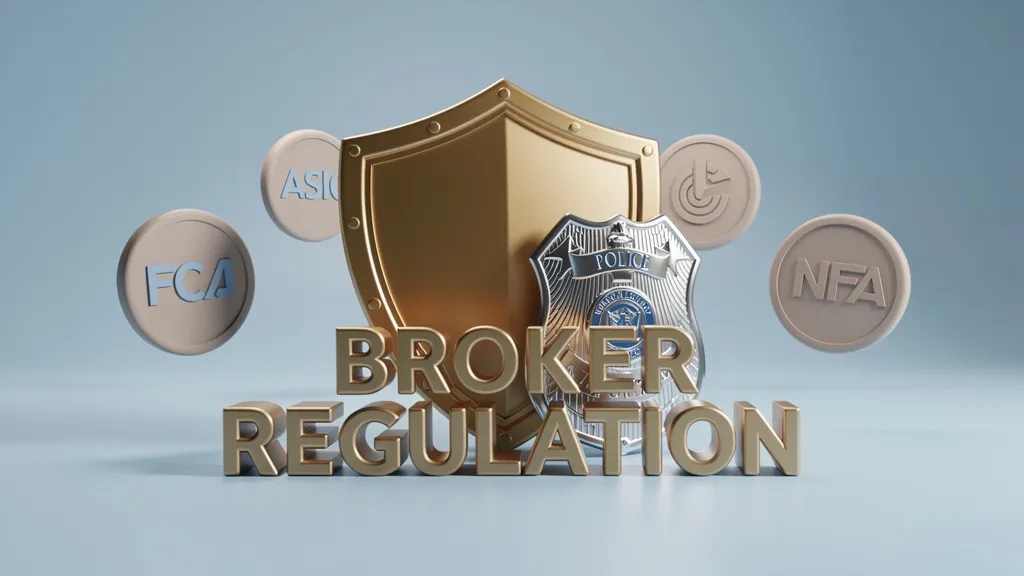
I still remember the early days. The charts looked the same, the candles moved the same, but the industry was completely different. It was the absolute Wild West. You could deposit $5,000 on a Tuesday, make a killer profit on a Wednesday, and find the brokers website “under maintenance” on Thursday.
Gone. Ghosted.
If you are reading this, you are probably hunting for pips. You are looking at support and resistance, worrying about your entry price. But let me tell you something that veterans learn the hard way: Your strategy is useless if your broker is a scam.
If you are trading in the Forex market, you are trading in a decentralized global network. There is no central exchange like the New York Stock Exchange. That means you need protection. You need to know who the “police” are.
Why Regulation isn't Just Paperwork
New traders often ignore the “Regulation” tab on a broker's website. They care about tight spreads and high leverage. They want that 1:1000 leverage so they can flip a $100 account into a Lamborghini.
Listing to me carefully: Regulation is the only thing standing between your deposit and a broker buying a new yacht with your money.
Top-tier regulators force brokers to do three critical things:
1. Segregate Funds: This means your money sits in a separate bank account. The broker cannot use your deposit to pay their electricity bill, their staff, or their own debts.
2. Fair Play: Valid regulators audit brokers to ensure they aren't manipulating price feeds to hunt your stop losses intentionally.
3. Compensation: In some jurisdictions, if the broker goes bankrupt, the regulator ensures you get some of your money back.
So, who are the heavy hitters? Lets look at the “Big Three” you will see most often.
The Gold Standard: FCA (United Kingdom)
The Financial Conduct Authority (FCA) is widely considered the toughest, most respected watchdog in the financial world. Based in London—the heart of global Forex trading—the FCA does not mess around.
If your broker has an FCA license, they have jumped through hoops of fire to get it.
- The Benefit: The Financial Services Compensation Scheme (FSCS). If an FCA-regulated broker goes bust, eligible traders can be compensated up to £85,000. That is a massive safety net.
- The Trade-off: They limit leverage (usually 1:30 for major pairs) to protect retail traders from blowing up their accounts too fast.
The Sheriff Down Under: ASIC (Australia)
For a long time, Australia was the go-to spot for traders who wanted safety and high leverage. However, the Australian Securities and Investments Commission (ASIC) has tightened its belt significantly in recent years.
They are the equivalent of the FCA in the Pacific. They are strict, they are organized, and they have very low tolerance for shady business practices.
- The Benefit: ASIC requires brokers to hold significant capital reserves. They monitor brokers constantly to ensure they are processing client money correctly.
- The Trade-off: Like the FCA, ASIC has reduced leverage limits for retail clients. If you see an “ASIC Regulated” broker offering you 1:500 leverage today, double-check that license—you might be looking at an offshore branch of the company, not the Australian one.
The Iron Fortress: NFA & CFTC (USA)
The United States is a different beast entirely. The National Futures Association (NFA) and the Commodity Futures Trading Commission (CFTC) create the strictest trading environment on the planet.
Getting a US license is incredibly expensive and difficult. That is why you don't see many brokers accepting US clients.
- The Rules: They enforce the FIFO rule (First In, First Out), which changes how you can open and close multiple positions on the same pair. They also firmly cap leverage at 1:50.
- The Reality: If a broker is NFA regulated, they are likely a financial giant. Small scams cannot survive the NFA scrutiny or capital requirements.
Is Your Broker Lying About Their License?
Here is the scary part. Anyone can hire a web designer to put an “FCA Regulated” logo in the footer of a website. I see it every week. A broker claims to be based in London, but their address is a virtual office, and their “license number” belongs to a different company or is entirely made up.
Cloned licenses are a real threat. Scammers copy the details of a legitimate firm to trick you into depositing.
You have to verify the data. You cannot just take their word for it.
This is where you need a proper database. I always tell my students to run a background check on WikiFX before they transfer a single cent. You can type in the broker‘s name, and the app will pull regulatory data directly from the sources. It will tell you if the license is active, revoked, or if it is a “clone” warning. It’s a 30-second check that can save your entire bankroll.
Trading Smart in a Dangerous World
When you are looking for a broker, don't get seduced by “bonuses” or absolute freedom. High leverage is a tool, but often its just a rope the broker gives you to hang yourself.
Stick to the major jurisdictions if you want to sleep well at night.
1. Check the license number.
2. Cross-reference it on WikiFX to ensure it isn't a clone.
3. Check the spread and execution speed.
The market gives us enough trouble with surprise news events and volatility. You don't need the added stress of wondering if your broker is actually a legitimate business. Stick with the cops—FCA, ASIC, and NFA—and keep your capital safe.
Disclaimer: This article is for educational purposes only and does not constitute financial advice. Forex trading involves significant risk, and you can lose your entire investment. Always conduct your own due diligence before trading.
Disclaimer:
The views in this article only represent the author's personal views, and do not constitute investment advice on this platform. This platform does not guarantee the accuracy, completeness and timeliness of the information in the article, and will not be liable for any loss caused by the use of or reliance on the information in the article.
WikiFX Broker
Latest News
OROKU EDGE Review 2026: What Traders Should Know About Withdrawal & Slippage Reports
WikiFXNZDCHF: Bearish Now, But Is Smart Money Preparing the Reversal?
WikiFXRockGlobal Review for India: Which Licence Was Cancelled on 19 July 2024?
WikiFXFxPro Opens Five CFDs To Weekend Trading
WikiFXFX Trading Share Falls Sharply Across Retail CFD Market
WikiFXValutrades Rejects Exit Rumors Amid Client Review
WikiFXIndonesia's new finance minister faces an uphill battle on fiscal credibility
WikiFXWeekend CFD Trading Moves Beyond Gold as Brokers Add Oil, Silver and Indices
WikiFXMalaysia To Host Asia Fintech Regulatory Summit
WikiFXSEC Alleges $16 Million Ponzi Scheme Targeted 200 Investors
WikiFX