


Why Most Retail Traders Fail: What the Numbers Reveal
Retail trading data shows why so many traders quit or lose money, from short survival periods and high costs to overconfidence, emotional decisions, and poor risk control.
Original

简体中文
繁體中文
English
Pусский
日本語
ภาษาไทย
Tiếng Việt
Bahasa Indonesia
Español
हिन्दी
Filippiiniläinen
Français
Deutsch
Português
Türkçe
한국어
العربية
اردو




Abstract:You’ve been there. You are staring at the EUR/USD chart. Your technical analysis is perfect. Support is holding, the RSI looks good, and you are 20 pips in profit.
Youve been there. You are staring at the EUR/USD chart. Your technical analysis is perfect. Support is holding, the RSI looks good, and you are 20 pips in profit.
Then, in the blink of an eye, a massive red candle rips through the screen. It hits your stop loss, triggers slippage, and puts you in the red. There was no economic data released. No GDP numbers. No employment change.
So, what happened?
A central banker walked up to a podium and said a single sentence.
If you want to survive in Forex, you need to understand why “jawboning”—verbal intervention by central banks—moves money faster than almost anything else.
To understand the volatility, you have to stop looking at pairs like GBP/USD as just lines on a chart. You are trading the economies of two nations.
The Central Bank (like the Federal Reserve in the US or the ECB in Europe) controls the tap. They decide how much money is in the system and what it costs to borrow it (interest rates).
Here is the secret: Markets are forward-looking. We are not trading what is happening now; we are trading what we think will happen six months from now.
When a calm market suddenly explodes, its usually because a central banker changed the expectation.
If the market thinks rates will stay flat, and the Fed Chair says, “We are considering tightening,” the market panics. Millions of algorithms and institutional traders instantly re-price the value of the Dollar based on that new potential future. That 50-pip spike? Thats the market adjusting its bets in real-time.
Absolutely. In fact, it often moves the market more than the actual rate decision.
Central banks use specific codes. You need to learn to speak their language:
The volatility comes from the surprise. If everyone expects a Hawkish speech and the banker sounds Dovish, the reversal will be brutal. The “smart money” exits their positions immediately, causing a cascade of stop losses.
When these speeches happen, liquidity can vanish. This leads to widened spreads. I have seen spreads on major pairs jump from 1 pip to 20 pips in a second during a major press conference.
This is where your choice of broker becomes a survival factor.
During high-impact news, unregulated or “B-book” brokers often play dirty. They might freeze your platform, hunt your stop loss with artificial spikes, or refuse to fill your order. They know volatility is the perfect place to hide bad practices.
You need a broker that plays by the rules. Before you try to trade high-volatility events, search for your broker on WikiFX. You need to see a high regulatory score. If WikiFX flags them with a warning or shows they operate without a valid license, pull your money out. Do not risk your capital with a broker that might collapse or cheat you just because the market moved fast.
So, how do you trade when there is a speech scheduled? Here is the veteran approach:
A single sentence moves the market because it changes the fundamental value of the currency in the eyes of the big banks.
Don't fight the Fed. Don't fight the ECB. Listen to what they say, protect your account with a verified broker, and never trade without a stop loss.
Disclaimer: This article is for educational purposes only and does not constitute financial advice. Forex trading involves significant risk and is not suitable for all investors. Past performance is not indicative of future results.
Disclaimer:
The views in this article only represent the author's personal views, and do not constitute investment advice on this platform. This platform does not guarantee the accuracy, completeness and timeliness of the information in the article, and will not be liable for any loss caused by the use of or reliance on the information in the article.
Retail trading data shows why so many traders quit or lose money, from short survival periods and high costs to overconfidence, emotional decisions, and poor risk control.

The market is a game of psychology, not just economics. Trade what the chart is doing, not what the news anchor is saying.
I see it every single day. A student sends me a screenshot of their trading setup, asking why they got stopped out.
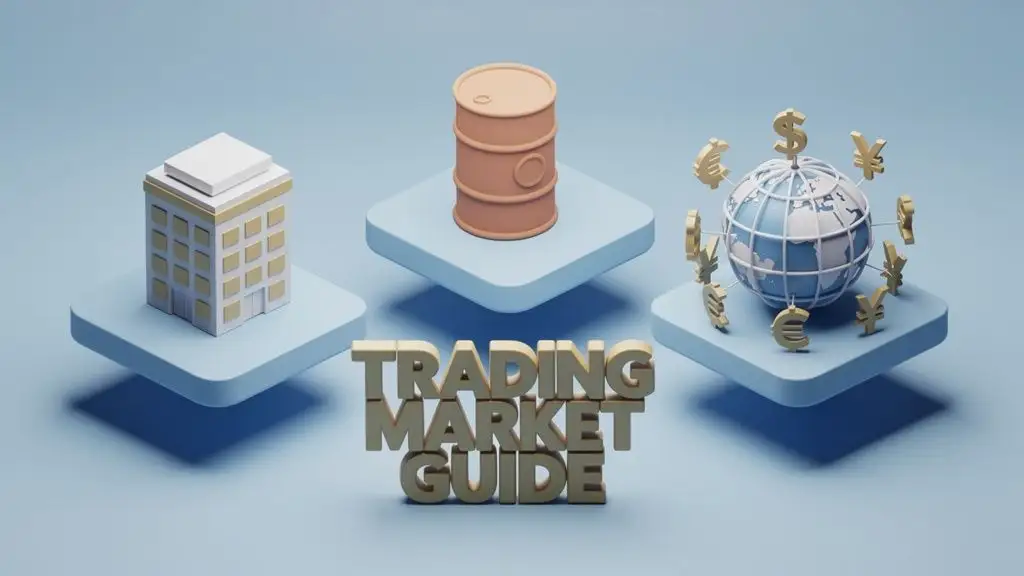
You’ve probably seen the screenshots on social media. Someone turns $500 into $5,000 in a single morning, and suddenly everyone wants to be a trader. But here is the cold reality: trading isn’t a single game. It’s a collection of different battlefields, and if you bring a knife to a gunfight, you’re going to lose your capital.
WikiFXWikiFXWikiFXWikiFXWikiFXWikiFXWikiFXWikiFXWikiFXWikiFX