


Why Most Retail Traders Fail: What the Numbers Reveal
Retail trading data shows why so many traders quit or lose money, from short survival periods and high costs to overconfidence, emotional decisions, and poor risk control.
Original

简体中文
繁體中文
English
Pусский
日本語
ภาษาไทย
Tiếng Việt
Bahasa Indonesia
Español
हिन्दी
Filippiiniläinen
Français
Deutsch
Português
Türkçe
한국어
العربية
اردو




Abstract:It’s the most frustrating scenario in Forex. You are in a trading group or following a signal. The setup is perfect. You and your buddy both hit "Buy" on Gold (XAUUSD) at the exact same moment.

Its the most frustrating scenario in Forex. You are in a trading group or following a signal. The setup is perfect. You and your buddy both hit “Buy” on Gold (XAUUSD) at the exact same moment.
An hour later, he sends a screenshot of a massive profit. You check your phone, expecting to see green numbers, but you staring at a closed trade. You hit your Stop Loss.
How is that possible? Same pair, same time, same direction. Different result.
If you think the market is rigged, you aren't entirely wrong. But it‘s not usually a grand conspiracy; it’s the mechanics of who you are betting against. Lets strip away the marketing fluff and look at why your broker determines your PnL just as much as your strategy does.
First, let's address the elephant in the room. New traders stare at a chart and assume that is “The Price.”
In Forex, there is no single centralized exchange like the New York Stock Exchange. The Forex market is decentralized. It is a massive network of banks, liquidity providers, and brokers.
Because of this, every broker has a slightly different data feed. A difference of 0.5 to 1 pip is normal. However, if you see a difference of 5 or 10 pips, that is where the danger lies.
Here are the three heavyweights that kill your trades on one platform while they survive on another:
You know you start every trade in the negative. That's the spread—the cost of doing business.
But spreads are not standard. Broker A might offer a fixed spread of 2 pips on GBPUSD. Broker B offers a raw spread of 0.1 pips but charges a commission. Broker C claims “low spreads” but widens them to 10 pips the second a major news event (like NFP or CPI) hits the wires.
If your Stop Loss is tight, a sudden widening of the spread on a lower-quality broker will trigger your exit order, even if the actual market price never touched your level. Your friend on a better broker survived the volatility; you got taken out by the mark-up.
Swing traders, listen up. If you hold a position overnight, you pay or earn “swap” (interest rate differential).
Some brokers drastically mark up these swap fees. I have seen instances where holding a trade for three days on one platform costs $5 per lot, while on another platform, it costs $30. If you are trading with small margins, those inflated fees eat your equity, pushing you closer to a margin call.
You see the price at 1.0500. You click buy. By the time your order reaches the broker's server and gets matched, the price is 1.0502.
That 2-pip difference is “slippage.” In a slow-moving market, it shouldn't happen. In a fast market, its inevitable. However, low-quality brokers often have poor technology or intentional delays (called “dealer intervention”) that make you enter at a worse price. You start the race ten meters behind everyone else.
This is the part brokers hate discussing.
There are two main ways a broker handles your trade:
Reliable Market Makers exist and they provide good liquidity. But shady B-Book brokers have a conflict of interest. They might execute “stop hunting”—momentarily skewing their own price feed just enough to trigger a cluster of Stop Losses before price returns to normal.
If your chart shows a massive spike that doesn't exist on any other major feed, you've likely been hunted.
You trade to make money, not to donate it to a bad broker. You need to verify who holds your funds.
Before you commit your hard-earned deposit, you have to do your homework. You need to know if your broker is regulated by a strict authority (like the FCA or ASIC) or if they are operating out of a basement on an unregulated island.
I always tell my students to run a background check. You can use the WikiFX app to look up the brokers regulatory status. It shows you if they have a valid license and, more importantly, if other traders have filed complaints about slippage or withdrawal issues. If you see a low score or a warning regarding their license on WikiFX, walk away. There are too many good brokers out there to risk trading with a bad one.
Don't just copy a trade signal and pray. Understand the battlefield.
The market is hard enough without fighting your own platform. Ensure your broker is your gateway to the market, not your enemy.
Disclaimer: This article is for educational purposes only and does not constitute financial advice. Forex trading involves significant risk and is not suitable for all investors. You could lose some or all of your initial investment.
Disclaimer:
The views in this article only represent the author's personal views, and do not constitute investment advice on this platform. This platform does not guarantee the accuracy, completeness and timeliness of the information in the article, and will not be liable for any loss caused by the use of or reliance on the information in the article.
Retail trading data shows why so many traders quit or lose money, from short survival periods and high costs to overconfidence, emotional decisions, and poor risk control.

The market is a game of psychology, not just economics. Trade what the chart is doing, not what the news anchor is saying.
I see it every single day. A student sends me a screenshot of their trading setup, asking why they got stopped out.
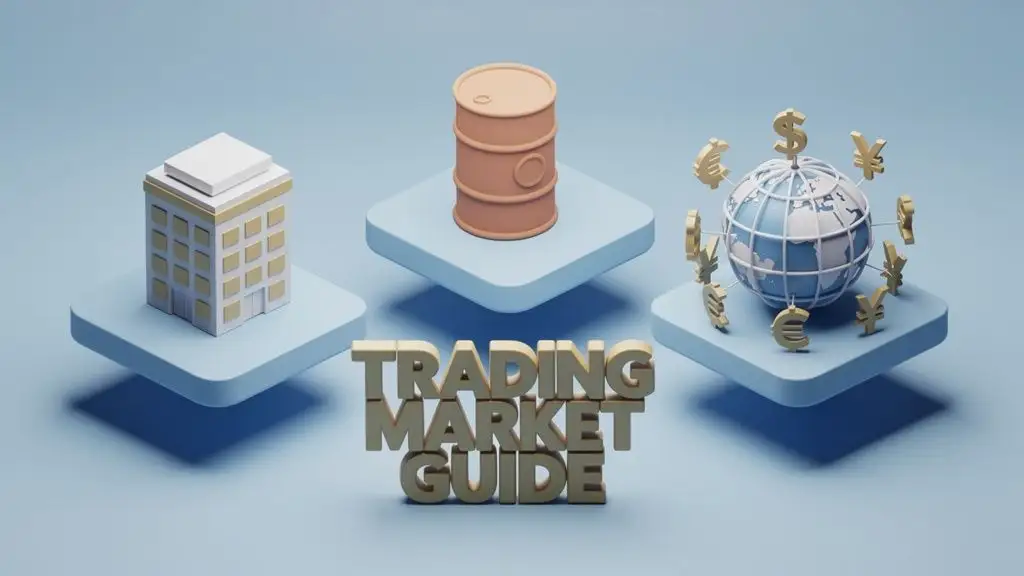
You’ve probably seen the screenshots on social media. Someone turns $500 into $5,000 in a single morning, and suddenly everyone wants to be a trader. But here is the cold reality: trading isn’t a single game. It’s a collection of different battlefields, and if you bring a knife to a gunfight, you’re going to lose your capital.
WikiFXWikiFXWikiFXWikiFXWikiFXWikiFXWikiFXWikiFXWikiFXWikiFX