Abstract:In a defining moment for global commodities markets, gold prices shattered expectations on Tuesday, December 23, surging past the $4,500 per ounce mark. This milestone underscores an extraordinary year for precious metals, with gold registering its 50th record high of 2025. Fuelled by a deteriorating US dollar, escalating geopolitical tensions, and aggressive central bank accumulation, the yellow metal is closing out the year with its strongest performance since 1979.
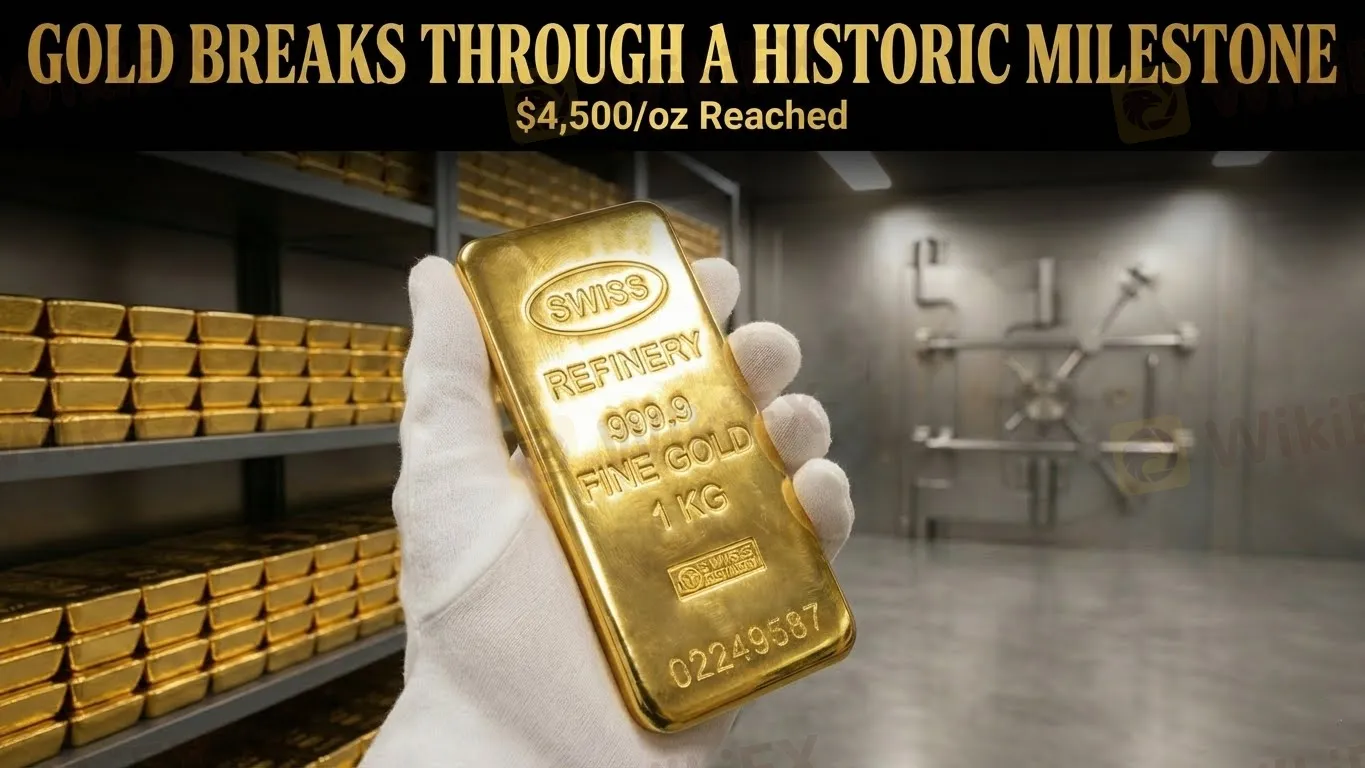
In a defining moment for global commodities markets, gold prices shattered expectations on Tuesday, December 23, surging past the $4,500 per ounce mark. This milestone underscores an extraordinary year for precious metals, with gold registering its 50th record high of 2025. Fuelled by a deteriorating US dollar, escalating geopolitical tensions, and aggressive central bank accumulation, the yellow metal is closing out the year with its strongest performance since 1979.
Spot gold touched an intraday high of $4,497.55 before consolidating, while futures contracts decisively cleared the psychological barrier to trade above $4,530. The rally has propelled bullion to a staggering year-to-date gain of nearly 71%, leaving traditional equities and fixed-income assets trailing significantly.
A Confluence of Macroeconomic Catalysts
The primary engine behind this unprecedented rally is the structural weakness of the US dollar. The greenback is on track to record its steepest annual decline since 2017, having shed approximately 8.2% of its value throughout 2025. This depreciation has made dollar-denominated commodities significantly cheaper for foreign buyers, stoking global demand.
Furthermore, changing expectations regarding Federal Reserve policy have accelerated the flight to real assets. While the Fed's December projections suggested a conservative approach, market consensus is aggressively pricing in at least two additional rate cuts in 2026, following three reductions earlier this year. As interest rates fall, the opportunity cost of holding non-yielding assets like gold decreases, making them increasingly attractive compared to Treasury bonds.
Asset management strategists note that the Federal Reserve is currently navigating a precarious balance between lingering inflation risks and signs of labor market fatigue. This policy uncertainty has further undermined confidence in fiat currencies, prompting institutional capital to flow into hard assets.
Geopolitical Flashpoints Ignite Safe-Haven Flows
Beyond monetary policy, a sharp escalation in geopolitical instability has spurred panic buying. Adding to existing tensions in the Middle East involving Iran and Israel, the focus has shifted to the Western Hemisphere. On December 17, following the seizure of several vessels, President Donald Trump announced a “total and complete blockade” on oil tankers operating in Venezuelan waters.
Market observers emphasize that these developments have transformed gold from a portfolio diversifier into a mandatory strategic hedge. The unpredictability of US foreign policy and the potential for supply chain disruptions have unnerved global investors, driving liquidity toward the safety of bullion.
The Silver and Industrial Metal Surge
Gold is not rallying in isolation; the entire commodities complex is witnessing a “supercycle” resurgence. Silver has outperformed its more expensive cousin, rocketing past $70 per ounce for the first time in history. The metal has gained over 140% this year, driven by a dual-demand shock: its role as a monetary safe haven and its critical utility in the green energy transition, specifically for solar panels and electric vehicles.
Simultaneously, copper prices breached $12,000 per ton on the London Metal Exchange, a record high catalyzed by supply outages and trade friction related to anticipated tariff policies. Platinum and palladium also hit multi-year highs, with platinum reaching levels not seen in 17 years.
Central Bank Accumulation and Institutional Forecasts
Underpinning the speculative fervor is robust physical demand from the official sector. Central banks have continued their aggressive diversification away from the US dollar, purchasing approximately 900 tons of gold in 2025. This marks the fourth consecutive year of above-average net accumulation, with Poland emerging as a notable buyer in recent months.
Major financial institutions have subsequently revised their 2026 outlooks upward. Strategies at Goldman Sachs maintain a bullish stance, projecting gold to hit $4,900 per ounce by late 2026, citing “structurally strong sovereign demand.” J.P. Morgan has set an even more ambitious target of $5,055.
While technical analysts caution that thin liquidity during the holiday season could lead to short-term volatility, the broader consensus remains overwhelmingly positive. With the psychological $5,000 barrier now in sight, market participants believe that once trading volumes normalize in January, the momentum will likely carry the precious metals sector to new, uncharted heights.