Abstract:President Trump signaled the U.S. and China are effectively in a trade war, even as Treasury Secretary Scott Bessent left room to extend a current tariff pause and a Trump–Xi meeting remains on the calendar. After floating a new 100% tariff on Chinese goods from Nov. 1, tensions seesawed amid Chinese sanctions and U.S. threats over soybeans. Some U.S. tariffs (up to ~145%) are paused until Nov. 10, with a Supreme Court test of “reciprocal” tariffs looming. Companies are adapting unevenly—Stellantis expanding in the U.S., while Apple deepens ties in China—suggesting continued market volatility.
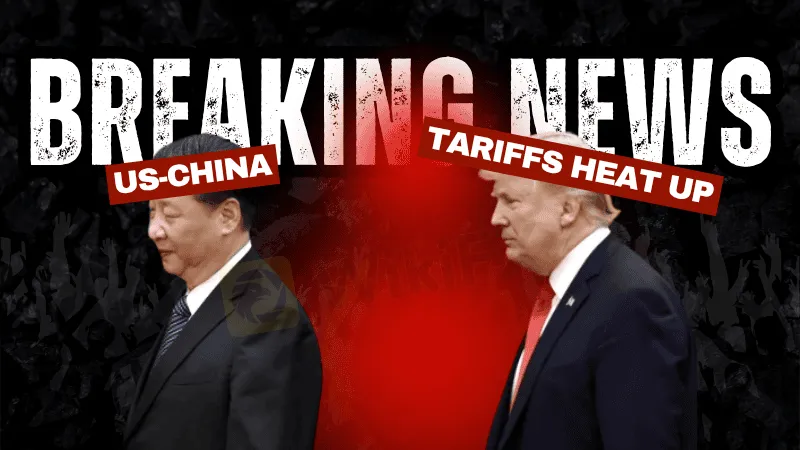
President Trump on Wednesday underscored that tensions with China remain elevated, telling a reporter who asked whether the two countries are headed for a prolonged trade war, “Well, youre in one now.” His remark came even as Treasury Secretary Scott Bessent suggested the existing tariff pause could be extended and while the White House still expects Trump to meet Chinese President Xi Jinping later this month.
The past week has been marked by mixed signals. On Friday, Trump said the U.S. would impose an additional 100% tariff on Chinese goods starting November 1, citing Beijing‘s plan to tighten export controls on rare earth minerals. By Monday, he appeared to strike a softer tone, posting on Truth Social: “Don’t worry about China, it will all be fine! Highly respected President Xi just had a bad moment.” Since then, China has sanctioned U.S. units of a South Korean shipping company, and Trump has threatened further trade curbs in response to Chinas halt of U.S. soybean purchases.
For now, some U.S. tariffs on Chinese imports—nearly 145% in certain categories—are on hold until November 10 as negotiators explore a broader deal. Chinas tariffs on U.S. goods had climbed to roughly 125% before the pause. Economists estimate Americans are bearing more than half of the tariff cost through higher consumer prices, a pass-through that Goldman Sachs says is already visible across several categories.
The policy backdrop could shift again next month when the U.S. Supreme Court hears a challenge to Trump‘s most sweeping “reciprocal” tariffs. Lower courts have ruled against those duties, and a similar outcome at the high court could reshape the administration’s tariff strategy and revenue expectations. Meanwhile, new U.S. duties on kitchen cabinets and vanities took effect October 1, followed by tariffs on timber and certain wood products—including furniture—on October 14.
Corporate responses are diverging. Stellantis announced a $13 billion U.S. investment over the next four years and 5,000 new jobs, positioning itself to offset tariff pressures with domestic capacity. Apple CEO Tim Cook, by contrast, signaled deeper engagement in China during a meeting with Beijings industry minister, pledging to increase investment and expand cooperation despite the prospect of broader U.S. tariffs on foreign-made products.
Taken together, the rhetoric and policy steps point to a hardening stance punctuated by occasional openings for de-escalation. Markets and multinational firms are bracing for continued volatility as legal challenges, new duties, and diplomacy unfold in parallel.