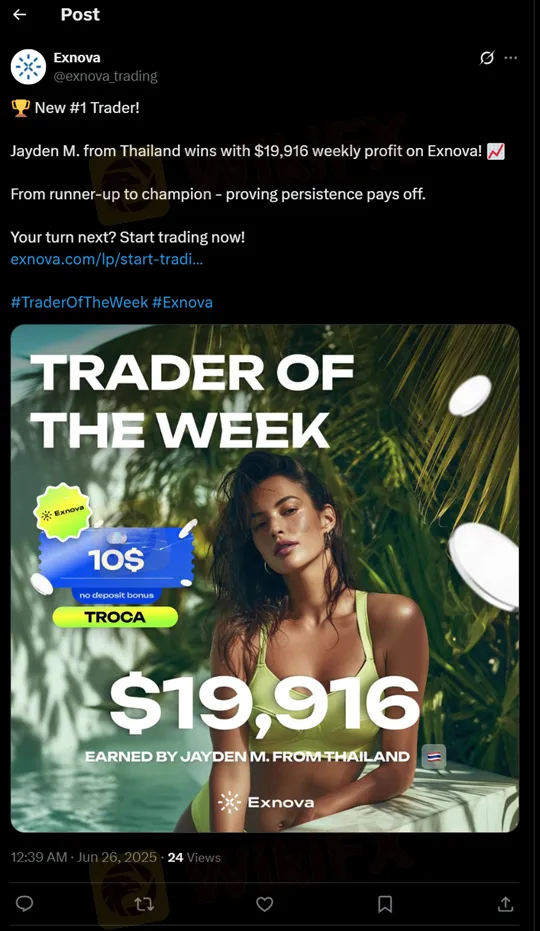
Abstract:Recently, a post on social media caught the attention of many traders — a supposed trader from Thailand allegedly made $19,916 in weekly profits on a trading platform called Exnova. While the claim sounds impressive and may spark curiosity among aspiring investors, it’s crucial to approach such statements with caution and understand the real facts behind the platform.
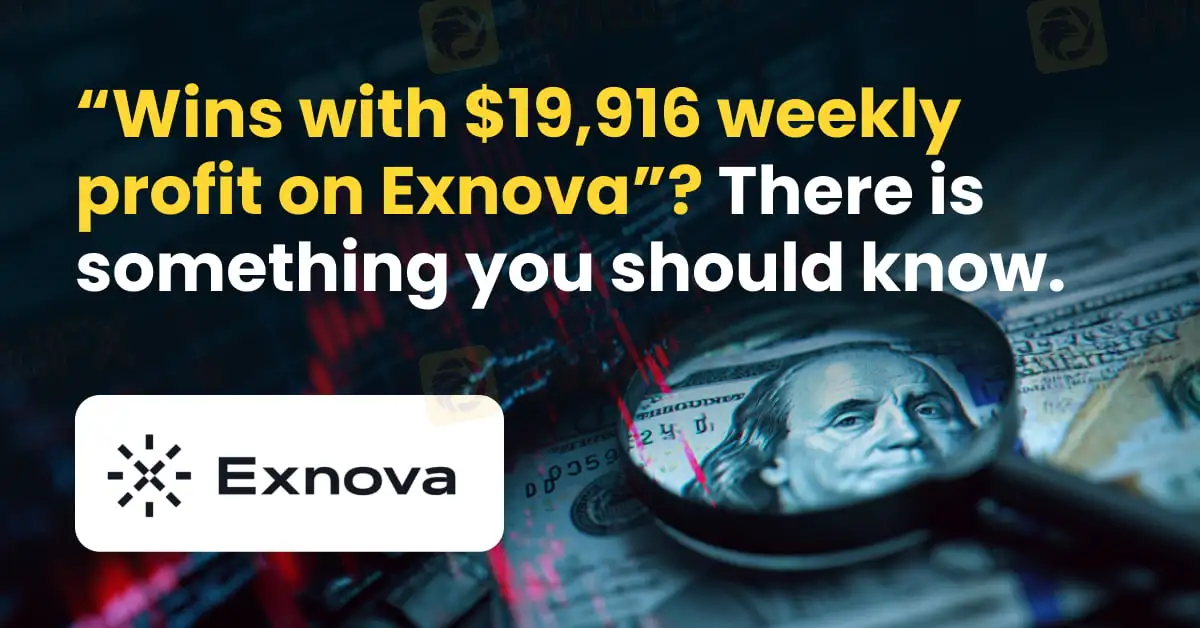
Recently, a post on social media caught the attention of many traders — a supposed trader from Thailand allegedly made $19,916 in weekly profits on a trading platform called Exnova. While the claim sounds impressive and may spark curiosity among aspiring investors, its crucial to approach such statements with caution and understand the real facts behind the platform.
Is the Profit Claim Real?
Let‘s be clear: no verified evidence confirms the trader’s claim. The post appears to be part of a broader promotional effort to attract new users to the platform. Without independent proof or transparent verification, its impossible to know if the profit claim is genuine or just a marketing stunt.
The Truth About Exnova
Before you consider trading on Exnova, there are several red flags that you should not ignore:

1. Unregulated Broker
According to WikiFX, Exnova is unregulated. This means it operates without oversight from any recognized financial authority. Trading with an unregulated broker is extremely risky. If the platform freezes your account, manipulates trades, or refuses withdrawals, you have little to no legal recourse.
2. Low WikiFX Score
Exnova has been given a low score on WikiFX, a global forex broker review platform. Low-scoring brokers typically lack transparency, financial backing, or a strong reputation in the industry — all of which are important indicators of a brokers reliability.
3. Growing Number of Complaints
Recently, WikiFX and other review sites have received multiple complaints against Exnova. Victims have reported serious issues, including:
- Being unable to withdraw funds.
- Lack of response from customer support.
- Alleged manipulation of account balances.

A notable case involves a trader from an Arab country who publicly claimed on social media that Exnova has blocked his withdrawals, leaving him without access to his funds.

While stories of big profits may sound tempting, remember that scam brokers often use fake testimonials to lure in new traders. Its easy to fabricate trading success on social media, but once your money is deposited with an unregulated broker, recovery can be extremely difficult — if not impossible.
Trading can be a profitable venture, but only if done through reputable and regulated brokers. Always research a brokers regulatory status, user feedback, and rating on platforms like WikiFX before you commit your money.
Exnova may promise big wins, but based on the current facts, it carries significant risk. Think twice before signing up.