Abstract:A Brazilian trader's funds are blocked by OX Securities, regulated by ASIC. High-risk trading outside the jurisdiction leaves the victim without $1,538.
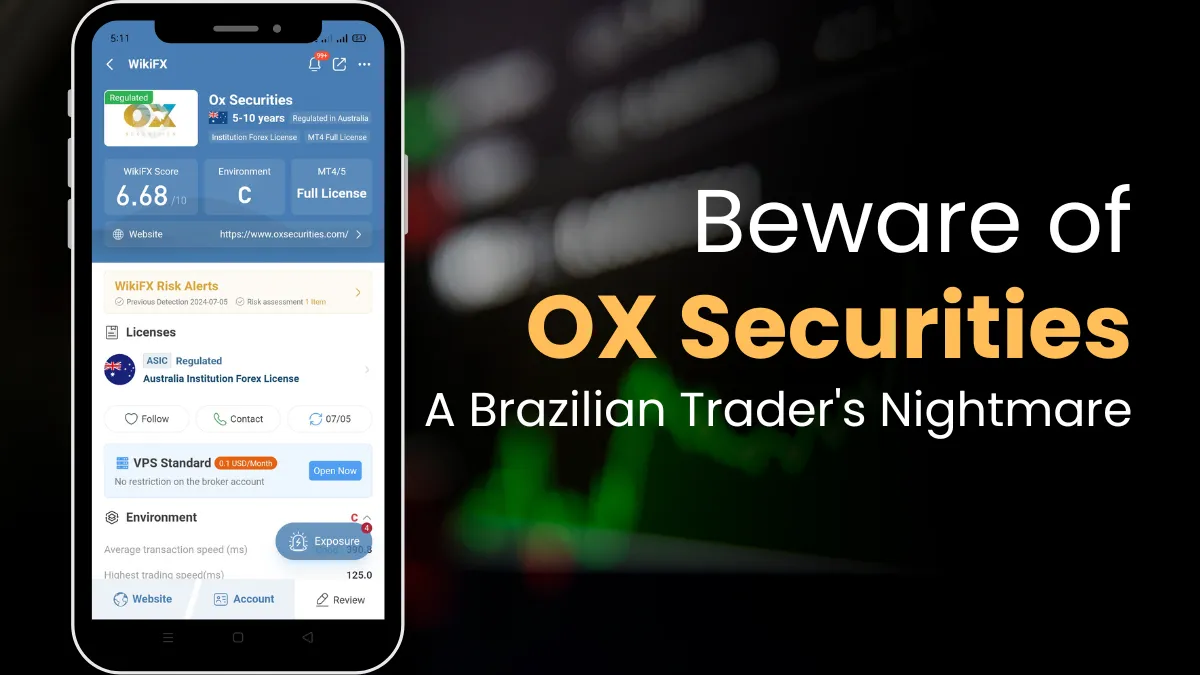
OX Securities, a Contract for Difference (CFD) broker regulated by the Australian Securities and Investment Commission (ASIC), has recently come under intense scrutiny. This case involves a Brazilian trader whose withdrawal of $1,538 was unjustly blocked. Despite its regulated status, trading with OX Securities outside Australias jurisdiction poses significant risks. This troubling scenario underscores the potential pitfalls traders face when dealing with brokers not regulated in their own country.
The Victims Story
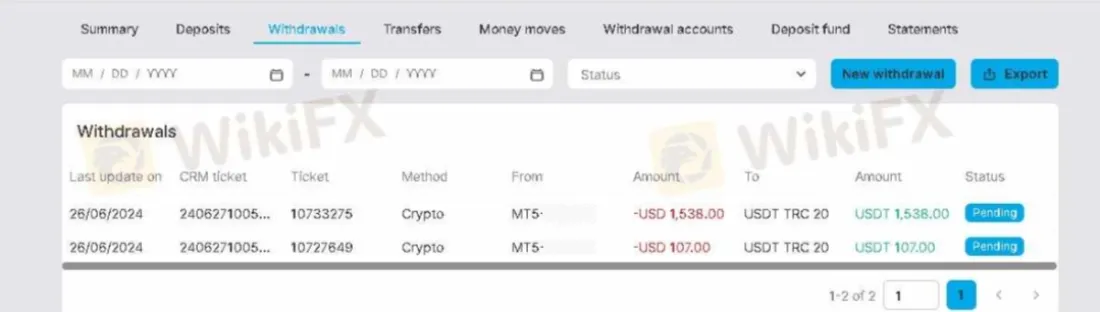
An anonymous trader from Brazil decided to invest with OX Securities, starting with a modest deposit of $99.61. Attracted by the broker‘s extensive offerings in Forex, Crypto, Commodities, and Indices, the trader was initially pleased with the platform’s performance. The support team reassured the trader that crypto withdrawals would be processed within 2 to 4 hours, fostering a sense of trust and confidence. Encouraged by this, the trader engaged in trading activities and impressively amassed a profit of $1,600. However, this initial success soon turned into a nightmare.
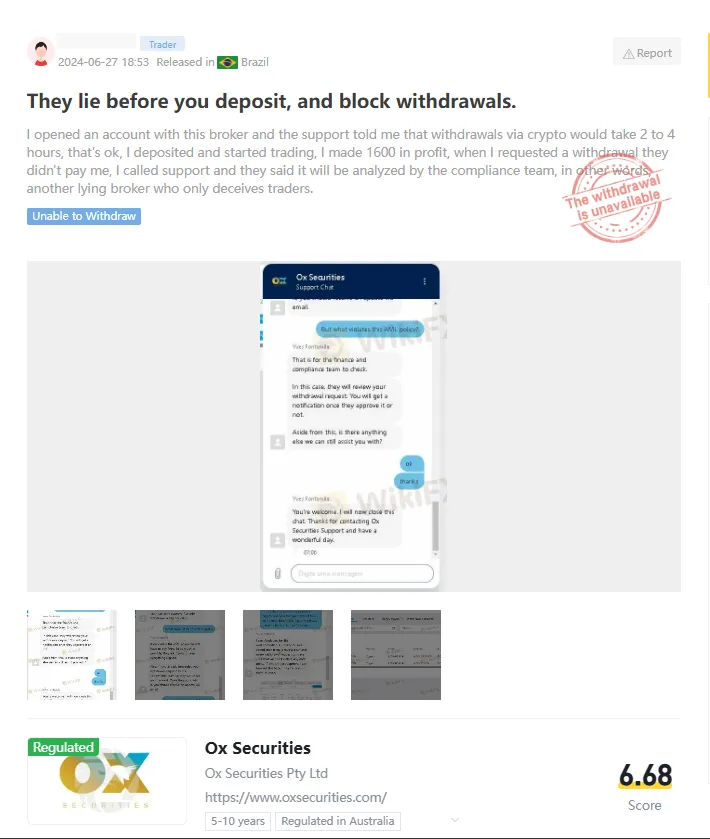
Withdrawal Blocked
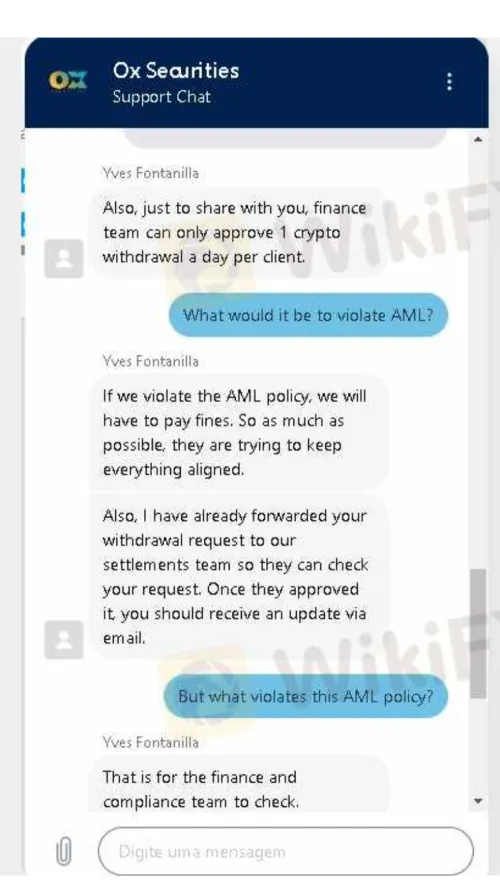
The trader's troubles began when they attempted to withdraw their hard-earned profits. Instead of the smooth transaction they were promised, the trader was informed by OX Securities' support team that the withdrawal request was under compliance review. Despite multiple attempts to seek clarity, the trader received vague responses, with customer support insisting that the finance and compliance team was handling the case. Days turned into weeks, and the trader‘s frustration grew as their funds remained inaccessible. This lack of transparency and prolonged delay in processing the withdrawal raised serious concerns about the broker’s integrity.
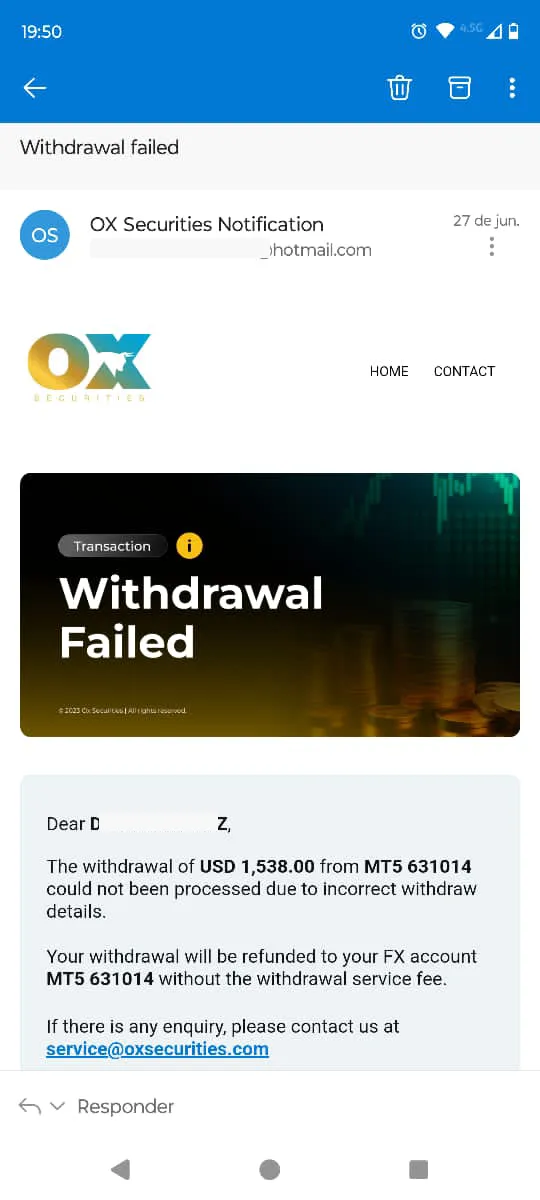
See the case below:
Compliance Issues
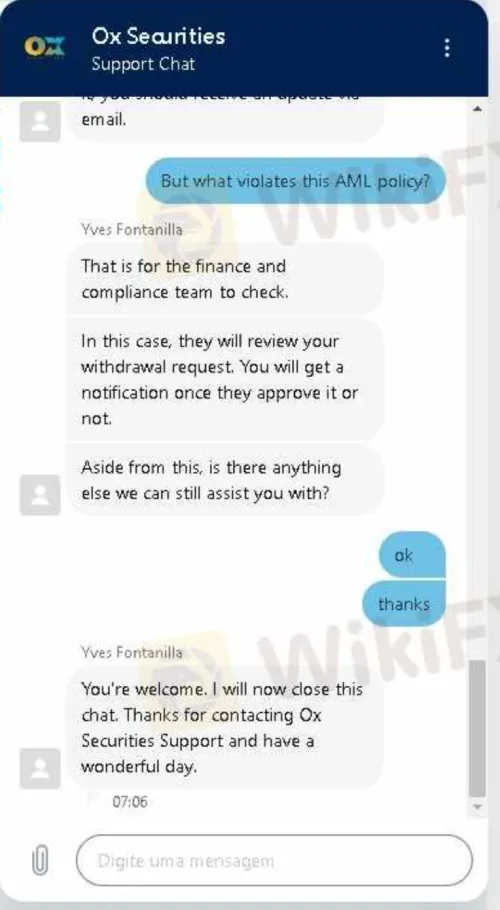
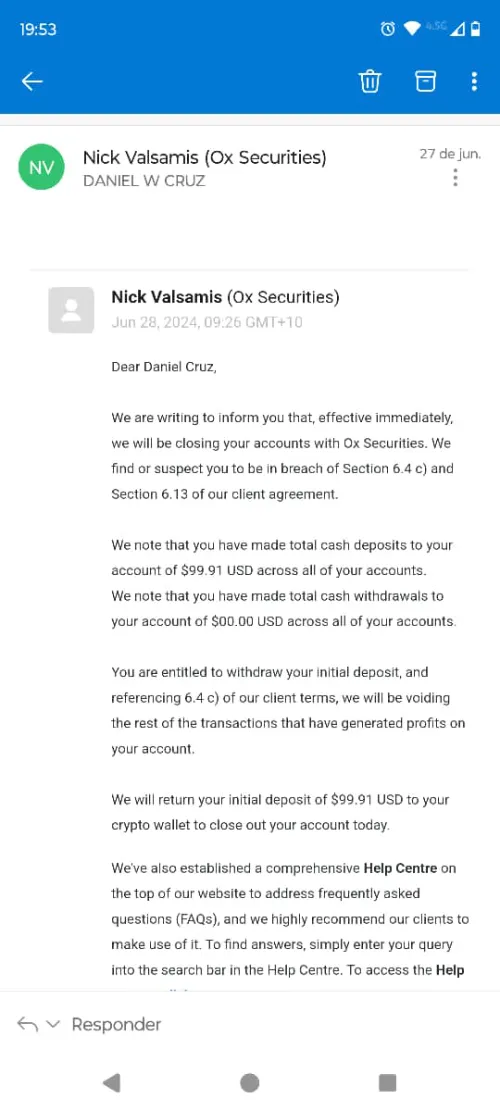
During a chat conversation, Yves Fontanilla, a representative from OX Securities, explained that the withdrawal was blocked due to an alleged violation of the Anti-Money Laundering (AML) policy, specifically citing section 6.13 of their terms and conditions. However, the trader was never given a clear explanation of what this violation entailed. Yves repeatedly insisted that only the finance and compliance team could provide further details, but despite the trader's persistent inquiries, no substantial updates were provided. This evasive behavior from the broker only added to the traders frustration and suspicion.
High-Risk Trading Outside Jurisdiction
This case highlights the inherent risks associated with trading with brokers outside their regulatory jurisdiction. Although OX Securities is regulated by ASIC in Australia, this regulation does not extend to Brazil, leaving the trader without the protections that would typically be available to Australian clients. This situation serves as a critical reminder that traders must be vigilant about the regulatory boundaries and legal protections when engaging with international brokers. The lack of jurisdictional oversight can lead to significant financial vulnerabilities, as evidenced by this trader's unfortunate experience.
Read the complete article below:
Conclusion
Despite OX Securities regulated status, this case serves as a stark reminder of the potential dangers when trading outside a broker's regulatory jurisdiction. Traders should exercise extreme caution and thoroughly research the legal protections available in their own countries before engaging with international brokers. The anonymous trader's ordeal with OX Securities underscores the importance of understanding the risks and ensuring adequate regulatory safeguards are in place before investing significant sums.