World Cup Fever Is Here! Choose your broker like you choose your team
Join WikiFX and investors worldwide in celebrating the excitement of the 2026 FIFA World Cup!
简体中文
繁體中文
English
Pусский
日本語
ภาษาไทย
Tiếng Việt
Bahasa Indonesia
Español
हिन्दी
Filippiiniläinen
Français
Deutsch
Português
Türkçe
한국어
العربية
اردو
Abstract:When it comes to forex trading, beginners should focus on adopting strategies that are suitable for their level of experience. Here are a few recommended trading strategies for novice traders
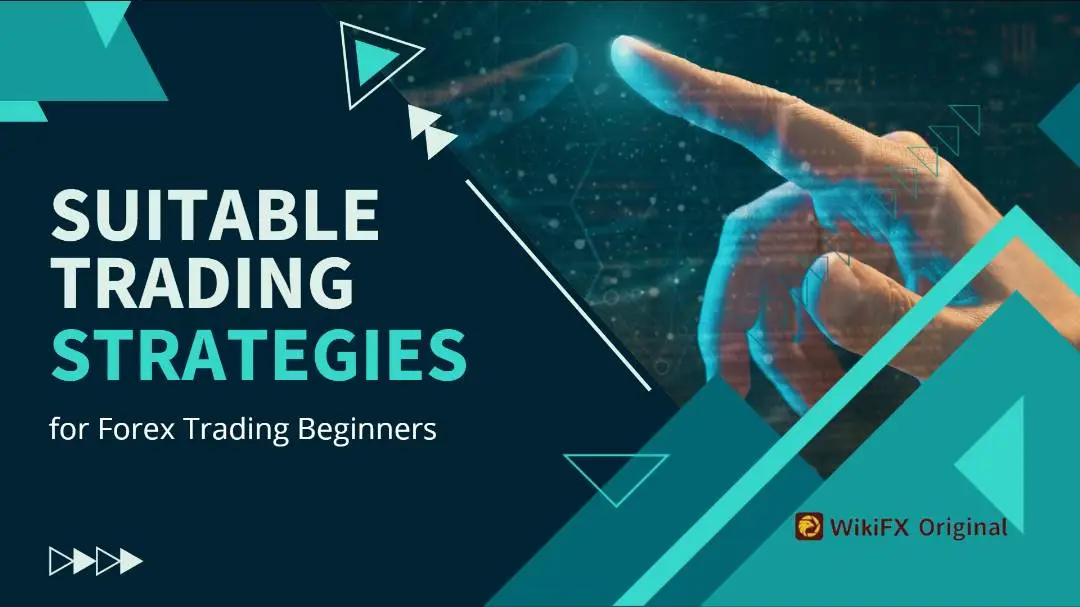
For forex trading beginners, it is recommended to adopt relatively simple and easy-to-understand trading strategies. Here are some common strategies suitable for beginners:
This is a strategy based on market trends. You can observe price movements and indicators like moving averages to identify clear trend directions and then trade in line with the trend. For example, if the market is in an uptrend, you can consider buying, and if the market is in a downtrend, you can consider selling.
This strategy is based on observing price bounces or reversals at specific levels. Support refers to the level where the price stops falling after a decline, while resistance refers to the level where the price stops rising after an uptrend. You can observe these support and resistance levels and trade when the price approaches these levels.
This strategy is suitable for short-term trading, involving buying and selling within a single day. You can choose to focus on a specific currency pair, monitor price fluctuations within shorter time intervals, and trade based on short-term trends. This strategy requires closely monitoring the market and timing entry and exit points appropriately.
If you are a cautious trader, you can adopt a conservative strategy, which involves taking fewer trades and setting smaller stop-loss and profit targets. This helps reduce risk and is easier for beginners to control emotions and manage risk.
Regardless of the chosen strategy, it is advisable for novice traders to engage in thorough learning and practice. Familiarize yourself with market analysis tools, technical indicators, and fundamental analysis methods. Practice with demo accounts or trade with small amounts of capital to gain experience. Additionally, it is important to stay calm and disciplined, set appropriate stop-loss and profit targets, and manage trading risks effectively.


Disclaimer:
The views in this article only represent the author's personal views, and do not constitute investment advice on this platform. This platform does not guarantee the accuracy, completeness and timeliness of the information in the article, and will not be liable for any loss caused by the use of or reliance on the information in the article.

Join WikiFX and investors worldwide in celebrating the excitement of the 2026 FIFA World Cup!

Have you experienced issues with Pepperstone deposit & withdrawal processing? From your experience, do you feel that the Australia-based forex broker causes losses to its clients? Did the brokerage entity freeze your account and give you a margin call? All these trading allegations have been rampant on broker review platforms such as WikiFX. This Pepperstone review article takes a close look at the user complaints, especially in 2026. Additionally, we have given an overview of the regulatory framework under which the brokerage entity operates.

Some broker comparisons end with a confident "go with this one." This is not one of them — and that honesty is exactly what makes it worth reading. Wundersys and tradgrip are two young, offshore-registered brokers that keep popping up in front of beginner traders, often through aggressive online marketing. Both promise the usual buffet: tight spreads, generous leverage, multiple account tiers. And both, according to WikiFX, sit near the very bottom of the safety scale. So instead of crowning a champion, this comparison is really about something more useful: learning to read the warning signs, understanding the small differences that still matter, and knowing why "the better of two risky options" is still a conversation about risk.

If you trade forex from India, Pakistan, Bangladesh, Sri Lanka, or Nepal, you already know the quiet truth that eats into every trader's results: it is not just the market that decides whether you profit — it is the cost of getting in and out of each trade. Shave a couple of dollars off your commission on every lot, multiply it across hundreds of trades a year, and you are looking at the difference between a strategy that works and one that bleeds out slowly. South Asian traders are some of the most cost-conscious in the world, and rightly so. So we pulled the data on the brokers most often recommended for the region, cross-checked every name on WikiFX, and ranked them by the one number that matters most here: what they actually charge you to trade. Before the list, one quick lesson that will make this whole ranking click.