Abstract:The following article describes the risks of high leverage in the forex market and summarizes ways to offset risky leverage levels.
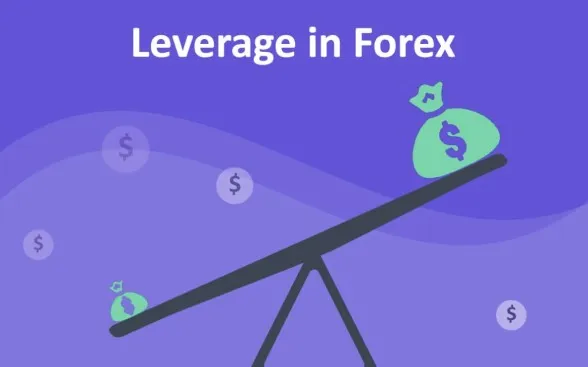
To understand how to trade Forex, we need to have a detailed understanding of the economic and political conditions of each country, the global macroeconomy, and the impact of market volatility on a particular market. But the truth is that it is not usually the economy or global financial fluctuations that confuse Forex traders. Rather, a lack of basic knowledge of how to use leverage is often the root cause of trading losses
According to statistics from the largest forex brokers, most retail forex clients are losing money. The misuse of leverage is often cited as the cause of these losses. The following article describes the risks of high leverage in the forex market and summarizes ways to offset risky leverage levels.
High Leverage Gets Risky
Leverage refers to the process by which an investor borrows money to invest or buy something. In forex trading, funds are usually obtained from a broker. Although Forex traders can borrow large amounts of money based on initial margin requirements, they can make more profit from successful trades.
In the past, many brokers were able to offer high leverage ratios of up to 400:1. This meant that by depositing as little as $250, a trader could control approximately $100,000 in the global foreign exchange market. However, in 2010 financial regulations limited the leverage offered by brokers to U.S. traders to 50:1 (which is still quite large). This means that with the same $250 deposit, a trader can control $12,500 of currency.
How to Choose the Right Level of Leverage?
Before choosing a leverage level, investors should review the generally accepted rules. The three simplest rules of leverage are:
1. Keep the leverage level low;
2. Use a stop loss to reduce downside and protect capital;
3. Limit the capital of each position to 1% to 2% of the total trading capital.
Forex traders should choose the level of leverage they feel most comfortable with. If you are conservative and don't like to take risks, or if you are still learning how to trade currencies, then a lower leverage ratio (e.g. 5:1 or 10:1) may be more appropriate.
Trailing or limited stops provide a reliable way for investors to cut their losses if a trade goes wrong. By limiting stops, investors can ensure that they can continue to learn how to trade currencies, but they can limit potential losses if the trade fails. These stops are also important because they help reduce trading emotions and allow individuals to leave the trading desk without emotion.
Choosing the appropriate level of Forex leverage depends on the trader's experience, risk tolerance and comfort level in operating in the global currency markets. New traders should familiarize themselves with the terminology and remain conservative in learning how to trade and gain experience. Using stops, keeping positions small and limiting the amount of capital in each position is a good start to learning proper leverage management practices.
More Forex Knowledge at WikiFX
WikiFX is a global broker regulatory inquiry app that holds information of over 35,000 forex brokers in collaboration with 30 national regulators. Here, traders can find verified details of a certain forex broker before engaging with them. In addition to this, you can also see more forex news. Visit WikiFX's official website at www.wikifx.com.
Alternatively, download the free WikiFX app on Google Play/App Store.