Global Broker Regulation Inquiry App
About WikiFX


Europe Pays €10 Billion More per Month for Oil Than in 2025

WikiFX
|


Abstract:Import volumes remain broadly stable, but higher crude prices push the EU’s monthly petroleum oil bill up 55.8% year on year. Experts see little prospect of a near-term decline in costs.
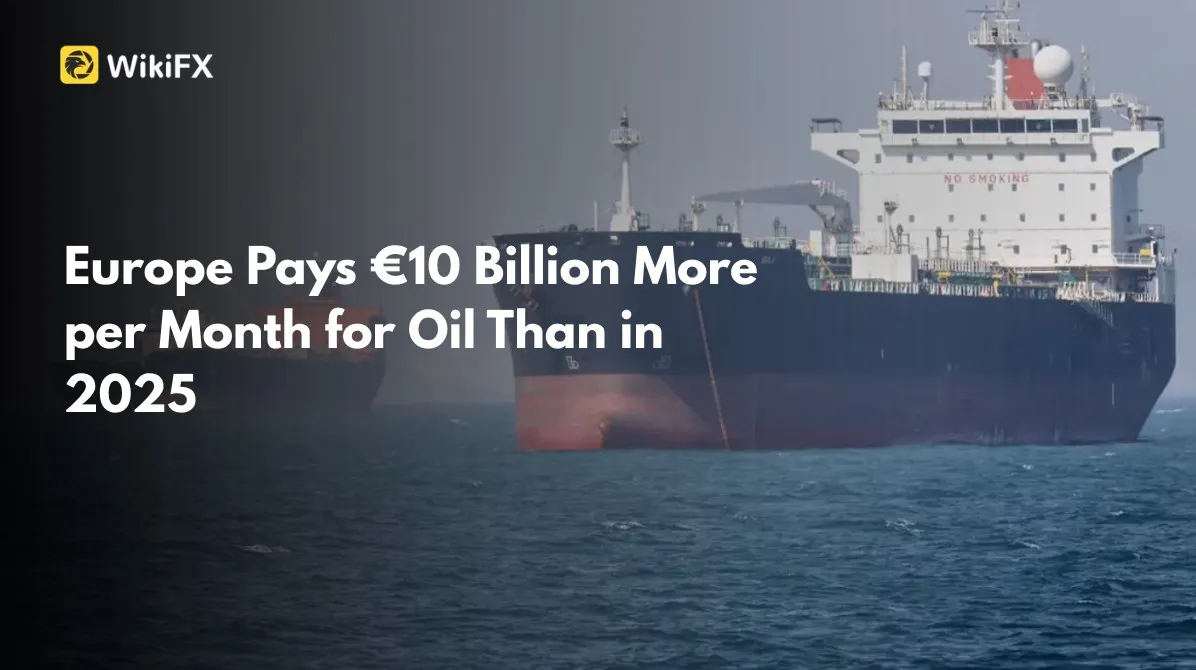
The European Union spent an average of €27.6 billion a month on petroleum oil imports in the second quarter of 2026, up from €17.7 billion a month in 2025, as conflict in the Middle East drove up oil prices and disrupted supplies.
The increase of €9.9 billion a month came despite little change in the amount of oil imported. Monthly volumes rose by just 1.2%, from 36.3 million tonnes to 36.7 million tonnes, according to figures reported by Euronews Business.
 Contents
Why is the bill rising?
The cost of each tonne of imported oil climbed to €750 in the second quarter, compared with €487 a year earlier. At the end of 2025, the figure stood at €435, before rising to €498 in the first quarter of 2026.
Brent crude prices averaged 49.5% higher in the second quarter than the 2025 average, an increase of about $34 per barrel, said Xiaoyi Mu, a professor at the University of Dundee. He pointed to disruption around the Strait of Hormuz, through which around 20% of global oil and oil product exports passed in 2025.
Szymon Kardas, a senior policy fellow at the European Council on Foreign Relations, said the conflict involving the United States, Israel and Iran had disrupted production and supplies to global markets. Tanker traffic through the strait has fluctuated, with some weeks seeing a return to pre-war levels followed by renewed declines.
The disruption comes at a time when Europe remains heavily reliant on imported oil. Eurostat data showed the EUs oil import dependency reached 96.6% in 2024. European buyers are also competing with major consumers in Asia, including China, for available supplies.
Diesel Prices Rise Above 2022 Peak
The increase in import costs has been reflected in fuel prices across Europe. Average EU diesel prices rose from €1.54 per litre in early January to €2.24 at the end of September, exceeding the previous peak of €2.03 recorded in 2022. By October 19, the average had eased to €2.14, still 38% above its level at the start of the year.
Petrol prices followed a similar pattern, climbing from €1.60 per litre in January to €2.10 at the end of September before falling back to €1.99. Filling a 50-litre diesel tank now costs about €107, compared with €77 at the start of the year.
Higher fuel prices are also adding to costs across the wider economy. Mu said households could have less money available for other purchases as more of their income goes towards filling their tanks. He also warned that food, public transport and other everyday goods could become more expensive because diesel is widely used in freight transport and buses.
Kardas said transport, heating, agriculture and energy-intensive manufacturing were likely to feel the pressure first, with higher freight, utility and fuel costs potentially passed on to consumers.
Oil Accounts for Most of the Increase in Energy Spending
The rise in petroleum oil costs accounted for almost all of the increase in the EUs energy import bill. Total spending on energy imports reached €115.6 billion in the second quarter of 2026, up from €81.4 billion a year earlier.
Petroleum oil accounted for €32.4 billion of the €34.2 billion increase. Spending on gas imports rose by €1.6 billion, while coal imports added €400 million. Liquefied natural gas imports fell slightly, by €200 million.
How long will it last?
Experts do not expect the pressure on oil costs to ease quickly. Mu said there was little practical prospect of an end to the conflict, while higher shipping and insurance costs might not yet be fully reflected in the second-quarter figures.
Kardas said conflict-related costs could persist in the coming months and potentially continue into 2027. Wolfgang Eichhammer, a senior expert at the Institute for European Energy and Climate Policy, also warned of a high risk that oil prices would remain elevated or rise further.
Disclaimer:
The views in this article only represent the author's personal views, and do not constitute investment advice on this platform. This platform does not guarantee the accuracy, completeness and timeliness of the information in the article, and will not be liable for any loss caused by the use of or reliance on the information in the article.
WikiFX Broker
Latest News
Seven Detained in an Investment Scam Call Centre Raid
WikiFXUSD/CAD Eyes 1.3982 as a Bank of Canada Hike Buys the Loonie a Week
WikiFXFirst Light News: AI Trade Boosted on Anthropic IPO Filing as Brazil Slumps
WikiFXED Makes Sixth Arrest in Pan-India Digital Arrest Fraud Case Worth INR 30K Crore
WikiFXEMAR MARKETS Review: What Traders Should Know Before Depositing
WikiFXScam Alert! Delhi Police Busts INR 3.9 Crore Cyber Fraud Racket
WikiFXRajan Warns Against Draining Reserves to Defend Rupee as USD/INR Pressures Build
WikiFXUSD/CAD: Can the Bank of Canada and Fed Trigger a Breakout?
WikiFXWhat I Am Watching Today: Copper, NAS100, DAX, USD/JPY
WikiFXAhmedabad Land Broker Allegedly Loses Rs 90.2 Lakh to Facebook 'Friend' in Trust Coin Crypto Scam
WikiFX