

Global Broker Regulation Inquiry App
About WikiFX
English
简体中文
繁體中文
English
Pусский
日本語
ภาษาไทย
Tiếng Việt
Bahasa Indonesia
Español
हिन्दी
Filippiiniläinen
Français
Deutsch
Português
Türkçe
한국어
العربية
اردو


Penang Police Bust Another Scam Ring Targeting China and Taiwan Victims

WikiFX
|


Abstract:Online scam syndicates are increasingly moving away from isolated compounds and into high-end residential properties, making them harder to detect. In Penang, police have dismantled another scam call centre operating from a luxury condominium, highlighting how criminal groups continue to exploit legitimate accommodation to target victims across the region.
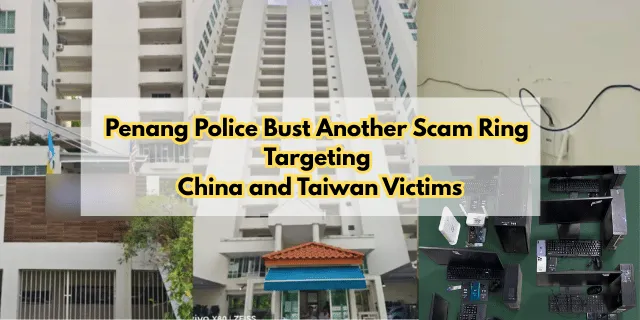
Police from the Northeast Penang District launched a raid on Thursday afternoon after receiving intelligence on suspicious activities at a luxury condominium in Tanjung Bungah.
The operation involved officers from the district's Criminal Investigation Department, Commercial Crime Investigation Department and Tanjung Tokong police station.
During the raid, authorities arrested eight foreign nationals, comprising seven men and one woman, aged between 25 and 37.
Investigators believe the group had converted the condominium unit into a fully functioning scam call centre that had been targeting individuals in China and Taiwan through online communication channels.
 Contents
Equipment Seized During Raid
During the operation, police confiscated numerous computers, mobile phones and communications equipment believed to have been used to facilitate the scam.
The seized devices are expected to undergo forensic examination as investigators work to determine the scale of the operation, identify additional suspects and establish whether the syndicate is linked to other cross border fraud networks.
Authorities are investigating the case under Section 420 of the Penal Code for cheating and Section 120B for criminal conspiracy.
All eight suspects have been remanded for three days, from 31 July to 2 August, to assist with ongoing investigations.
Criminal Syndicates Are Adapting
Rather than relying solely on large compounds commonly associated with scam operations in parts of Southeast Asia, syndicates are increasingly renting apartments, serviced residences and luxury condominiums to reduce suspicion while maintaining access to reliable internet connectivity.
Operating from residential properties also allows criminal groups to blend into ordinary neighbourhoods, making detection more difficult for both property owners and law enforcement agencies.
The strategy has become increasingly common across the region as authorities intensify crackdowns on dedicated scam compounds.
Why Traders Should Pay Attention
Scammers frequently establish contact through social media, messaging platforms or unsolicited phone calls before directing victims towards fake investment opportunities involving forex, cryptocurrencies or high return financial products.
Professional looking websites, convincing customer service representatives and sophisticated communication systems have become standard features of many organised scam operations.
For retail investors, the case reinforces the importance of verifying the legitimacy of any financial opportunity before transferring funds.
Legitimate investment firms do not cold call prospective clients with guaranteed returns, nor do they pressure individuals into making immediate payments through unofficial channels.
Police Continue Crackdown on Foreign Run Scam Networks
Penang police said enforcement efforts against criminal activities involving foreign syndicates will continue, with authorities committed to taking firm action against those found operating illegal scam centres in Malaysia.
As cybercrime becomes increasingly sophisticated, law enforcement agencies across the region are shifting their focus beyond individual scammers to dismantle the operational infrastructure that enables these fraud networks to function.
While technology has made investing more accessible than ever, it has also provided organised criminal groups with new ways to reach potential victims. Verifying the identity of brokers, confirming regulatory licences and remaining sceptical of unsolicited financial offers remain among the most effective defences against increasingly sophisticated online fraud.

Disclaimer:
The views in this article only represent the author's personal views, and do not constitute investment advice on this platform. This platform does not guarantee the accuracy, completeness and timeliness of the information in the article, and will not be liable for any loss caused by the use of or reliance on the information in the article.
WikiFX Broker
Latest News
USD and Commodities Forecasts: Some Maps Changed, Others Just Paid Off
WikiFXFUNDEDNEXT Review: Is This Prop Trading Firm Safe & Trustworthy?
WikiFXMeta Dismantles 3.8 Million Scam Linked Pages
WikiFXU.S. Dollar Rallies As 10-Year Treasury Yield Tests New Highs: Analysis For EUR/USD, GBP/USD, USD/CAD, USD/JPY
WikiFXSTARTRADER Opens Weekend Trading on Two Chinese AI Stocks
WikiFXWikiFX Wishes You a Happy Mid-Autumn Festival
WikiFXJustMarkets Review 2026: Withdrawal Delay & Trade Execution Error Complaints Surface
WikiFXUS Dollar Price Forecast: Strong U.S. Data Lifts DXY as EUR/USD and GBP/USD Weaken
WikiFXAzure Markets Review After Its Licence Page Returned 404
WikiFXXPO FUND Review After the BVI Statement of 16 March 2026
WikiFX