Abstract:India’s 10-year G-sec rose toward 7.1%, approaching a new one-month high as global oil prices surged following renewed geopolitical tensions.
The recent oil price surge following attacks on shipping routes in the Strait of Hormuz and subsequent damage to oil infrastructure has led to fresh inflation concerns in India.
Meanwhile, the weakness in the rupee, which crossed a low of 95 per dollar mark twice in 2026, has added upward pressure on yields.
According to market participants, the constantly elevated energy prices may further the fiscal deficit and make the inflation outlook complicated, making a more cautious tone important in India’s bond markets.
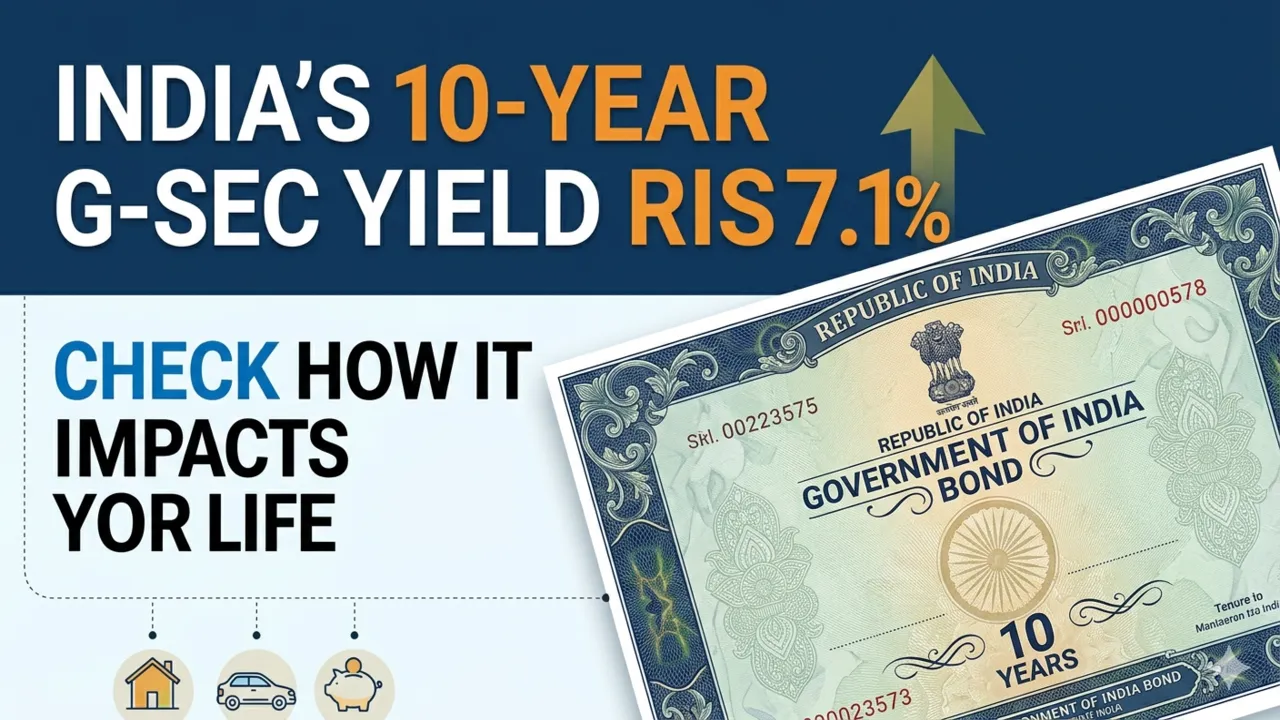
Indias 10-year G-sec rose toward 7.1%, approaching a new one-month high as global oil prices surged following renewed geopolitical tensions.
The recent oil price surge following attacks on shipping routes in the Strait of Hormuz and subsequent damage to oil infrastructure has led to fresh inflation concerns in India.
Meanwhile, the weakness in the rupee, which crossed a low of 95 per dollar mark twice in 2026, has added upward pressure on yields.
According to market participants, the constantly elevated energy prices may further the fiscal deficit and make the inflation outlook complicated, making a more cautious tone important in Indias bond markets.
However, with the government planning to sell a new 10-year bond valued at INR 340 billion this week, the upside gains in the G-sec yield may be capped.
But how does it impact our daily life beyond making new bonds attractive for investments? Lets find out.
Firstly, What‘s the 10-Year G-Sec Yield All About?
The 10-year government bond yield in India reflects the bond’s yield-to-maturity (YTM). It is the annualized return you will receive until maturity by purchasing it at todays price. This is like an effective interest rate on a 10-year government bond, considering the current market price.
Here are the different terms and their meaning in the context of a G-sec yield.
Understanding the yield, which signals borrowing costs, helps you correctly enter government bond return streams.
Effect of 10-Year G-Sec Yield on Your Bond Investments
The rise in 10-year G-Sec yield indicates a potential drop in bond prices, largely due to increased interest rate expectations. This makes new bonds more appealing for investments. If you are an investor buying bonds, this is what you need to understand. A lower yield means more upfront payment for the same coupons. However, it indicates stable times ahead.
Steady Income: Government bonds usually pay fixed coupons every six months, making them attractive for matching business cash requirements.
Benchmark Role: The 10-year G-Sec yield in India impacts borrowing costs over the long term and acts as an important price reference across credit markets.
Safety: These government-backed bonds carry the lowest risk.
The Impact on the Economy
Banks across India use G-Sec yield as a reference for deposits and loans, as a drop can lead to enhanced company expansion. As government bonds remain the safest alternative across this market segment, it ensures predictable returns and stabilizes broader markets. Here are some sectors and how they are influenced by yields.
Exports: The G-Sec yield can lead to currency movements indirectly through interest rate differentials and foreign flows.
Infrastructure: It helps decide the governments borrowing costs for many infrastructure projects such as roads.
Housing - Home loan EMIs fall with a lower yield, igniting real estate purchases.
Conclusion
Think of the 10-year G-Sec yield as a signal, not just a statistic. When it rises, it‘s a cue to be more selective—lock in higher fixed-income returns if you’re investing, but be cautious about taking on new debt as borrowing could get costlier.
For everyday decisions, the takeaway is simple: align your money moves with the direction of yields—lean toward saving and fixed returns when yields are high, and toward borrowing or expansion when they ease.
Explore the latest financial updates, including extensive forex broker exposure exports, on the WikiFX app. Download now!

More Insightful Articles for You