Abstract:Is XLNTrade safe? This review examines its 1.52/10 WikiFX score, unverified status, regulatory warning signals, and withdrawal complaints that are difficult to ignore.
At first glance, XLNTrade presents itself as a multi-asset broker offering access to forex, cryptocurrencies, indices, shares, and commodities. But a closer look at its regulatory profile, third-party risk signals, and user complaint pattern raises far more questions than confidence.
For traders searching for an XLNTrade review, the real issue is not product variety. It is whether the broker shows enough regulatory clarity and operational credibility to justify trust in the first place.
 Contents
WikiFX Score: 1.52/10 and “Unverified” Status
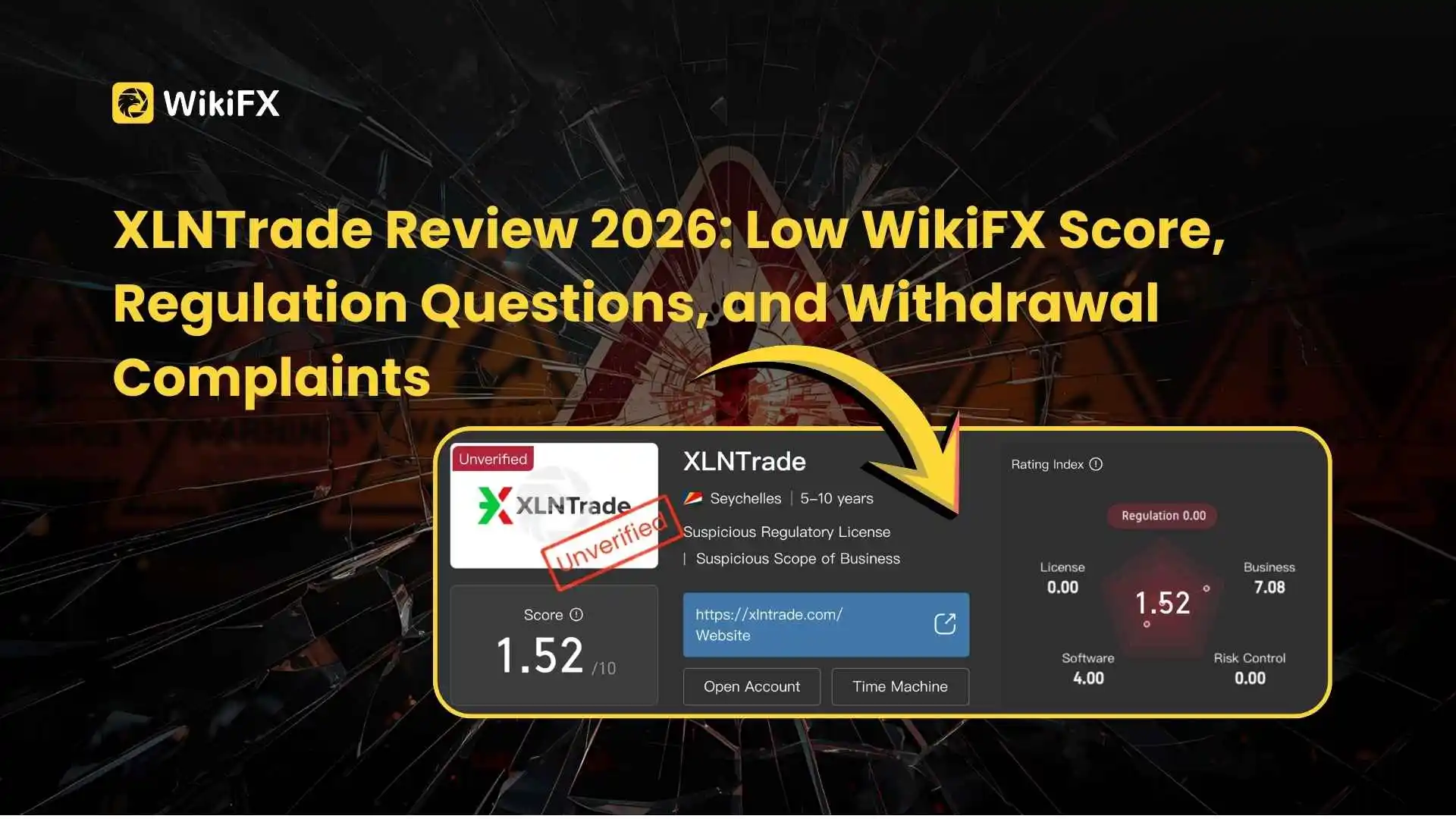
According to the brokers profile on WikiFX, XLNTrade currently holds a WikiFX score of just 1.52 out of 10, a level that immediately places it in the high-risk category. The profile also marks the broker as “Unverified”, while flagging both “Suspicious Regulatory License” and “Suspicious Scope of Business.”
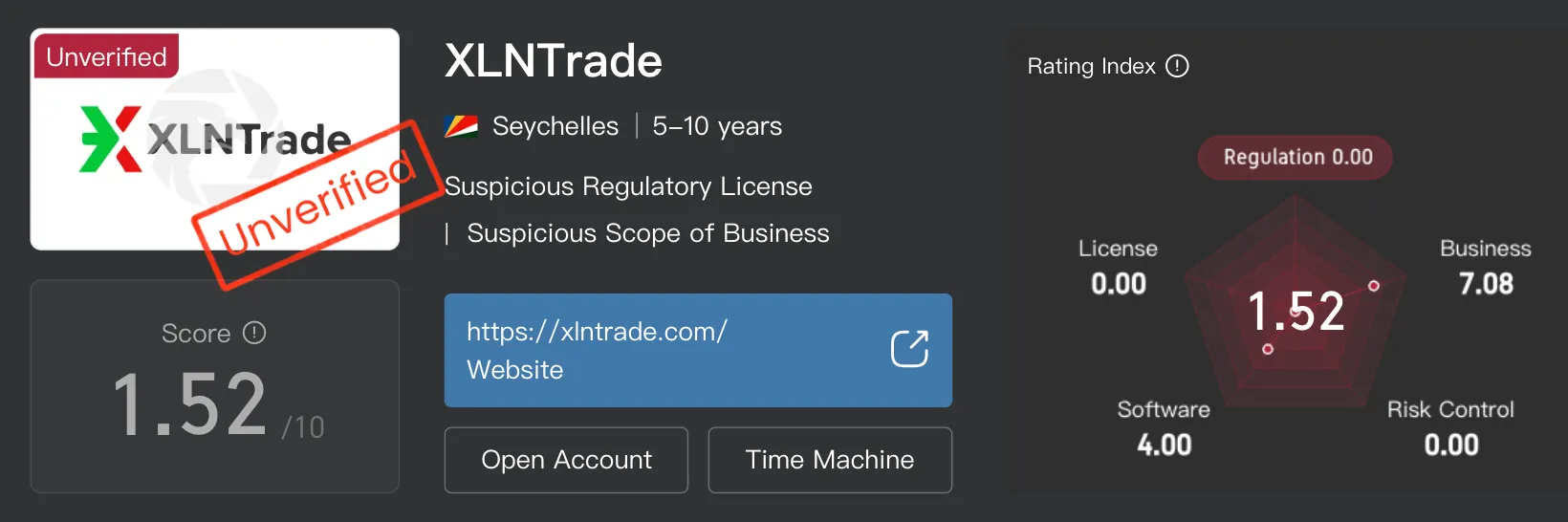
The rating structure shown on WikiFX is also worth noting in detail. Based on the screenshot, XLNTrades License score is 0.00, its Regulation score is 0.00, and its Risk Control score is also 0.00. The only relatively stronger figure shown is Business at 7.08, while Software stands at 4.00. In practice, that means the broker may have some visible market activity, but the regulatory and risk-control side of the profile remains extremely weak.
The brokers full WikiFX page is available here:
https://www.wikifx.com/en/dealer/2444187902.html
For any broker handling deposits and leveraged trading, a score profile like this is a serious warning sign.
No Valid Forex License Found
One of the clearest concerns on the WikiFX profile is the statement that no forex trading license was found. That point matters more than any marketing claim on the brokers homepage.
XLNTrade is shown on WikiFX as connected to Seychelles, with an operating history of around 5–10 years, but the profile does not present a verified and effective forex regulatory status. Instead, the page explicitly warns users to stay cautious due to the brokers low score and lack of valid forex regulation.
For traders in MENA markets, where offshore brokers often market aggressively across borders, that distinction is critical. A broker may look active and established on the surface, but if its license cannot be verified clearly, the risk profile changes immediately.
Regulation Warnings Add More Pressure
The regulatory picture becomes even more uncomfortable when external warning signals are considered.
XLNTrade and entities reportedly associated with it, including names such as Lydya Financial Ltd and Nacional Trade LTD, have been linked to warning activity by multiple regulators. These include:
- Malaysias Securities Commission (SC), which placed XLNTrade on its Investor Alert List as an unauthorised entity not permitted to offer securities or derivatives-related services in Malaysia.
- Spains CNMV, which warned that XLNTrade, including associated names such as Nacional Trade LTD, was not authorised to provide investment services and also highlighted impersonation-related risks.
- Greeces HCMC, which warned that the platform and its operating company did not hold the licenses required to conduct financial business legally within Greece or the wider EU framework.
- Italys CONSOB, which has repeatedly warned the public about unauthorised financial platforms and has used website blocking powers against similar operators under its anti-scam enforcement framework.
Taken together, these signals do not support the image of a broker operating within a clean, transparent regulatory structure. Even without relying on any single warning alone, the overall pattern points to a platform surrounded by serious compliance concerns.
What the Broker Claims to Offer
According to the company summary shown in the materials, XLNTrade markets itself as a CFD broker with access to a relatively broad list of instruments. These include forex, cryptocurrencies, indices, stocks, and commodities. ETFs, bonds, and options appear unavailable.
The leverage conditions displayed in the summary are also aggressive. The broker claims to offer leverage of up to 1:200on forex, gold, silver, and Brent; 1:100 on commodities; 1:100 on CFDs on indices; 1:10 on share CFDs; 1:20 on cryptocurrency CFDs; and 1:5 on cryptocurrencies.
That range may look attractive to high-risk retail traders, but leverage should never be evaluated in isolation. When licensing is unclear, risk control scores are weak, and complaints cluster around withdrawals, high leverage becomes less of an opportunity and more of a danger multiplier.
Complaints Point to the Same Problem: Withdrawals
User feedback appears to be one of the most important pieces of the XLNTrade puzzle.
The complaint screenshots shared in the materials consistently point in the same direction: depositing appears easy, but withdrawing funds becomes difficult or impossible. Several users describe being asked to deposit more money before withdrawals can be processed. Others accuse the company of using excuses, delaying tactics, false promises, or direct account manipulation. Words such as “scam,” “fraudulent company,” and “unable to withdraw” appear repeatedly.
That does not mean every complaint must be taken as proven fact on its own. But when the same operational issue appears again and again, it becomes more than isolated frustration. It becomes a pattern.
And for any broker, withdrawal-related complaints are among the most serious red flags possible.
Is XLNTrade Safe?
Based on the available risk signals, XLNTrade does not appear to qualify as a low-risk broker.
The combination of a 1.52/10 WikiFX score, unverified status, no valid forex license found, zero scores in licensing and risk control, and a visible cluster of withdrawal complaints creates a profile that deserves strong caution rather than confidence.
For traders evaluating whether XLNTrade is safe, the practical conclusion is straightforward: the burden of proof remains on the broker, and current evidence does not support a strong trust case.
Before opening an account with any offshore platform, checking regulatory status, broker–entity relationships, and real user complaint history remains essential. In XLNTrades case, those checks raise enough concerns to justify a highly cautious stance.