

Global Broker Regulation Inquiry App
About WikiFX
English
简体中文
繁體中文
English
Pусский
日本語
ภาษาไทย
Tiếng Việt
Bahasa Indonesia
Español
हिन्दी
Filippiiniläinen
Français
Deutsch
Português
Türkçe
한국어
العربية
اردو


China Records $1.2T Surplus as Trade Flows Pivot Away from Dollar Hegemony

WikiFX
|


Abstract:Defying expectations of a trade contraction under US protectionism, China has posted a record $1.2 trillion trade surplus by pivoting exports to the Global South. This shift is accelerating the internationalization of the Yuan, with cross-border RMB settlements now exceeding 50%.
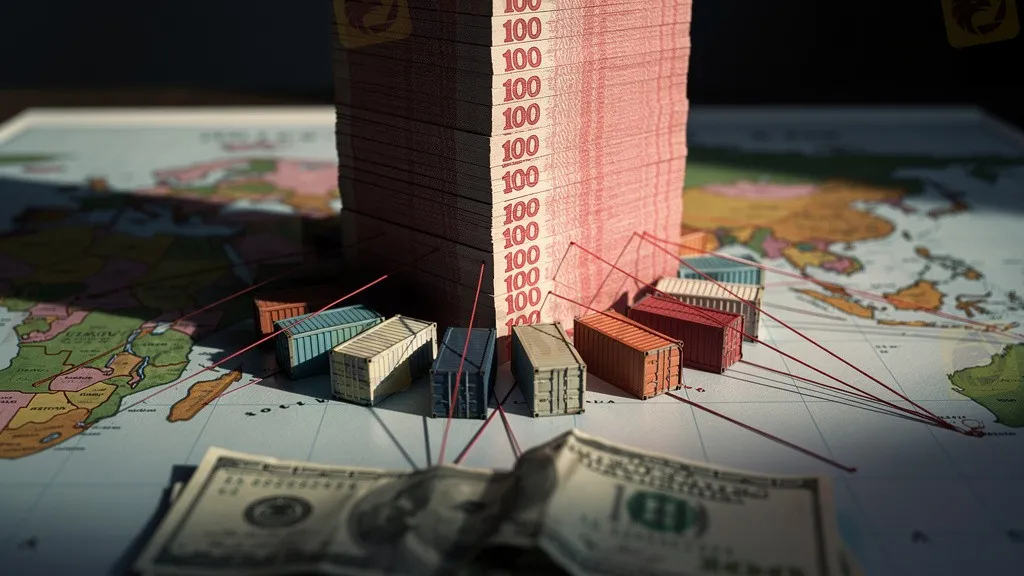
Despite aggressive tariff policies and “America First” protectionism, Chinas trade machine has not only survived but expanded, posting a record $1.2 trillion trade surplus in 2025. This divergence underscores a significant structural shift in global forex flows: while US-China direct trade shrinks, China is successfully rerouting its manufacturing capacity to the Global South and Europe.
The Great Pivot
Data reveals that while Chinese exports to the US plummeted by 20%, this was more than offset by surges elsewhere:
- Africa: +25.8%
- Southeast Asia: +13.4%
- European Union: +8.4%
“China has effectively positioned itself as the 'reliable partner' amidst US policy volatility,” noted Derek Irwin of Allspring Global Investments. This sentiment was bolstered by recent diplomatic visits from UK and Canadian leadership, signaling a pragmatic approach to trade ties despite political friction.
Yuan Internationalization Accelerates
The breakdown of traditional US-centric trade routes is accelerating the usage of the Renminbi (RMB). According to the latest data from the PBOC, over 50% of China's cross-border transactions are now settled in RMB, a figure that was near zero just 15 years ago.
This trend is further supported by capital market flows. Foreign inflows into China hit $100 billion in December, and foreign exchange reserves have climbed to a decade-high of $3.36 trillion.
For FX traders, the implication is a gradual decoupling of the Yuan from pure USD correlation. As the RMB becomes more deeply embedded in the trade invoices of the Global South (Latin America, Africa, SE Asia), its value will increasingly reflect a trade-weighted basket rather than bilateral US tensions.
While the USD remains dominant, the “weaponization” of the dollar via sanctions and tariffs appears to be inadvertently fast-tracking the development of a multipolar currency system.
Disclaimer:
The views in this article only represent the author's personal views, and do not constitute investment advice on this platform. This platform does not guarantee the accuracy, completeness and timeliness of the information in the article, and will not be liable for any loss caused by the use of or reliance on the information in the article.
WikiFX Broker
Latest News
Swiss Franc weakens as US Dollar strengthens on Fed rate hike bets
WikiFXAustralian Dollar posts fresh three-month high amid hawkish RBA prospects
WikiFXThai Baht: Recent THB gains face headwinds – OCBC
WikiFXAustralian Dollar rides thin-trading lift as Fed test looms
WikiFXBlackwell Global UK Loss Widens as Revenue Falls 37%
WikiFXLiquid Network Suffers from a US$320 Million Bitcoin Hack
WikiFXOANDA Is Shutting Down MT4 Trading by 25 September 2026
WikiFXVietnam: Inflation and trade trends shape VND – Commerzbank
WikiFXAustralian Dollar drifts higher above 0.7200 despite as strong US NFP
WikiFXBritish Pound climbs as USD fades, Hormuz risk keeps Fed in play
WikiFX