Abstract:USD1, a U.S. dollar–pegged stablecoin reportedly backed by interests aligned with former U.S. President Donald Trump, has overtaken PayPal’s PYUSD in market capitalization, marking a notable shift in the rapidly evolving stablecoin landscape.
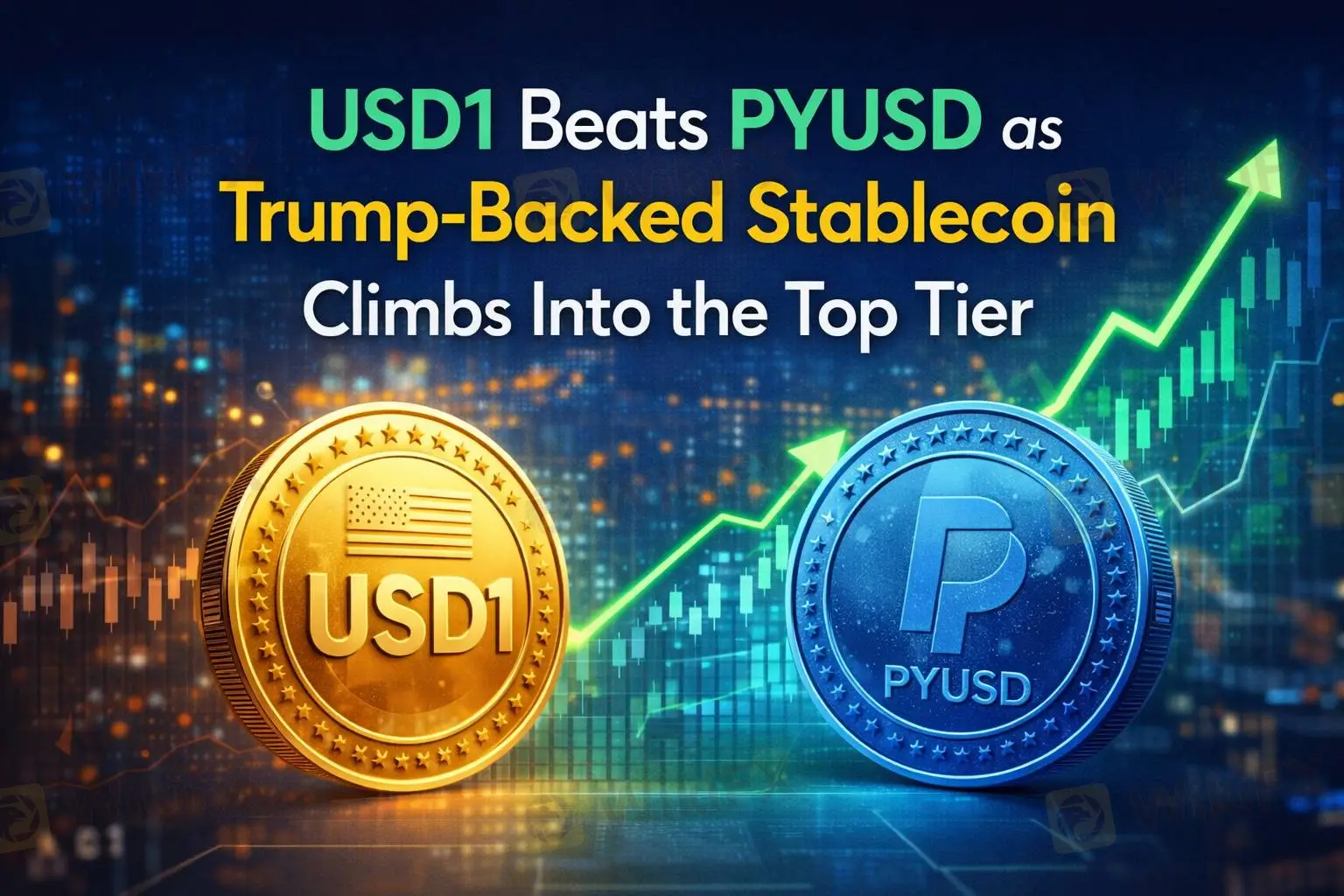
USD1, a U.S. dollar–pegged stablecoin reportedly backed by interests aligned with former U.S. President Donald Trump, has overtaken PayPals PYUSD in market capitalization, marking a notable shift in the rapidly evolving stablecoin landscape.
The milestone places USD1 among the top tier of stablecoins, highlighting how emerging issuers can gain traction through targeted use cases, expanding exchange support, and favorable regulatory momentum—despite competition from established fintech giants.
 Contents
Lending Demand Drives USD1 Growth
One of the primary drivers behind USD1s rapid rise has been its increasing adoption in crypto lending and yield-generation platforms. Market participants have favored USD1 for short-term liquidity provisioning and collateralized lending, attracted by competitive incentives and growing on-chain activity.
As decentralized finance (DeFi) protocols and centralized platforms seek diversified stablecoin exposure, USD1 has benefited from being integrated early into lending pools and structured products, boosting both circulation and transaction volume.
Exchange Listings Expand Liquidity
USD1s expansion has also been supported by broader exchange adoption. Multiple centralized and decentralized trading venues have added USD1 trading pairs, improving liquidity and accessibility for both retail and institutional users.
This increased visibility has allowed USD1 to compete directly with more established stablecoins, including PYUSD, which—despite PayPals brand strength—has seen slower adoption beyond payments-focused use cases.
Regulatory Shifts Favor New Entrants
Regulatory developments in the United States have played a key role in shaping the competitive environment. As lawmakers move toward clearer frameworks for stablecoin issuance, reserve management, and compliance, newer projects like USD1 have positioned themselves to align closely with anticipated regulatory standards.
Analysts note that regulatory clarity may be benefiting agile issuers that can adapt quickly, while larger fintech-backed stablecoins may face longer internal approval cycles and stricter risk controls.
PYUSD Faces Adoption Challenges
PayPal launched PYUSD with the goal of bridging traditional payments and blockchain-based finance. However, adoption has remained relatively concentrated within PayPals ecosystem, limiting its utility in broader DeFi and crypto trading markets.
While PYUSD continues to play a role in regulated digital payments, its slower expansion into lending, trading, and on-chain liquidity has allowed USD1 to surpass it in market capitalization.
A Shifting Stablecoin Landscape
USD1s ascent underscores a broader trend in the stablecoin sector: market share is increasingly driven by utility, liquidity, and regulatory positioning rather than brand recognition alone. As stablecoins become core infrastructure for trading, lending, and cross-border settlement, issuers that can integrate deeply into crypto-native use cases may gain a decisive advantage.
Outlook
With lending demand remaining strong and regulatory clarity improving, USD1s momentum could continue in the near term. However, competition among stablecoins remains intense, particularly as established players respond by expanding use cases and strengthening partnerships.
For now, USD1s rise past PYUSD highlights how quickly the balance of power can shift in the stablecoin market—reshaping assumptions about who can compete at the top of the digital dollar economy.