Abstract:In today’s fast-moving online trading world, regulation and safety are more important than ever. TradeFW claims to be a regulated broker, but a closer look at its licence and operations reveals a more complex picture.
In todays fast-moving online trading world, regulation and safety are more important than ever. TradeFW claims to be a regulated broker, but a closer look at its licence and operations reveals a more complex picture.
In online trading, choosing the right broker can make the difference between protecting your money and losing it. TradeFW presents itself as a regulated company, but a deeper review raises serious questions about its credibility.
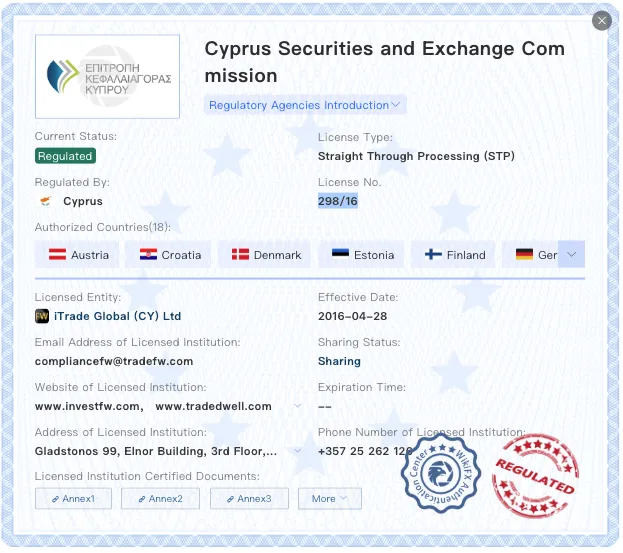
The broker is licensed by the Cyprus Securities and Exchange Commission (CySEC) under licence number 298/16, operating with a Straight Through Processing (STP) model. While CySEC is a recognised regulator within the EU, its rules and investor protections are not as strict as those enforced by top-tier regulators such as the UK‘s Financial Conduct Authority (FCA) or Australia’s Securities and Investments Commission (ASIC).
Concerns about TradeFW grew after WikiFX, an independent broker review platform, carried out an on-site check at the companys official address in Cyprus. WikiFX, which tracks licences from over 40 global regulators and collects user complaints, reported that its team could not find the company at the address it had registered. This raises serious doubts about whether TradeFW has a real office there. (Full report: https://www.wikifx.com/en/survey/821406e8f5.html)
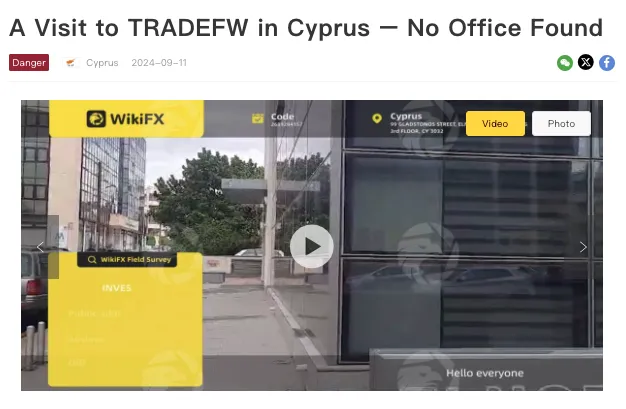
The absence of a verifiable office presence undermines both transparency and accountability. If a broker cannot be physically located at its registered address, it becomes significantly harder for regulators or affected investors to resolve disputes or take enforcement action in the event of misconduct.
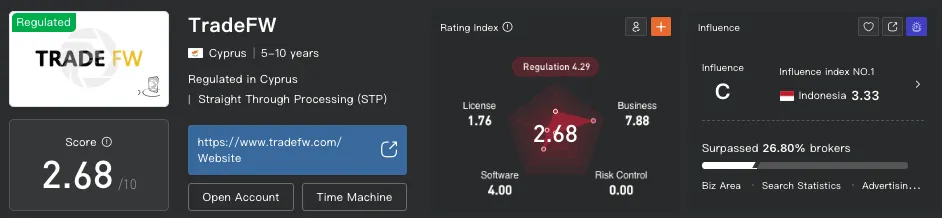
WikiFX assigns trust scores to brokers based on a combination of factors, including regulatory standing, operational transparency, and user feedback. While TradeFW is technically regulated by CySEC, the combination of concerns about its physical presence and the limitations of CySEC‘s supervisory framework has raised doubts among many market watchers about the broker’s overall reliability. Investors are strongly advised to exercise caution and carry out comprehensive due diligence before engaging with any broker, particularly those operating under regulatory authorities perceived to have lighter oversight. Assessing a brokers full regulatory profile, operational transparency, and verifiable presence can help mitigate risks in an industry where unregulated or loosely regulated entities have caused significant financial harm.