


UK Retail Sales July 2026 Fall 0.5%: What the Result Means for GBP
UK retail sales fell 0.5% in July 2026, while the three-month measure rose 1.1%. See the ONS details and what the mixed result may mean for GBP.
Original

简体中文
繁體中文
English
Pусский
日本語
ภาษาไทย
Tiếng Việt
Bahasa Indonesia
Español
हिन्दी
Filippiiniläinen
Français
Deutsch
Português
Türkçe
한국어
العربية
اردو




Abstract:Understanding who takes part in the financial markets is key to knowing how and why prices move. Knowing who these people or organisations are can help investors feel more confident and better understand the effects of global news on market movements.

Understanding who takes part in the financial markets is key to knowing how and why prices move. Each trade, whether big or small, happens because someone is buying while someone else is selling. Knowing who these people or organisations are can help investors feel more confident and better understand the effects of global news on market movements.

One of the largest and most powerful groups in the market is the interbank market, made up of major commercial banks and securities firms. These institutions are responsible for around 40% to 50% of all foreign exchange trading worldwide. Because they trade such large volumes, they benefit from the lowest transaction costs, or “spreads”, in the market. Their size and influence put them at the top of the financial trading world.
Another major player is the central bank. Central banks manage a countrys money supply, interest rates, and inflation. They also hold large amounts of foreign currency, which they use to keep their local economies stable. Their involvement in the market is not for profit but for national economic stability, which gives them a strong presence in the foreign exchange world.
Investment management companies also play a key role. These firms handle large amounts of money on behalf of clients, such as individuals, companies, or pension funds. When they invest in foreign assets, they need to buy and sell different currencies to complete those deals. While part of their activity is based on practical needs, many also trade currencies to take advantage of market trends and try to earn profits.
The market also includes a growing number of retail traders, that is, individual investors who use banks or online brokers to make trades. Their trades are usually small and focused on speculation rather than actual currency exchange. They do not take physical delivery of money but instead try to earn from price changes. Even though they are smaller players, their combined actions can still affect the market, especially during periods of high activity.
Finally, there are non-bank foreign exchange companies. These firms help people and businesses move money across borders or exchange currencies for everyday needs. Unlike banks, they do not trade for speculation. Their customers often need to receive or send money in different currencies, so the transactions involve the physical delivery of funds. They serve an important role, especially in global trade and personal finance.
Each of these groups, from powerful banks to everyday individuals, plays a unique part in keeping the financial markets running. By understanding who they are and what drives them, traders and investors can make more informed decisions and better navigate the complex world of finance.

Disclaimer:
The views in this article only represent the author's personal views, and do not constitute investment advice on this platform. This platform does not guarantee the accuracy, completeness and timeliness of the information in the article, and will not be liable for any loss caused by the use of or reliance on the information in the article.
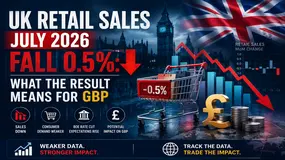
UK retail sales fell 0.5% in July 2026, while the three-month measure rose 1.1%. See the ONS details and what the mixed result may mean for GBP.
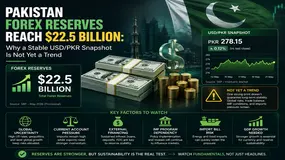
Pakistan forex reserves stood at $22.506 billion on 13 August 2026, while the SBP dashboard showed a USD/PKR mark to market rate of 277.5713 on 20 August. This article separates the SBP forex reserves facts from predictions about the Pakistan rupee and the forex market Pakistan.
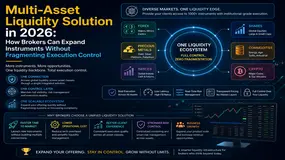
A multi-asset liquidity solution can help a broker support FX, CFDs, commodities, and indices through a more unified operating model. But adding asset classes can also create fragmented symbols, pricing, routing, margin rules, records, and client messages if controls are not designed first. This 2026 guide explains how a multi asset liquidity provider, forex CFD liquidity setup, commodity liquidity provider, and indices liquidity provider fit into a broker-owned execution service. It outlines the due-diligence questions, shared-control model, cost drivers, and 90-day implementation plan that help teams expand without making the execution chain harder to explain. The aim is not to promise deeper liquidity or better trading outcomes. It is to create evidence that a broker can supervise market access, trace order events, reconcile costs, and communicate consistently to the relevant clients when conditions are difficult.

Gold surged above $4,500 after the US Treasury expanded its purchases of longer-dated government bonds, pushing yields and the dollar lower. But this was not debt forgiveness or Federal Reserve money printing—it was a liquidity operation that exposed a much bigger fear: America may be finding it increasingly difficult to live with market-driven interest rates.
WikiFXWikiFXWikiFXWikiFXWikiFXWikiFXWikiFXWikiFXWikiFXWikiFX