FXGT Review of an Indian User's USD 1089.37 Profit Dispute
FXGT review of an India-labelled profit dispute, with complaint screenshots, a transaction-date mismatch, entity disclosures and evidence limits.
Original

简体中文
繁體中文
English
Pусский
日本語
ภาษาไทย
Tiếng Việt
Bahasa Indonesia
Español
हिन्दी
Filippiiniläinen
Français
Deutsch
Português
Türkçe
한국어
العربية
اردو




Abstract:Silver has once again become the center of attention in global financial markets.
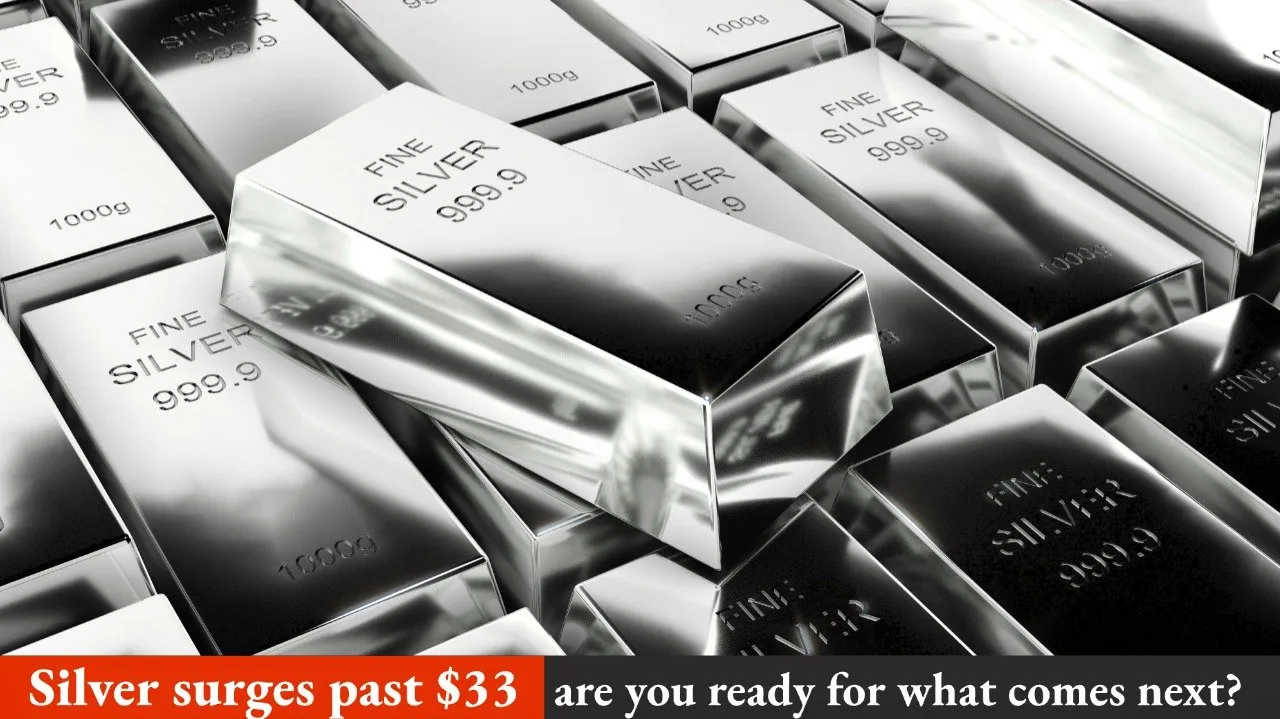
On April 21, spot silver prices climbed sharply and briefly surpassed the $33 per ounce mark, continuing a powerful rally from the previous week. This breakout not only drew the attention of traders and analysts but also raised an important question for long-term investors: Is silver entering a new bullish phase, or is this another short-lived spike?
To understand whats happening—and what to do next—we need to look at the factors driving the price, why silver tends to swing so dramatically, and what challenges lie ahead for investors.
Silver‘s latest jump wasn’t entirely unexpected. Several macroeconomic forces have been building momentum in recent months, and they all seem to be converging at the same time.
One of the biggest drivers is growing global uncertainty. Concerns over inflation, interest rates, and geopolitical tensions have made investors more cautious. In such times, precious metals like silver and gold often serve as a hedge—a place to store value when traditional markets feel shaky.
Another major factor is the declining strength of the U.S. dollar. The Dollar Index (DXY) recently dropped to its lowest point since early 2022, making dollar-denominated assets like silver more attractive to international buyers. Lower yields on U.S. Treasuries are also playing a role, signaling that investors are moving money out of government bonds and into safer, inflation-resistant assets.
From a technical perspective, silver has shown clear signs of strength. It recovered sharply from its recent low near $28 per ounce and formed a classic V-shaped reversal pattern. The $28.33 level has become a key support zone, and the push toward $33 indicates strong buyer interest. Technical indicators such as the MACD show a bullish crossover, and RSI levels suggest further upside without yet reaching overbought territory.
Unlike gold, silver wears two hats. Its both a precious metal and an industrial commodity. That makes it more sensitive to economic shifts than gold, and it also explains why silver is usually more volatile.
When the global economy looks strong, silver gets a boost from rising demand in industries like solar energy, electronics, and electric vehicles. When things look uncertain, silver benefits from its safe-haven appeal. The result is a metal that reacts to almost everything—from factory output data in China to interest rate decisions in the U.S.
In the current environment, markets are being pulled in opposite directions. There‘s hope that interest rates will come down later this year, which supports risk assets, but there are also fears about slowing growth and rising political tension. All of this creates a perfect storm for silver’s price swings.
Another factor contributing to volatility is market sentiment. As prices rise, some traders look to lock in profits, especially near key resistance levels like $34.50 or $35.00. That means even in a bullish trend, temporary pullbacks are common—and investors need to be prepared for that.
Short term, the silver market is still leaning bullish. With momentum intact and no major resistance below $34.50, silver could continue climbing toward $33.80 or even higher. Technical patterns suggest support remains strong at $32.00 and $31.00, which helps limit downside risk in the near future.
That said, price action is unlikely to be smooth. Market expectations for future interest rate cuts, inflation readings, and any geopolitical developments can all cause sharp day-to-day movements. For investors, the challenge is to separate short-term noise from long-term trends.
Longer term, silver still holds strong potential. The energy transition continues to push demand for industrial silver, especially in the production of solar panels and EVs. Meanwhile, a weaker dollar and persistently high inflation expectations could provide further tailwinds.
However, investors should also be cautious. If silver fails to hold support above $28, it could re-enter a bearish phase and test the $25 area. And if the Federal Reserve unexpectedly shifts policy—tightening rates again or taking a more hawkish stance—that could reverse some of the recent gains.
So whats the best move right now? It depends on your investing goals and time horizon.
For short-term traders, silver is offering clear breakout opportunities, but the ride may be bumpy. Watching momentum indicators like RSI and MACD, along with key resistance zones, can help time entries and exits more effectively.
For long-term investors, now may be a good time to start accumulating gradually. Rather than trying to buy at the exact bottom or sell at the top, dollar-cost averaging into silver positions can help smooth out volatility and build exposure over time.
Exchange-traded funds (ETFs) like SLV offer easy access to silver without dealing with storage or futures contracts. Alternatively, some may prefer physical silver, especially if theyre focused on preserving wealth over decades. Mining stocks could also be an option, although they come with additional risks tied to individual companies and operations.
Silver‘s recent surge past $33 is more than just a technical milestone—it’s a reflection of a world increasingly shaped by uncertainty. From inflation to energy policy to geopolitical risk, many of todays challenges are long-term in nature. That gives silver a unique advantage as both a financial hedge and a growth-linked asset.
However, as with any investment, timing and discipline matter. The road ahead for silver could involve sudden dips and dramatic rallies. But for those willing to stay informed and manage risk, the metal may offer both protection and opportunity in a changing world.
Now that silver has taken the spotlight, the key is not to overreact—but to prepare.

Disclaimer:
The views in this article only represent the author's personal views, and do not constitute investment advice on this platform. This platform does not guarantee the accuracy, completeness and timeliness of the information in the article, and will not be liable for any loss caused by the use of or reliance on the information in the article.
FXGT review of an India-labelled profit dispute, with complaint screenshots, a transaction-date mismatch, entity disclosures and evidence limits.

Did your Weltrade account earn you profits only to be cancelled by the broker on claims such as trading abuse? Did you fail to open or close orders due to stuck charts? Did you notice an unaccounted fund deduction? Users have been constantly reporting these issues on broker review platforms such as WikiFX. This Weltrade review examines user allegations and provides you with an overview of the company's regulatory structure.
Deriv, a Malta-based brokerage firm, receives multiple allegations on trading charts that are allegedly not in traders' interest. The constant price spikes on the Deriv platform usually lead to losses for traders, according to the user reviews shared on broker evaluation platforms such as WikiFX. Additionally, users have reported withdrawal issues and deposit credit failures on the trading platform. In this Deriv review 2026, we have examined multiple user allegations and shared its regulatory framework.

Gold and silver fell after the weekend's US-Iran escalation, and Indian markets opened lower on 28 September. The rupee opened 7 paise weaker at 95.88 against the dollar. Brent crude traded around $107 a barrel. US 10-year yields sat near 5.20%. Those figures come from trader posts on X, not from any media report in this material. None of them has been independently confirmed. Treat them as what traders saw on their screens at the open, not as settled fact. The counterintuitive part is the metals. War usually pushes gold up. This time it didn't. "Both precious metals had other plans after this weekend's US-Iran war escalation," wrote @YuvrajShah02, an account with 15,103 followers, roughly two hours after the open. The same post says Indian markets "have also taken a hit today." That post is the event this article is about. Everything below comes either from it or from other trader posts published the same morning.
WikiFXWikiFXWikiFXWikiFXWikiFXWikiFXWikiFXWikiFXWikiFXWikiFX