Abstract:The Japanese yen faces both internal and external pressures, with a potential intervention by the Japanese government looming.

If the yen weakens beyond the 160 level against the US dollar, it could raise concerns among Japanese authorities about the negative impact on the economy, particularly on businesses and consumers.
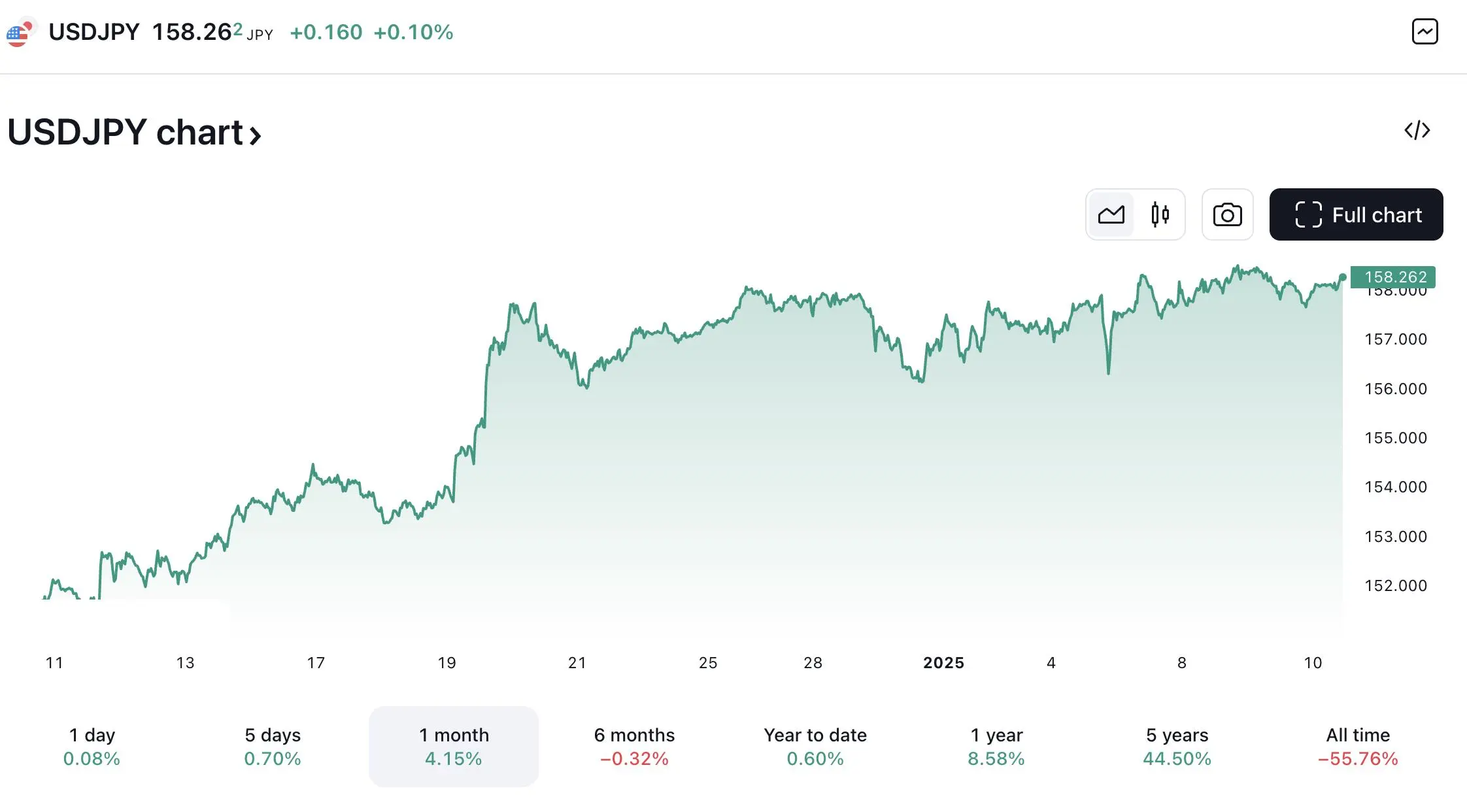
The yen remains weak against the US dollar, dipping to 158.55 on Wednesday and closing at 158.13 on Thursday. If strong US non-farm payroll data is released, the dollar could rise further, pushing the yen toward the psychological threshold of 160. Should it break this level, it will heighten concerns in Tokyo about the weakening yen.
Japanese Finance Minister Kato has stated that the government will take appropriate action if exchange rate volatility becomes excessive. Japan has already intervened in the foreign exchange market four times in 2024, spending nearly $100 billion to support the yen. It is widely expected that if the yen approaches 160 following the release of non-farm data, the government may issue verbal warnings or take direct intervention.
Japan's economy in 2024 is facing significant challenges due to natural disasters, domestic and international economic factors, and high inflation. The household savings rate continues to decline, reaching 1.5% in 2023, marking three consecutive years of decline. While disposable income has increased, rising prices have led to increased consumer spending. Additionally, corporate bankruptcies have surged, with 8,323 bankruptcies recorded in 2024, a 17.6% increase compared to the previous year.
Despite some positive growth in certain quarters, Japan's overall economic growth remains fragile, relying heavily on yen depreciation and short-term consumption spikes. However, consumer goods growth remains sluggish, and high inflation combined with stagnant wage growth continues to put pressure on the Japanese public.
Impact of a Strong Dollar on the Yen
If the US dollar remains strong, the yen could depreciate further, placing greater pressure on Japan's economy. A strong dollar increases the cost of imported goods, exacerbating inflationary pressures within Japan. While yen depreciation might benefit export companies, it raises living costs for domestic consumers, creating a “double-edged sword” effect.
Additionally, the weakening yen could present further challenges for the Bank of Japan's monetary policy. In the context of US interest rate hikes, if Japan maintains its loose monetary policy, the yen's depreciation may accelerate.
For investors, the future of the yen remains uncertain, especially in a scenario where the US dollar continues to strengthen, which could lead to greater depreciation of the yen. The risk of government intervention is also rising, so investors should exercise caution, closely monitor US economic data, and be aware of Japan's policy actions. Given the significant market volatility, strict risk management and flexible strategies are crucial.