Abstract:The Japanese yen failed to create a miracle in 2024, continuing its four-year decline against the US dollar. Does the yen still retain its safe-haven properties? Will the interest rate differential between the US and Japan narrow?

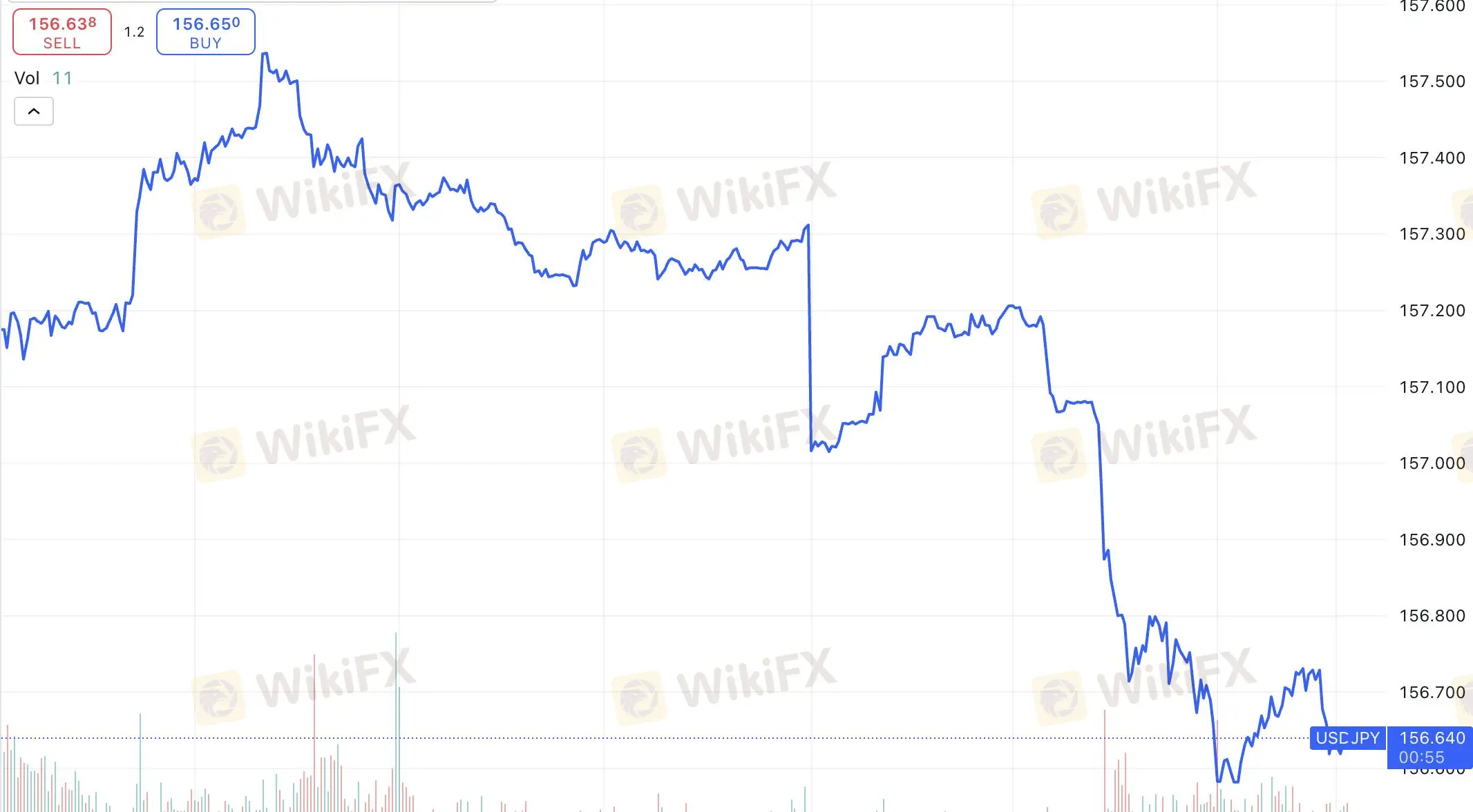
By the end of 2024, the exchange rate hovered around 156 yen to the dollar, with a 10% drop for the year, surpassing the 7% decline in 2023. Contrary to market expectations, the US-Japan interest rate gap did not narrow. Since 2023, the significant divergence between the Federal Reserve's interest rate hikes and the Bank of Japan's ongoing accommodative monetary policy has rapidly expanded this gap. This has driven a surge in “carry trades,” where investors borrow yen at low rates and invest in higher-yielding assets.
Moreover, while the Fed did cut rates in 2024, the pace of those cuts was slow, failing to effectively reduce the interest rate differential or curb the yen's depreciation. As a result, the interest rate gap between the US and Japan remains wide, pushing the yen to its historical low range of 156 yen to the dollar. The trend of speculative yen selling continues to expand, and volatility risks for the yen are expected to persist as we enter 2025.
The Yen as a Safe-Haven Currency
The yen has long been considered a “safe-haven” currency. Even in a low-interest environment, the yen can attract safe-haven capital due to Japan's stable government and large foreign exchange reserves. However, Japan's prolonged low-interest-rate environment and the Bank of Japan's monetary easing policies have diminished the yen's safe-haven appeal. The Bank's negative interest rates and large-scale quantitative easing (QE) have supported economic growth but also depressed the yens yields, reducing its attractiveness as a safe-haven asset.
Despite the large US-Japan interest rate differential, the yen still maintains a degree of safe-haven demand in times of rising global uncertainty. In the face of geopolitical crises or global financial market volatility, the yens safe-haven properties may come back into play, attracting capital inflows. For example, during periods of global market uncertainty, the yen may still draw investors due to its stable government and strong foreign exchange reserves.
Looking ahead to 2025, the yens performance will remain highly sensitive to global economic and geopolitical developments. As market uncertainty increases, the yen may regain its role as a safe-haven currency. Therefore, investors will need to closely monitor changes in the global landscape.