Abstract:PT. Doo Financial Futures, a subsidiary of the global financial services brand Doo Group, has secured regulatory approval from Indonesia’s Badan Pengawas Perdagangan Berjangka Komoditi (BAPPEBTI).
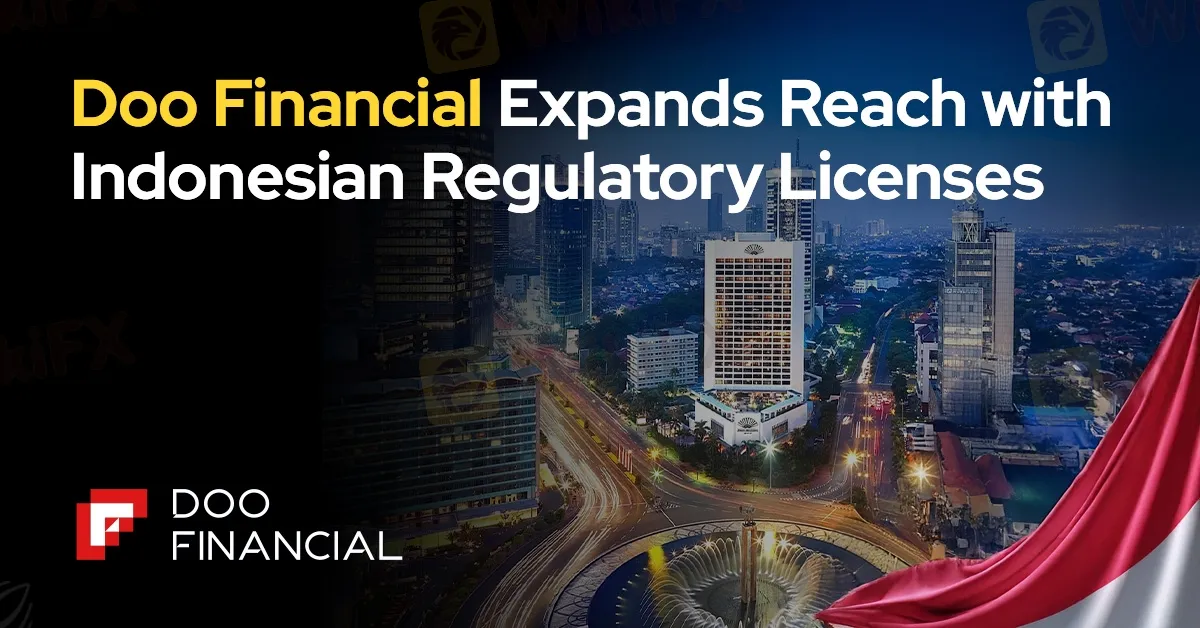
PT. Doo Financial Futures, a subsidiary of the global financial services brand Doo Group, has secured regulatory approval from Indonesia‘s Badan Pengawas Perdagangan Berjangka Komoditi (BAPPEBTI). This milestone marks a significant step in the company’s expansion into Southeast Asias largest economy.
The newly obtained licenses empower PT. Doo Financial Futures to provide a wide range of financial services in Indonesia. These include securities trading, futures, contracts for difference (CFDs), and over-the-counter (OTC) trading solutions. This approval positions the company to deliver comprehensive offerings tailored to the Indonesian market, aligning with its broader strategy of global growth.

Doo Group, the parent company, is a well-regulated financial services provider with licences in several prominent jurisdictions, including the United States, Australia, Hong Kong, and Singapore. The addition of Indonesian regulatory approval strengthens its foothold in the Asia-Pacific region
The licenses granted include a Futures Brokerage Business License and approval as a Participant of the Alternative Trading System. These regulatory endorsements reflect the company‘s compliance with Indonesia’s stringent standards, which focus on market stability, transparency, and investor protection.
This development follows a series of regulatory milestones for Doo Group. Notably, the firm secured a CySEC license in November, enabling it to extend its services to retail clients across Europe. The continuous pursuit of compliance and professionalism underscores its commitment to building trust with investors worldwide.
Indonesia represents a growing hub for financial services in Southeast Asia, offering immense potential for expansion. The financial market is regulated by BAPPEBTI, an agency established in 2005 to oversee the commodities and futures trading sectors. The regulator enforces measures designed to ensure fairness and market stability. Companies seeking approval undergo rigorous evaluations, including assessments of capitalisation, risk management frameworks, and operational compliance.
With nearly 300 million residents, Indonesia presents a dynamic opportunity for the financial sector. Recent data from the Indonesia Central Securities Depository revealed that the number of investors grew by 14% year-over-year as of September 2023, reflecting the markets rising prominence. In March, another financial institution, XTB, entered the Indonesian market, citing its strategic importance as a gateway to Asia.
The approval of PT. Doo Financial Futures allows the company to establish a stronger presence in this promising market. Doo Group has emphasised its commitment to monitoring Indonesia‘s regulatory landscape to ensure compliance and sound operations. It also aims to leverage Indonesia’s economic advantages to unlock further growth opportunities within the region.