


RoboForex Review: Examining a Pakistan User’s $1,627.39 Allegation
RoboForex review examines a Pakistan user’s $1,627.39 allegation, a balance photograph, official entity disclosures and the records still needed.
Original

简体中文
繁體中文
English
Pусский
日本語
ภาษาไทย
Tiếng Việt
Bahasa Indonesia
Español
हिन्दी
Filippiiniläinen
Français
Deutsch
Português
Türkçe
한국어
العربية
اردو




Abstract:In the dynamic world of financial markets, individuals often find themselves grappling with a fundamental question: should they pursue trading or investing?
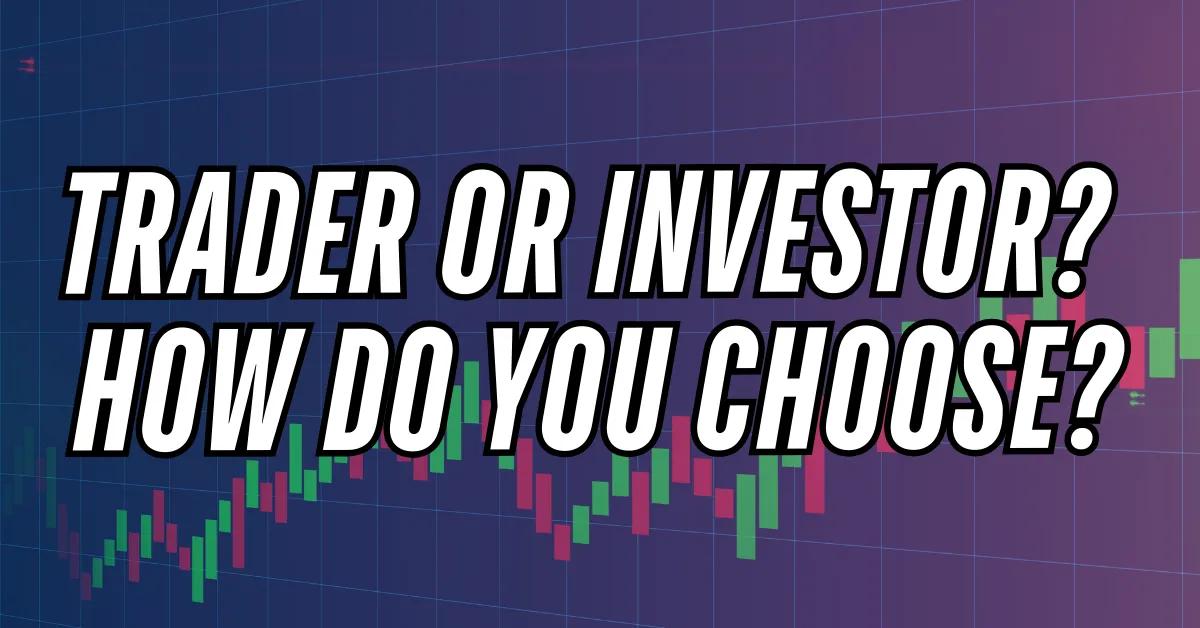
In the dynamic world of financial markets, individuals often find themselves grappling with a fundamental question: should they pursue trading or investing? While both paths offer the potential for profit, they entail different strategies, mindsets, and risk profiles. Understanding the key distinctions between trading and investing is crucial for anyone looking to enter the financial markets.
The primary difference between traders and investors lies in their time horizons and strategies. Traders focus on short-term market movements, seeking to capitalize on price fluctuations over days, weeks, or even minutes. They rely heavily on technical analysis, using charts and indicators to make rapid decisions. Trading demands constant attention and quick reflexes, as market conditions can change in the blink of an eye.
In contrast, investors adopt a long-term perspective, often holding assets for years or even decades. Their approach is rooted in fundamental analysis, evaluating a company's financial health, growth potential, and overall market position. Investors aim to build wealth gradually through the appreciation of their holdings and dividends. Patience and discipline are their watchwords, as they ride out market volatility in pursuit of steady, compounded returns.
Both trading and investing carry inherent risks and rewards, but they do so in different ways. Traders can achieve significant profits quickly, but the fast-paced nature of their activities also exposes them to substantial losses. The use of leverage, a common practice in trading, can amplify gains but also magnify losses. This high-stakes environment requires traders to have a strong risk management strategy and the emotional fortitude to handle rapid changes.
Investors, while not immune to market downturns, generally experience less volatility in their portfolios. By focusing on well-established companies with strong fundamentals, investors can mitigate some of the risks associated with market fluctuations. The trade-off, however, is that investment returns may be slower and less dramatic compared to the potential windfalls of successful trading.

Choosing between trading and investing also involves a deep understanding of one's personal attributes and lifestyle preferences. Trading requires a high tolerance for risk, a willingness to spend significant time analysing markets, and the ability to make quick, decisive actions. It can be a full-time endeavour, demanding constant vigilance and the resilience to handle stress.
Investing, on the other hand, suits individuals who prefer a more hands-off approach. It allows for a balance between other professional or personal commitments and requires less day-to-day involvement. Investors need patience, a long-term outlook, and the discipline to stick to their strategy even during market downturns.
Ultimately, the choice between trading and investing is a personal one, influenced by individual goals, risk tolerance, and lifestyle. Some may find a hybrid approach, engaging in both trading and investing, to be the most satisfying. Regardless of the path chosen, success in the financial markets hinges on continuous learning, disciplined execution, and an unwavering commitment to one's chosen strategy. The financial landscape is vast and varied, offering opportunities for both traders and investors to thrive. The key is to choose the path that aligns best with your personal strengths and financial objectives.

Disclaimer:
The views in this article only represent the author's personal views, and do not constitute investment advice on this platform. This platform does not guarantee the accuracy, completeness and timeliness of the information in the article, and will not be liable for any loss caused by the use of or reliance on the information in the article.
RoboForex review examines a Pakistan user’s $1,627.39 allegation, a balance photograph, official entity disclosures and the records still needed.
GRAND MARKETS, an Australia-based brokerage firm, continues to receive appreciation from users regarding trading activities. These users have praised the broker for the trade execution speed, spreads, and even withdrawal processing. WikiFX, a globally-recognized forex broker inquiry tool, recorded largely positive GRAND MARKETS reviews. This article talks about user reviews, the broker's trading product portfolio, accounts offered, its regulatory structure, etc. A detailed evaluation will help you make an informed investment decision.
FXGT review of an India-labelled profit dispute, with complaint screenshots, a transaction-date mismatch, entity disclosures and evidence limits.
Did your Weltrade account earn you profits only to be cancelled by the broker on claims such as trading abuse? Did you fail to open or close orders due to stuck charts? Did you notice an unaccounted fund deduction? Users have been constantly reporting these issues on broker review platforms such as WikiFX. This Weltrade review examines user allegations and provides you with an overview of the company's regulatory structure.
WikiFXWikiFXWikiFXWikiFXWikiFXWikiFXWikiFXWikiFXWikiFXWikiFX