World Cup Fever Is Here! Choose your broker like you choose your team
Join WikiFX and investors worldwide in celebrating the excitement of the 2026 FIFA World Cup!
简体中文
繁體中文
English
Pусский
日本語
ภาษาไทย
Tiếng Việt
Bahasa Indonesia
Español
हिन्दी
Filippiiniläinen
Français
Deutsch
Português
Türkçe
한국어
العربية
اردو
Abstract:Federal agencies propose risk-sensitive executive pay plans to prevent excessive risk-taking.
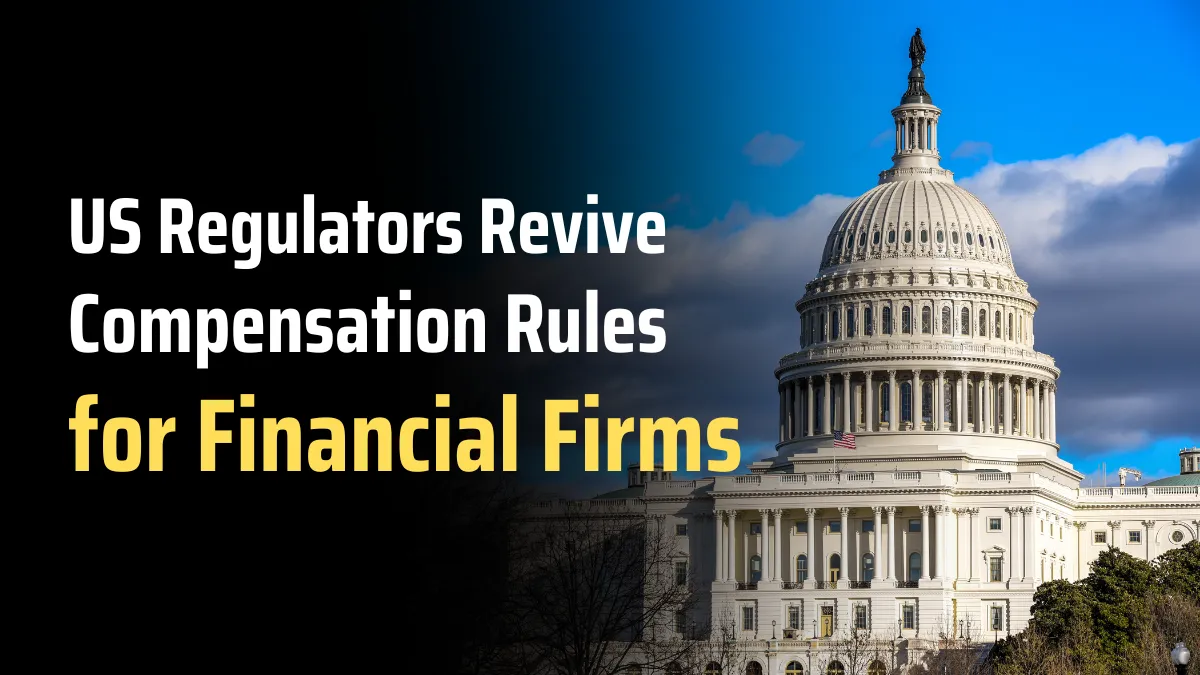
Significantly, US bank authorities have rekindled attempts to put into effect long-delayed compensation regulations meant to increase the risk sensitivity of CEO pay schemes in financial companies. The regulation, proposed jointly by the Federal Deposit Insurance Corporation (FDIC), the Office of the Comptroller of the Currency (OCC), and the Federal Housing Finance Agency (FHFA), would outlaw incentive-based systems that do not consider risks or permit pay forfeitures and clawbacks. This repeated attempt is part of a larger effort to improve financial stability and stop CEOs of financial institutions from taking on too much risk. It follows a 2016 plan.
FDIC Chairman Martin Gruenberg emphasized the need to address unfair pay practices, particularly in large financial institutions. Such behaviors, he said, may have a huge influence on the whole financial system. The bankruptcy of Silicon Valley Bank the previous year brought to light the need for strong compensation regulations to reduce risk.
Industry players have criticized the plan, however. The new regulations would apply to banks with assets over $1 billion, with the harshest restrictions imposed on those with holdings exceeding $250 billion. Representing bigger banks, the Bank Policy Institute wrote down the proposal as “purely political.”
Because the FDIC, OCC, FHFA, National Credit Union Administration, Securities and Exchange Commission, and Federal Reserve all need to agree, putting these regulations into practice has been difficult. While the NCUA is anticipated to approve the idea shortly, the SEC has it on its calendar for rulemaking.
Jerome Powell, the Federal Reserve chairman, has not pledged to issue the rule this year. Powell wanted a strategy that effectively handled the risks involved with compensation and emphasized the need to understand the problem. The government delegate emphasized the need to consider existing industrial practices and reiterated the commitment to cooperate with other authorities.
Finalizing any new regulations requires public input. The agencies will keep getting comments on their websites as long as none of the regulators provide a coherent plan. The redoubled attention on compensation regulations highlights the continuous efforts to protect financial stability and encourage prudent risk management in the sector.


Disclaimer:
The views in this article only represent the author's personal views, and do not constitute investment advice on this platform. This platform does not guarantee the accuracy, completeness and timeliness of the information in the article, and will not be liable for any loss caused by the use of or reliance on the information in the article.

Join WikiFX and investors worldwide in celebrating the excitement of the 2026 FIFA World Cup!

Indian stock markets witnessed a sharp low in the early trading hours on Monday. While the Sensex fell by more than 600 points, Nifty slumped under 23,200. The fall in the stock market today is the investors’ reaction to the escalating tensions in the Middle East, a surge in crude oil prices and weakness across markets worldwide. At around 9:30 a.m. on June 8, 2026, the BSE Sensex dropped by 627.47 points to 73,615.87, recording a fall of 0.85%. At the same time, the Nifty declined by 195.40 points to 23,171.30, registering a 0.84% fall. The selloff was broad based, with most sectoral indices slipping into red. Nifty IT, Nifty Realty, Nifty Auto and Nifty Metal slipped by 1.61%, 1.68%, 1.21% and 1.31%, respectively. Even the Nifty Midcap 100 and Nifty Smallcap 100 declined by 0.73% and 0.63%, respectively. As far as Sensex stocks are concerned, only State Bank of India, Axis Bank, Power Grid Corporation of India and Sun Pharmaceutical Industries were found to be green. Among the one

The Reserve Bank of India (RBI) decided to keep the repo rate unchanged at 5.25% in its monetary policy meeting on June 6, 226. The decision comes after the six-member monetary policy committee discussed the situation over days. The unanimous decision came hours after the US President Donald Trump decided a double-sided ceasefire with Iran. The global markets, including India, rallied after the US decision. The RBI governor-led monetary policy committee sits every two months to analyze key economic indicators and discuss the way forward through their policies.

On May 30, WikiFX participated as an official partner at Wealth Expo Colombia 2026, engaging in extensive exchanges with investors, trading professionals, IBs, KOLs, fintech institutions, and industry partners from Latin America and around the world. The event attracted significant attention on-site, once again demonstrating WikiFX’s growing brand influence and industry recognition across the LATAM market.