Abstract:Trader struggles with Tickmill, facing blocked withdrawals and demands for fees, highlighting concerns about the broker's reliability and ethics.

The WikiFX expose team has received 53 complaints about Tickmill, an online trading broker, up until this date. This is a concerning trend. Many people's most urgent issue is not being able to withdraw money, which raises questions about Tickmill's reliability and business procedures.
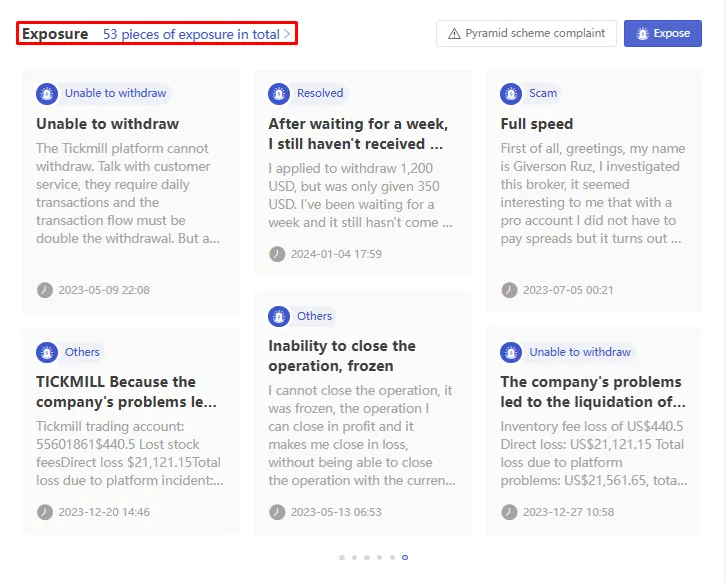
The account of a 35-year-old American trader serves as a clear illustration of the difficulties faced by Tickmill's customers. The person was first drawn into trading via an app discussion, but a promoter's endorsement of Tickmill's trading platform and services eventually won them over. With the expectation of having a profitable trading experience, these guarantees prompted people to deposit their money.
Soon after the trader finished registering and made their first deposit, their excitement turned to dissatisfaction. They encountered a masonry wall while attempting to extract their wealth. After Tickmill reported the account for potential money laundering, their withdrawal request was abruptly denied. In response to this accusation, Tickmill withheld their cash and sought identification documentation and a large payment of $4,000 to settle the disagreement.
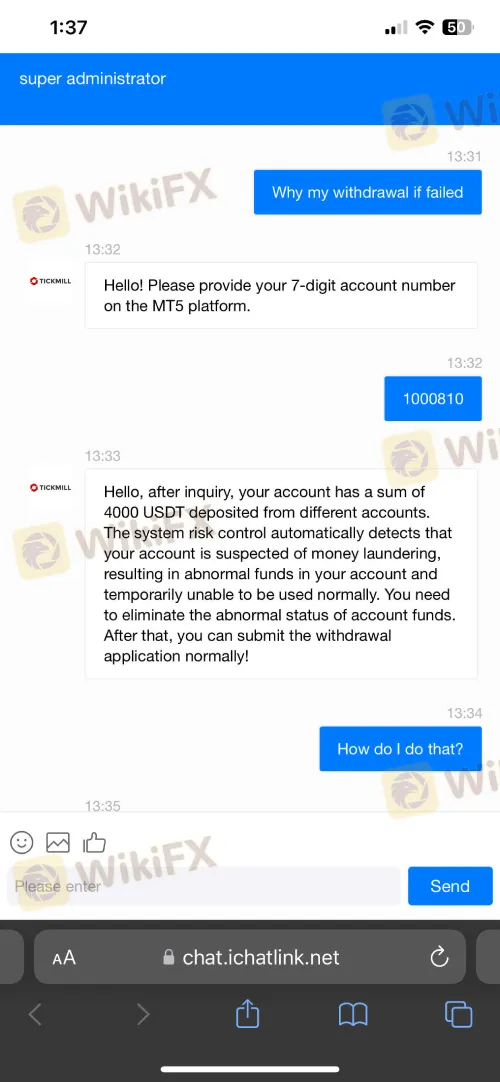
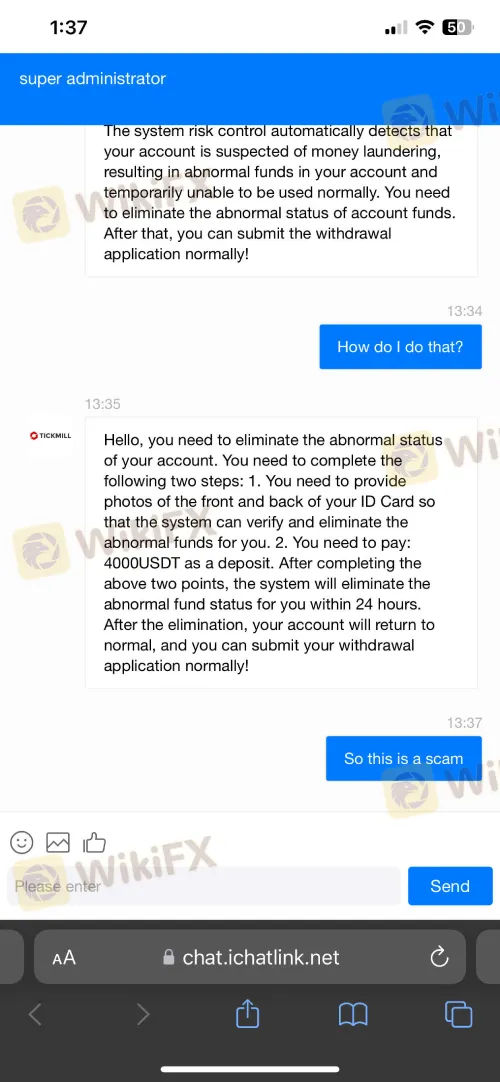
The trader had doubts about agreeing with such requests, particularly considering their impeccable financial record, since they saw warning signs. The issue deteriorated when Tickmill set a rigid payment deadline, requiring the $4000 to be received by March 15th to unlock the account. This irrational demand validated the trader's suspicions that they were involved in a possible fraud.
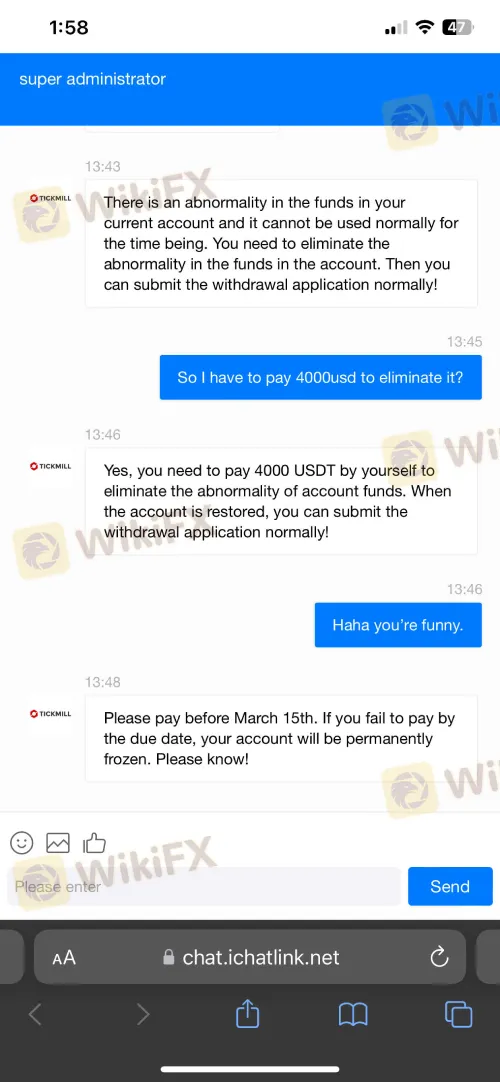
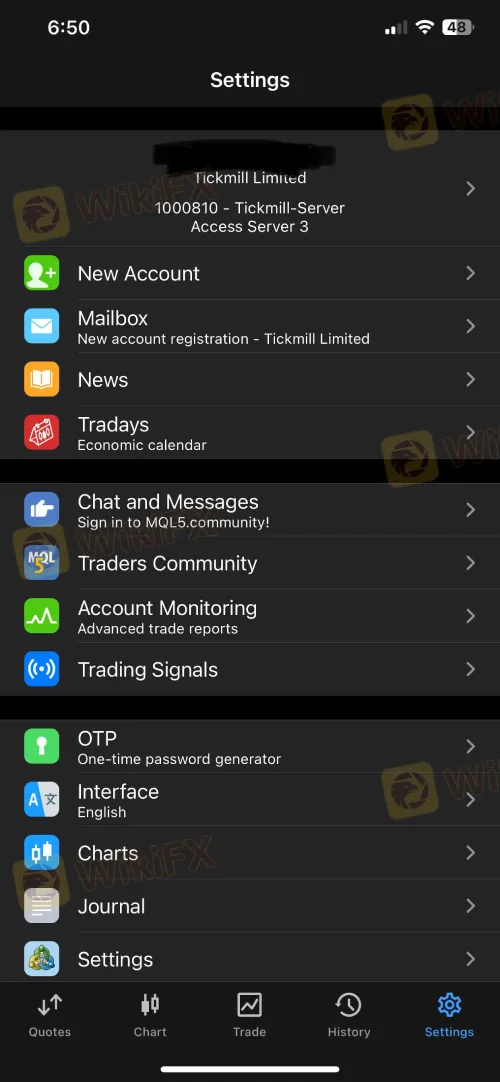
In an attempt to exact revenge and alert others to the broker's questionable practices, the trader, determined to fight back, refused to pay the charge and reported Tickmill to WikiFX.
This experience brings to the attention of anyone considering trading with Tickmill a significant issue. The disruption of the trading process caused by the challenges associated with currency withdrawals also raises concerns regarding the broker's operational integrity and moral character. Before making investments on an online trading platform, people who want to become traders should be careful and do a lot of studying. This aspect holds specific significance for platforms such as Tickmill, which have frequently received reports of withdrawal issues.
You may access the exposure report here.
In summary, many customers have had negative experiences with Tickmill, particularly when attempting to withdraw money. When investing money in Tickmill, it's crucial to exercise caution and due diligence. It is evident from the many complaints about the inability to withdraw money that we should exercise caution while engaging in online trading.