World Cup Fever Is Here! Choose your broker like you choose your team
Join WikiFX and investors worldwide in celebrating the excitement of the 2026 FIFA World Cup!
简体中文
繁體中文
English
Pусский
日本語
ภาษาไทย
Tiếng Việt
Bahasa Indonesia
Español
हिन्दी
Filippiiniläinen
Français
Deutsch
Português
Türkçe
한국어
العربية
اردو
Abstract:The embattled blockchain network Harmony Protocol has put a bounty on the table in the hope of recovering some of its lost millions.
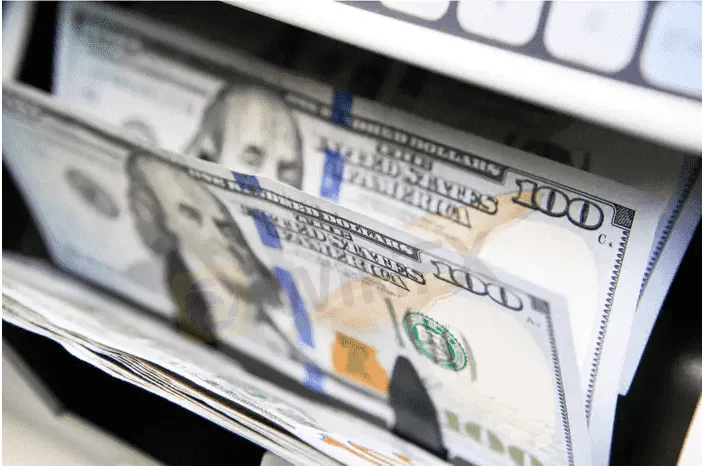
Harmonys Horizon bridge was exploited for $100M on Friday.
The teams 1% bounty may not be enough incentive for the attackers.
The funds remain in the hacker‘s wallet and have yet to be moved or ’cleaned.
Late last week, the high-throughput layer-1 blockchain platform Harmony became the latest victim of a bridge exploit. Around $100 million in various crypto assets were stolen from the protocol due to a vulnerability in a multi-signature wallet connected to the Horizon bridge. The bridge allows assets to be transferred to and from Harmony and other networks such as Ethereum and Bitcoin (BTC).
On June 26, the Harmony team offered a million-dollar bounty for the return of the funds. It also promised to advocate for no legal charges.

The theft makes Harmony the fourteenth-largest industry exploit, according to Defiyields Rekt database (which has yet to be updated). However, the 1% bounty is one of the smallest offered so far, so they may have to up the incentive a little to have any hope of funds being returned.
At the time of writing, the funds were still in the hackers address which held 85,867 ETH worth approximately $104.6 million. If the assets start moving to anonymizing services such as Tornado Cash, Harmony can kiss goodbye any hopes of retrieval.
There was plenty of reaction from the crypto community, with many suggesting that the amount offered was too low. Others pointed out that providing bounties doesnt solve the problem and, if anything, may even encourage hackers.
“Isn‘t it funny to actually reward the hackers with $1M dollars for returning the fund when they can get away with $100M?” one commented before adding, “even if they accept the offer, the same hackers will and again comprise another system? Problem isn’t solved.”
The exploit, which resulted from a private key breach, not a smart contract bug, is the latest cross-chain bridge attack this year. On June 26, Harmony stated:
“The team has found evidence that private keys were compromised, leading to the breach of our Horizon bridge. Funds were stolen from the Ethereum side of the bridge.”
The attacker was able to access and decrypt a number of these keys and use them to sign unauthorized transactions, it added.
Hackers have been increasingly targeting these conduits between different networks. In February, hackers stole $320 million from the Wormhole bridge; then, the following month came the industry‘s largest attack. More than $600 million was stolen in an attack on Axie Infinitie’s Ronin bridge in March.


Disclaimer:
The views in this article only represent the author's personal views, and do not constitute investment advice on this platform. This platform does not guarantee the accuracy, completeness and timeliness of the information in the article, and will not be liable for any loss caused by the use of or reliance on the information in the article.

Join WikiFX and investors worldwide in celebrating the excitement of the 2026 FIFA World Cup!

Have you experienced issues with Pepperstone deposit & withdrawal processing? From your experience, do you feel that the Australia-based forex broker causes losses to its clients? Did the brokerage entity freeze your account and give you a margin call? All these trading allegations have been rampant on broker review platforms such as WikiFX. This Pepperstone review article takes a close look at the user complaints, especially in 2026. Additionally, we have given an overview of the regulatory framework under which the brokerage entity operates.

Some broker comparisons end with a confident "go with this one." This is not one of them — and that honesty is exactly what makes it worth reading. Wundersys and tradgrip are two young, offshore-registered brokers that keep popping up in front of beginner traders, often through aggressive online marketing. Both promise the usual buffet: tight spreads, generous leverage, multiple account tiers. And both, according to WikiFX, sit near the very bottom of the safety scale. So instead of crowning a champion, this comparison is really about something more useful: learning to read the warning signs, understanding the small differences that still matter, and knowing why "the better of two risky options" is still a conversation about risk.

If you trade forex from India, Pakistan, Bangladesh, Sri Lanka, or Nepal, you already know the quiet truth that eats into every trader's results: it is not just the market that decides whether you profit — it is the cost of getting in and out of each trade. Shave a couple of dollars off your commission on every lot, multiply it across hundreds of trades a year, and you are looking at the difference between a strategy that works and one that bleeds out slowly. South Asian traders are some of the most cost-conscious in the world, and rightly so. So we pulled the data on the brokers most often recommended for the region, cross-checked every name on WikiFX, and ranked them by the one number that matters most here: what they actually charge you to trade. Before the list, one quick lesson that will make this whole ranking click.