


FOMC Minutes Today: 3 USD and Gold Scenarios Traders Should Prepare For
The Fed releases the July FOMC minutes on 19 August 2026. Here are three USD and gold scenarios, confirmation signals, and a practical risk checklist for traders.
Original

简体中文
繁體中文
English
Pусский
日本語
ภาษาไทย
Tiếng Việt
Bahasa Indonesia
Español
हिन्दी
Filippiiniläinen
Français
Deutsch
Português
Türkçe
한국어
العربية
اردو



Abstract:You can't manage it if you can't trace it! In this post, we'll look at a facet of money management that's sometimes ignored yet crucial: traceability. End-to-end traceability improves FX management quality and eliminates wasteful expenses and operational hazards.

When you you can‘t trace it, you can’t manage it! In this article, we will discuss an overlooked but important feature in currency management: traceability. End-to-end traceability enhances the quality of FX management and allows you to remove unnecessary costs and operational risks.
What is traceability?
Depending on the sector, traceability could means many things. From an accounting perspective, traceability is the ability to follow a business transaction back to the originating document. It is a key concept for auditors as they need systems with a high degree of traceability to assist them in verifying the transactions included in financial statements.
Traceability gives you the chance to pinpoint the exact place where something has gone wrong, and to organize product callbacks whenever a pervading fault in a batch is detected. Even more importantly, having certain traceability-related policies in place could give you the chance to avoid product non-conformity that could be traced back to your company.
From the point of view of industrial applications, traceability is about identifying products throughout the supply chain and supporting supply chain visibility. Obviously, this can be a major concern in industries with health or environmental concerns.
Traceability in the context of foreign exchange managementTraceability in the context of foreign exchange management
Now let's see what does traceability mean in the context of foreign currency management? Individual pieces of exposure are known as entries. Entries are grouped into positions. When positions are hedged, they become operations, and they can lead to single or multiple payments.
Traceability is the fact that each element has its own unique reference number in the journey from entry to payment. In addition, payments carry the operation reference within their SWIFT message, allowing funds to be traced throughout the entire payment process.
Whenever a position is hedged, it is possible to trace it back to the original entries, including the exchange rate. Thats what Currency Management Automation does. We call it perfect end-to-end traceability
An overlooked, but essential element in currency management
Let us introduce two examples that allow us to understand the importance of traceability in the context of currency management.
When individual pieces of exposures are aggregated, you may benefit from lower trading costs and perhaps more time for scanning netting opportunities and even savings in terms of forward points if they are not in your favour. But, in the absence of perfect traceability, youd be hard-pressed to calculate your profit margins adequately. It would be quite challenging to determine what purchase corresponds to what sale and at what exchange rate each transaction took place.
In the context of a combination of hedging programs for which you want to apply Hedge Accounting, if the budgeted exposure has been hedged, you still need to process firm sales/purchase orders. But why? This is Because in order to compile the required documentation, you need to trace these hedged items to the corresponding hedging instrument, including its value date and exchange rate. This would be an extremely time-consuming activity in the absence of perfect traceability.
Therefore in summary, Traceability is an important yet somewhat neglected concept. You are unlikely to find many references to traceability in textbooks on FX management. It allows treasurers to drill down to the smallest piece of exposure to obtain the required data granularity.
Disclaimer:
The views in this article only represent the author's personal views, and do not constitute investment advice on this platform. This platform does not guarantee the accuracy, completeness and timeliness of the information in the article, and will not be liable for any loss caused by the use of or reliance on the information in the article.
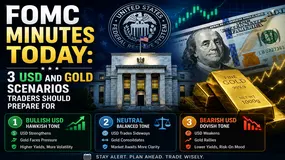
The Fed releases the July FOMC minutes on 19 August 2026. Here are three USD and gold scenarios, confirmation signals, and a practical risk checklist for traders.
Angel One, an India-based brokerage entity, constantly receives allegations from users online. Users are complaining about withheld funds, poor customer support service, undesired trade execution orders, etc. In this Angel One review, let’s quickly go through these complaints, understand its regulatory framework and pay attention to the product portfolio.
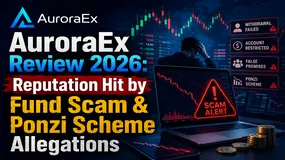
AuroraEx, a United States-based multi-asset brokerage entity, is facing serious user allegations over how it handles deposited funds. Many users have accused the broker of failing to meet its payment obligations. Some have questioned the broker over possible trade-related foul play, while others have alleged that it scammed them through a Ponzi operation. This AuroraEx review examines these user-reported allegations and provides an overview of the broker’s regulatory status.

This Valbury review examines PT Valbury Asia Futures, Broker Code 3441997314, its Bappebti record, the Q1 2026 A+++ assessment, product-specific costs, segregated accounts, withdrawals and complaint routes for traders researching an Indonesia forex broker.
 WikiFXWikiFXWikiFXWikiFXWikiFXWikiFXWikiFXWikiFXWikiFXWikiFX