Abstract:As a result of the breakdown of two more generating units yesterday, Eskom increased its rotating power cuts to Stage 4, extending load shedding until Friday morning. In the best-case scenario, the power utility predicted 37 days of load shedding, but the worst-case scenario could see the country without electricity for 100 days this winter. Load shedding is expected to cost the South African economy R500 million per stage a day in 2022, as economic activity comes to a halt during power outages.
As a result of the breakdown of two more generating units yesterday, Eskom increased its rotating power cuts to Stage 4, extending load shedding until Friday morning. In the best-case scenario, the power utility predicted 37 days of load shedding, but the worst-case scenario could see the country without electricity for 100 days this winter. Load shedding is expected to cost the South African economy R500 million per stage a day in 2022, as economic activity comes to a halt during power outages.
Eskom reportedly spent R235 million on fuel for 20 open-cycle gas turbine generators to keep the lights on during the long Easter weekend, despite lesser demand, according to reports. Due to fears about the impact of catastrophic power outages and deadly flooding in KwaZulu-Natal, the rand plummeted 0.35 percent to R14.96 to the dollar by 5 p.m., its lowest level since March 20, according to Eskom.
The government has declared a National State of Disaster as a result of the floods, which have killed 443 people, damaged infrastructure worth billions of rands, and interrupted supply networks for essential goods like fuel. During the long weekend, the rand weakened owing to both global and domestic causes, according to Citadel Global head Bianca Botes. The euro has been pushed down by uncertainty around the Ukraine conflict and the potential of quicker Federal Reserve interest rate rises, according to Botes.
“The rand fell to its lowest level versus the dollar since April 7 over the weekend, as Eskom warned of additional power outages this week and severe rainfall and floods in KZN continued to wreak havoc on essential infrastructure, both negatively impacting the country,” Botes said.
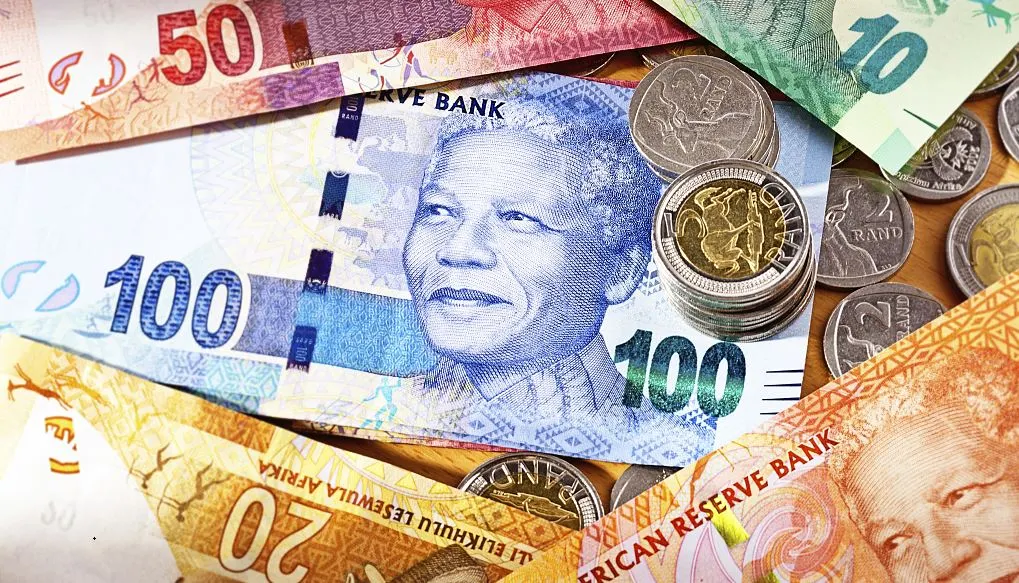
“The rand was also pulled down by uncertainty surrounding the Ukraine conflict and the potential of quicker Fed interest rate rises.” The South African Reserve Bank (Sarb) penciled in ongoing monetary policy tightening and an improved economic outlook, which curbed additional losses.
As the situation in Ukraine continues, data from Statistics South Africa is likely to show headline inflation climbing from 5.7 percent in February to 6% in March.South Africa, on the other hand, is in a comparatively robust budgetary situation, having benefited from the spike in commodities prices brought on by the Covid-19 supply interruptions and the crisis in Ukraine.
However, the Russia-Ukraine conflict has harmed global economic development, prompting a series of downward adjustments as the outlook for the lengthy geopolitical conflict has worsened.Due to the conflict in Ukraine, the IMF cut its global growth forecasts for 2022 by 0.8 percentage points to 3.6 percent.According to the IMF, this reflects the direct impact of the crisis in Ukraine and sanctions on Russia, both of which are expected to have sharp contractions.
It forecasted 5.7 percent inflation in advanced countries and 8.7 percent in emerging market and developing economies, respectively, 1.8 and 2.8 percentage points higher than in January. The IMF's economic growth prediction for South Africa has stayed constant since January, at 1.9 percent for 2022 and 1.4 percent for 2023, in line with Sarb projections.