


FCA Warns reclaim-experts.com: 7 Checks Before You Pay
The UK regulator classified the website as a clone of an authorised firm on 28 August 2026. The FCA says the genuine Reclaim Experts Ltd has no connection with the clone.
Original

简体中文
繁體中文
English
Pусский
日本語
ภาษาไทย
Tiếng Việt
Bahasa Indonesia
Español
हिन्दी
Filippiiniläinen
Français
Deutsch
Português
Türkçe
한국어
العربية
اردو




Abstract:There are many different factors that traders consider when making calculations in the market. We will look at one of the most common methods of avoiding losses and how to go about implementing it – How to calculate the size of a stop loss when trading.

There are many strategies used by traders to manage market risks while trading. These strategies are applied either during the trade or before the trade. It is important to have measures that protect your investments because the markets are always in constant change. There are many different factors that traders consider when making calculations in the market. The prevailing market conditions, the prospects of the trader and the size of investment are all important factors to consider when making calculations. We will look at one of the most common methods of avoiding losses and how to go about implementing it.
Using Stop Loss to Protect the Investment
Before we go into the calculations, let us focus on what the stop loss is and how it is used by traders to prevent losses. The stop loss is a tool that is used in the trading markets to mark points in the market where a trader no longer wishes to continue trading. This strategy is used extensively in the forex markets. The stop loss is a tool used by traders of all levels. In fact, it is recommended to use this tool on all trades, including currencies such as the EUR/USD, GBP/USD and USD/JPY or commodities such as gold and crude oil and indices. This is because the tool is a direct means of telling traders what they stand to lose on every single trade. To use this tool effectively, however, the right calculations must be done.
How to Place the Stop Loss Correctly
As stated earlier, the placement of the stop loss depends on the calculations that a trader has done. Timing is thus important and this timing is determined by mathematical projects. The ideal application of the tool is where a trader allows the market to move for a while before implementing the strategy. Every trader has projections about the market even before venturing into it. If you feel like the market will go up, for instance, then the placement of the stop-loss will be determined by the first few signs that you notice in the market.
The general rule is to always place the stop loss right under the entry price bar. This is a good way to ensure that the trade is actually going in the forecast direction. In case the market acts contrary to expectation, then the trader knows that the market is not ripe for the preferred strategy. An exit would thus prevent any losses. The market does not always go according to traders expectations. This is why the placement of the stop loss should not just be backed by instinct but also mathematical data.

How to Calculate the Placement
In general, the trade is measured by cents/pips/ticks or account-dollars. Each of these gives the trader a clue of what amount of investment is at risk of loss with each particular trade. The account-dollar measure is the most direct as it shows exactly how much could be lost in actual dollar value. For both of these measures, the difference between the entry and stop loss position is equal to the risk. If the entry point is at $5.00 and the stop loss is at $5.10, then the risked amount is $0.10.
While this serves to show the figure that is at risk, it does not exactly indicate the account at risk. In order to calculate the account risk, the position size must also be put into consideration. The position size is basically the number of investments made on each trade. A position size of 1,000 shares in the stock market would, for instance, result in an account risk of $.010 x 1,000, going by the initial example.
How to Control Account Risks
Having understood the placement risk and account risk, it is important to understand how you can protect your account from a risky market. As a general rule, the amount risked in a particular trade should represent less than 2 percent of what you have in your account. It is important to calculate the account risk before you do each trade because this is the only way to get any profit out of the market.
Conclusion
As stated earlier, the stop loss is a valuable tool that traders should always use when trading. This tool not only guarantees traders of proper market insights, but it also protects their investments. The market does not always go according to a traders expectations, having a form of risk management strategy is thus a smart move.

Disclaimer:
The views in this article only represent the author's personal views, and do not constitute investment advice on this platform. This platform does not guarantee the accuracy, completeness and timeliness of the information in the article, and will not be liable for any loss caused by the use of or reliance on the information in the article.

The UK regulator classified the website as a clone of an authorised firm on 28 August 2026. The FCA says the genuine Reclaim Experts Ltd has no connection with the clone.
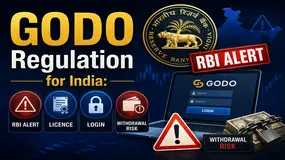
People searching GODO regulation or regulation GODO should separate overseas licensing from permission in India. The Reserve Bank of India Alert List, updated 19 November 2025, names “GoDo FX” and godofx.com. RBI says listed entities are neither authorised to deal in forex under FEMA nor authorised to operate an approved forex electronic trading platform. GODO's legal documents name GODO LTD and a Mauritius FSC licence, but that overseas status does not create RBI authorisation. No cited court ruling proves fraud. The main checks are jurisdiction, domains, leverage, and withdrawals.

Most traders who have opened accounts with Succedo Markets, a Saint Lucia-based brokerage entity, have reported withdrawal request denials after a pleasant first experience. Traders globally, including those from India, have made these complaints. Meanwhile, some traders have reportedly taken legal recourse to recover their stuck funds. The critical nature of these complaints made us share this in-depth Succedo Markets review. This review does not only examine user allegations but also shed light on its regulatory framework.
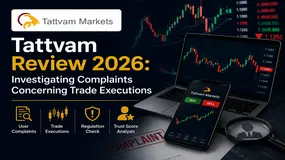
Did you encounter trade-related concerns with Tattvam, a Mauritius-based brokerage entity? Several users have reportedly accused the broker of cancelling profitable trades, allegedly citing scalping as the reason. At the same time, traders have reportedly expressed concerns over the lack of understanding among the broker officials about critical trading aspects such as copy trading. In this Tattvam review, we have carefully examined user-reported allegations. Additionally, we have given a regulatory overview of the broker.
WikiFXWikiFXWikiFXWikiFXWikiFXWikiFXWikiFXWikiFXWikiFXWikiFX