Abstract:On Tuesday, gold prices witnessed the biggest loss for seven years while USD embraced its biggest gain since early June. Driven by this, the markets of stocks, forex, oil and precious metals showed mixed performance.
WikiFX News (12 Aug) - On Tuesday, gold prices witnessed the biggest loss for seven years while USD embraced its biggest gain since early June. Driven by this, the markets of stocks, forex, oil and precious metals showed mixed performance.
This Tuesday, gold sharply dropped over 6% to the low level of $1,901, compared to the high level of $2,035 the night before. The half-month low since July 27 is a record one for seven years and the largest one since Lehman's bankruptcy. Besides, spot palladium fell 6.5% coupled with a slump of 6.7% in spot silver on the same day.
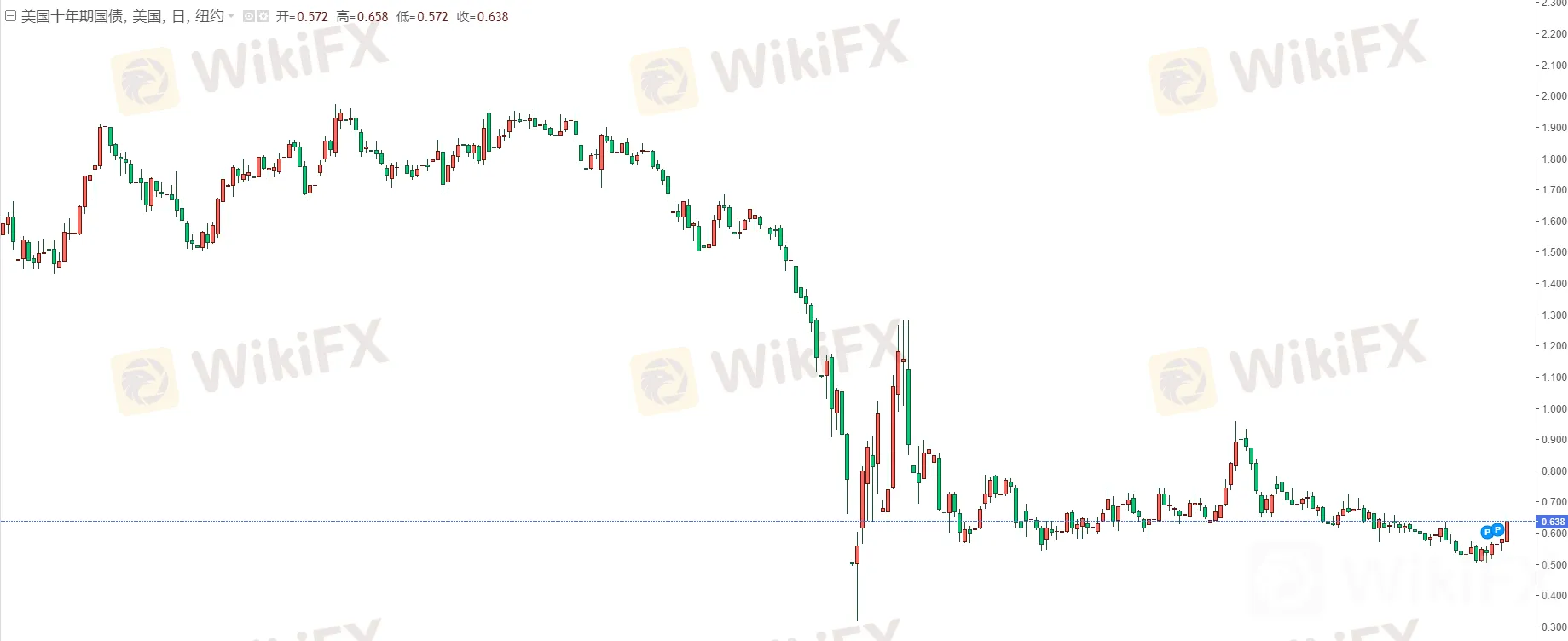
The growing greenback and U.S. Treasury yields may mainly account for the fluctuations in gold prices. The yields of both 10-year and 30-year bonds have been climbing as markets placed a bet on the U.S. issuing a record national debt of $112 billion together with large amounts of corporate bonds within this week.
Furthermore, WTI crude oil generally eased back on the day, seeing its intraday rebound at a time but finally losing 1.39% just shy of $42.0.
Tuesdays USD stayed strong on the whole, with DXY nudged slightly higher of 0.04%. At the same time, the USD/JPY pair volatilized most with a buoyancy of 0.67%, compared to the least volatilized pair of AUD/USD which obtained 0.01%
All the above is provided by WikiFX, a platform world-renowned for foreign exchange information. For details, please download the WikiFX App:
bit.ly/WIKIFX
You can also find us here-
Vietnam: www.facebook.com/wikifx.vn
Thailand: www.facebook.com/wikifx.th
Indonesia: www.facebook.com/wikifx.id
South Asia: www.facebook.com/wikifxglobal
Italy: www.facebook.com/wikifx.it
Japan: www.facebook.com/wikifx.jp
India: www.facebook.com/wikifx.in
Pakistan: www.facebook.com/wikifx.pk
Bangladesh: www.facebook.com/wikifx.bd
Arabian countries: www.facebook.com/wikifx.arab
Russian countries: www.facebook.com/wikifx.russian
French countries: www.facebook.com/wikifx.French
Western Pacific area: www.facebook.com/wikifx.westernpacific