

Broker Globale Piattaforma di Verifica Regolamentare
WikiFX
English
简体中文
繁體中文
English
Pусский
日本語
ภาษาไทย
Tiếng Việt
Bahasa Indonesia
Español
हिन्दी
Filippiiniläinen
Français
Deutsch
Português
Türkçe
한국어
العربية
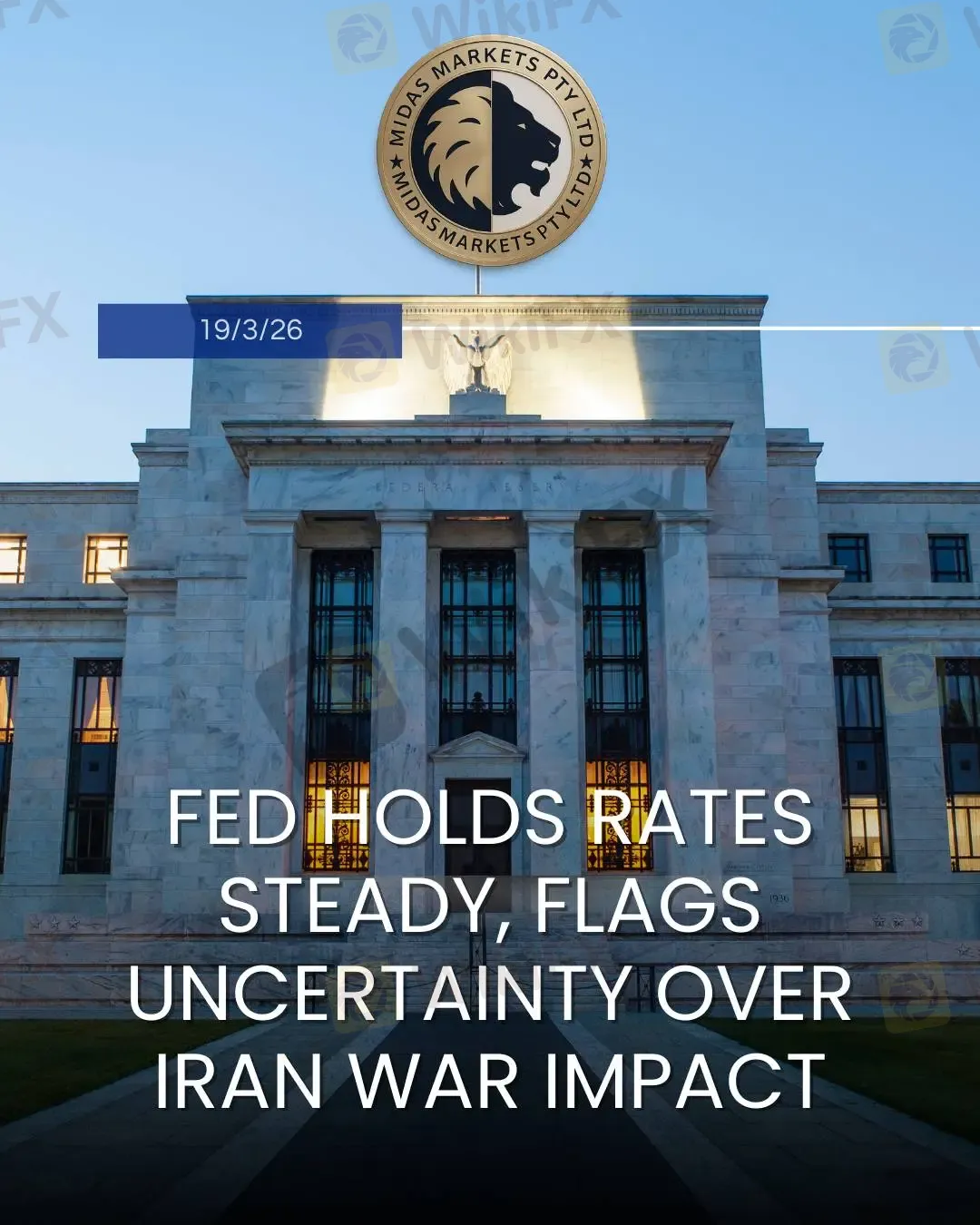
Fed Holds Rates Steady, Flags Uncertainty Over Iran War Impact
Sommario:The Federal Reserve left interest rates unchanged on Wednesday, choosing to stay cautious as policymakers weigh stubborn inflation, mixed labor market signals, and the growing economic uncertainty lin
The Federal Reserve left interest rates unchanged on Wednesday, choosing to stay cautious as policymakers weigh stubborn inflation, mixed labor market signals, and the growing economic uncertainty linked to the war with Iran.
In a decision that markets had largely expected, the Federal Open Market Committee voted 11-1 to keep the benchmark federal funds rate within the 3.5% to 3.75% range. Although this rate directly applies to overnight bank lending, it also influences borrowing costs across the broader economy, from mortgages to business loans.
In its latest statement, the Fed made only limited adjustments to its broader economic assessment, though updated projections showed slightly stronger growth and somewhat higher inflation expectations for 2026.
Even with uncertainty still elevated, policymakers continued to signal that rate cuts are likely over time. The committees updated dot plot showed a median expectation for one cut this year and another in 2027, though officials gave no clear indication of when those moves might happen. Among the 19 participants, seven now expect no rate cuts at all this year, one more than in the December projections. Beyond that, forecasts remain spread out, although the longer-run policy rate is still seen settling near 3.1%.
Financial markets reacted negatively after the announcement, with equities falling to session lows as investors focused on the Feds concern that inflation may remain stubbornly high. Comments from Chair Jerome Powell reinforced that message.
A major source of uncertainty is the conflict with Iran, now approaching its third week. Fighting in the region and disruption around the Strait of Hormuz have unsettled global energy markets and raised concerns that higher oil prices could delay progress on inflation. The Fed acknowledged this directly in its statement, noting that developments in the Middle East could have unclear consequences for the U.S. economy.
Powell echoed that caution during his press conference, saying it remains too early to determine the full impact of the conflict. He added that short-term inflation expectations have moved higher in recent weeks, largely because oil prices have risen sharply amid supply disruptions in the region.
Not everyone on the committee agreed with the decision. Governor Stephen Miran again dissented in favor of a quarter-point rate cut, pointing to growing unease about labor market conditions. Governor Christopher Waller, who had supported a cut earlier this year, voted this time to keep rates unchanged.
Before the outbreak of the conflict, markets had been pricing in two rate cuts this year, with some chance of a third. Those expectations have since been scaled back sharply as oil prices surged and inflation data remained firm, even before the latest energy shock took hold.
The Fed‘s updated economic forecasts showed a somewhat stronger outlook for growth. Officials now expect U.S. GDP to expand by 2.4% this year, slightly above the level projected in December, with 2027 growth also revised higher to 2.3%. At the same time, inflation estimates were raised. Policymakers now see both headline and core PCE inflation at 2.7% this year, though they still expect inflation to move closer to the Fed’s 2% target in the years ahead as the effects of tariffs and war-related disruptions fade. The unemployment rate is still projected to end the year at 4.4%, despite recent signs of softer payroll growth.
The decision also comes amid intensifying political pressure. President Donald Trump has continued urging the Fed to cut rates, recently criticizing Powell for not calling a special meeting despite mounting economic uncertainty.
Disclaimer:
Le opinioni di questo articolo rappresentano solo le opinioni personali dell’autore e non costituiscono consulenza in materia di investimenti per questa piattaforma. La piattaforma non garantisce l’accuratezza, la completezza e la tempestività delle informazioni relative all’articolo, né è responsabile delle perdite causate dall’uso o dall’affidamento delle informazioni relative all’articolo.
WikiFX Trader
Vantage
Sotto supervisione
AVATRADE
Sotto supervisione
Exness
Sotto supervisione
HFM
Sotto supervisione
STARTRADER
Sotto supervisione
EBC FINANCIAL GROUP
Sotto supervisione
Vantage
Sotto supervisione
AVATRADE
Sotto supervisione
Exness
Sotto supervisione
HFM
Sotto supervisione
STARTRADER
Sotto supervisione
EBC FINANCIAL GROUP
Sotto supervisione
WikiFX Trader
Vantage
Sotto supervisione
AVATRADE
Sotto supervisione
Exness
Sotto supervisione
HFM
Sotto supervisione
STARTRADER
Sotto supervisione
EBC FINANCIAL GROUP
Sotto supervisione
Vantage
Sotto supervisione
AVATRADE
Sotto supervisione
Exness
Sotto supervisione
HFM
Sotto supervisione
STARTRADER
Sotto supervisione
EBC FINANCIAL GROUP
Sotto supervisione
Rate Calc
USD

CNY
Tasso di cambio attuale:0
inserisci l'importo
USD
A disposizione
CNY
Calcolare 